

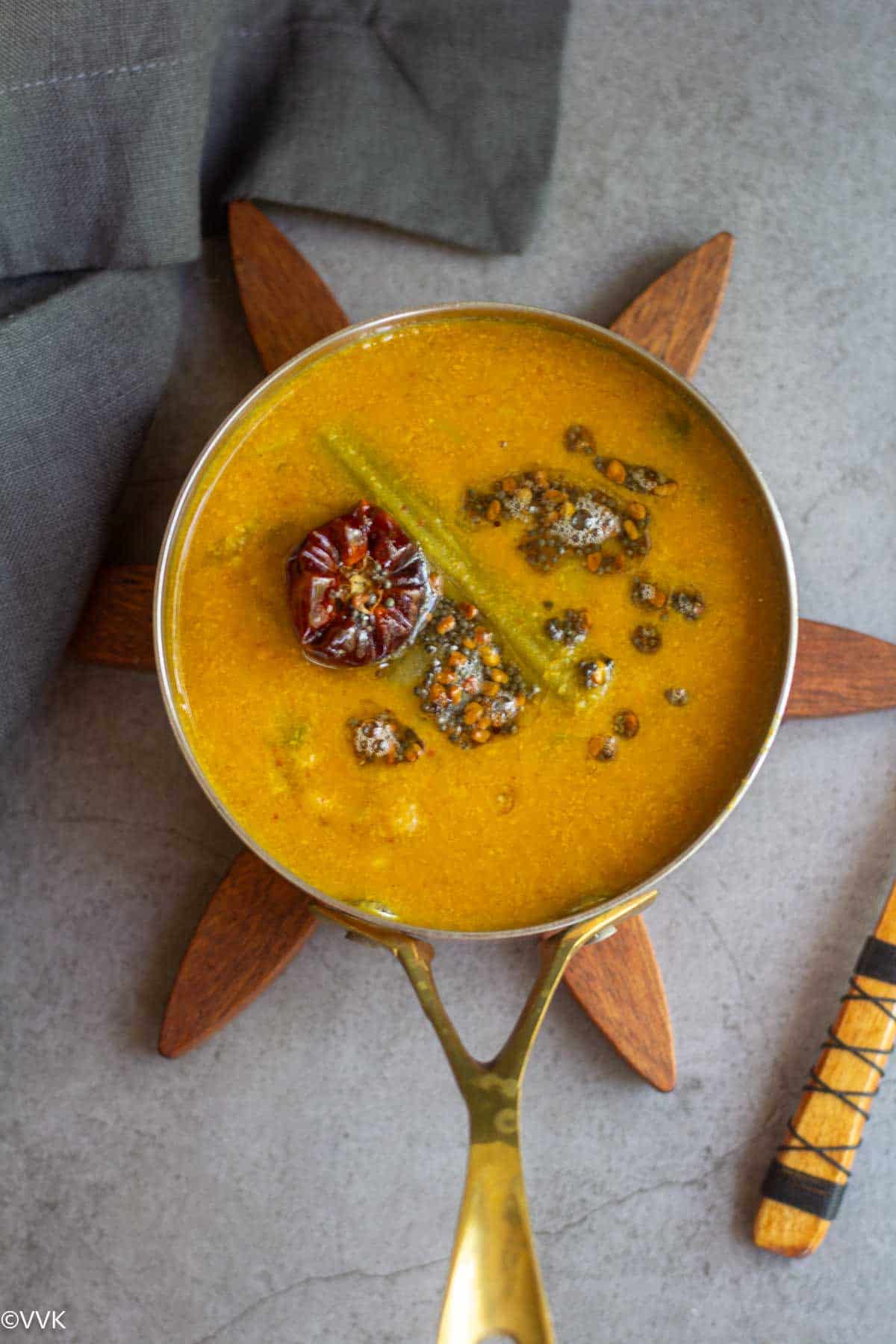
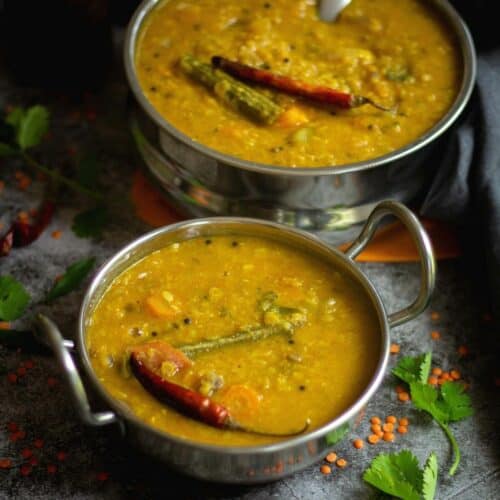
Easy murungakkai sambar with a quick coconut-tomato masala. Get all the flavor of traditional arachuvitta sambar in under 45 minutes. No roasting needed.
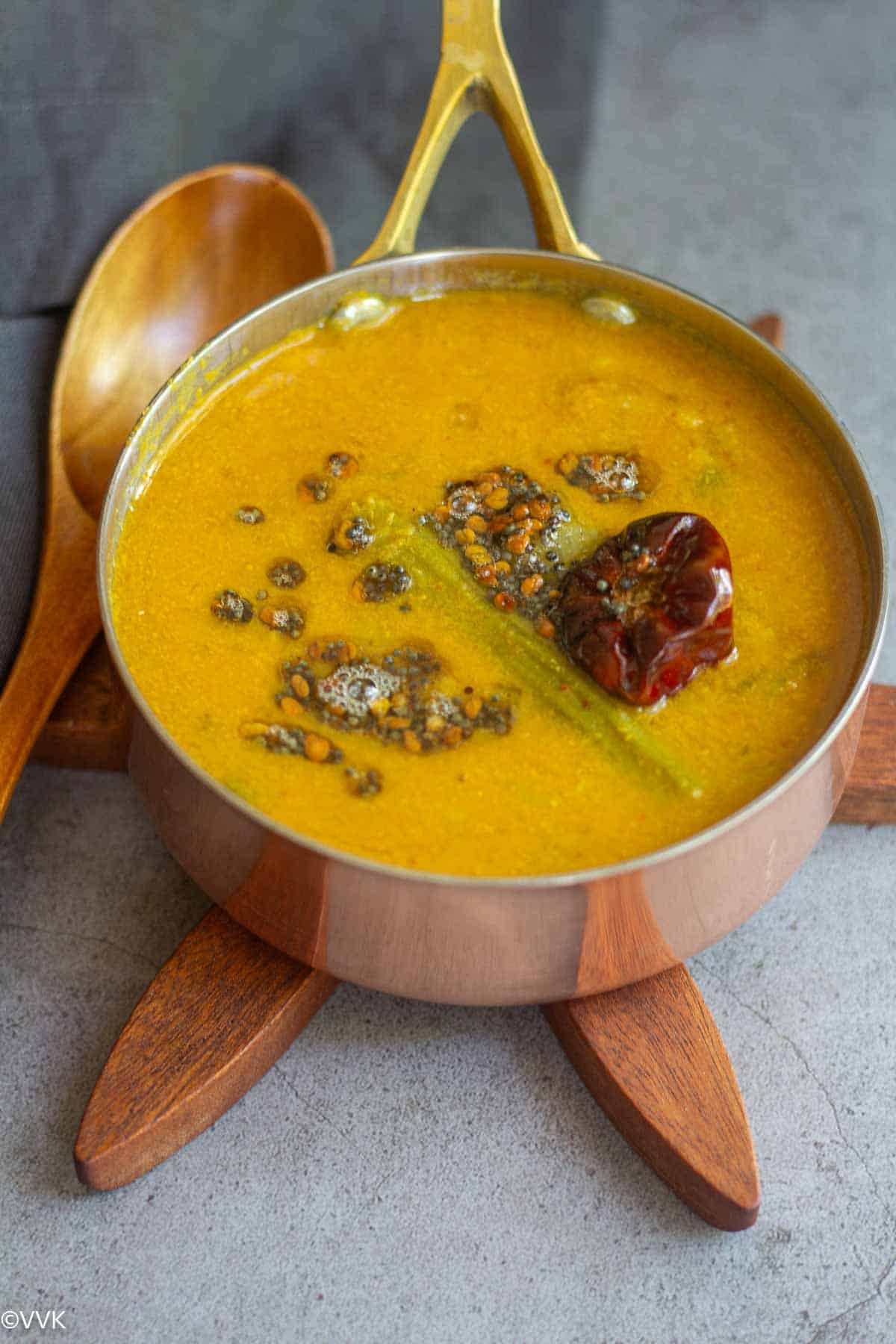
Every household makes sambar differently. Changing the masala or vegetable creates a new dish. At VVK, I share a collection of sambar recipes. Today, I’m adding an easy arachuvitta murungakkai sambar—drumstick sambar with a quick coconut masala—which is a regular in my kitchen.
Jump to:
Arachuvitta Sambar
Arachuvitta sambar is sambar with freshly ground masala. Traditionally, you dry-roast coconut, red chilies, coriander seeds, and other spices, then grind them. This method is flavorful but takes time, especially on weekdays. I make both my mom’s pumpkin sambar and my mil’s chinna vengaya sambar. This version skips the roasting. Just grind frozen coconut with tomato, a dried red chili, and sambar powder. The taste matches the traditional version.
The coconut-tomato masala adds a rich, full-bodied depth to the sambar. You’d never guess how quickly it comes together. I cook the rice and toor dal together using the pot-in-pot method. By the time the pressure cooker is done, the hardest part is over.
For this version, I’m using frozen drumsticks, coconut, and shallots. This makes it even more pantry-friendly. Whether you serve it with idli, dosa, venpongal, or just hot rice, this murungakkai sambar delivers every time. It’s one of those recipes that feels like a warm hug — deeply flavored, comforting, and quick to make.
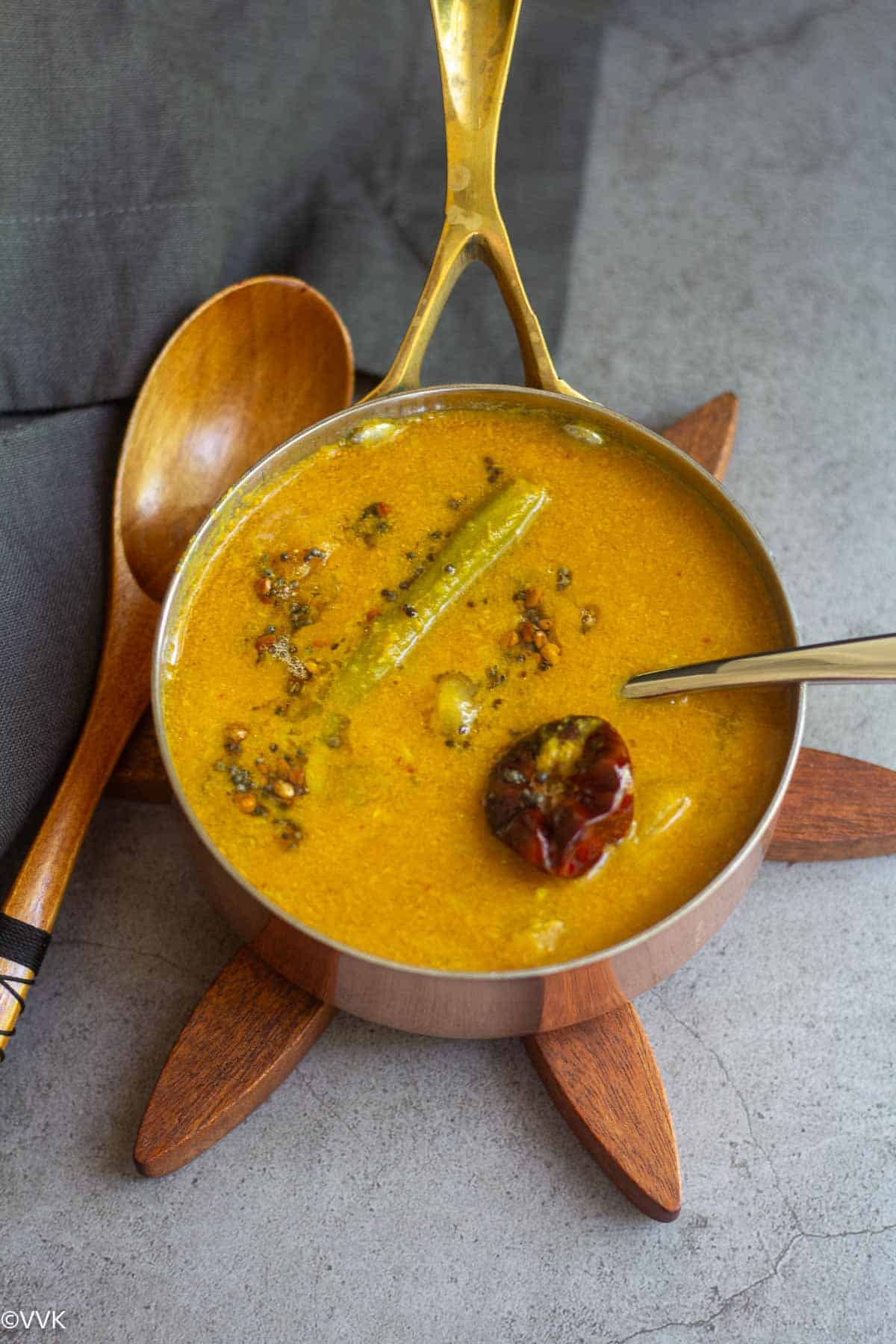
Why You’ll Love This Recipe
- Tastes like traditional arachuvitta sambar with minimal effort
- One pressure cooker does most of the work (pot-in-pot method for rice + dal)
- Freezer-friendly ingredients mean you can make this anytime.
- No onions version works perfectly for auspicious/festival days.
- Pairs beautifully with idli, dosa, rice, and venpongal
Ingredients Overview
For murungakkai sambar, use common South Indian pantry staples.
Toor dal forms the base, pressure-cooked until soft and mashed well. I have also used shallots and cooked them along with the dal.
Drumsticks are the main vegetable. Fresh or frozen, both work well.
For the coconut masala, you need grated coconut, a ripe tomato, a dried red chili, and sambar powder. Grind everything together into a smooth paste. No roasting required.
Tamarind adds the essential tang and forms the base. I use tamarind paste for convenience, but a small gooseberry-sized tamarind block soaked in water works too. A small piece of jaggery at the end beautifully balances all the flavors.
For tempering, use mustard seeds, fenugreek seeds, asafoetida, curry leaves, and dried red chilies. Use your choice of oil.
Serving Suggestions
This sambar is incredibly versatile. Here are my favorite ways to serve it:
- With rice — Pair with beetroot poriyal and cucumber thayir pachadi. This gives a complete South Indian meal.
- Serve with idli or dosa—this sambar is perfect for tiffin.
- With venpongal — A classic pairing for weekend mornings
- With upma — A lighter pairing that works surprisingly well
Skip the shallots for onion-free festivals and auspicious days.
Dietary Specifications & Storage
This murungakkai sambar is naturally vegan and gluten-free. It is also nut-free. Use gluten-free asafoetida to keep it completely gluten-free. Skip the shallots in the dal and omit onions to make it suitable for festivals and auspicious days.
Storage: This sambar keeps well in the refrigerator for 2–3 days. The flavors deepen overnight, so it tastes even better the next day! Reheat on the stovetop with a splash of water, as it tends to thicken in the fridge.
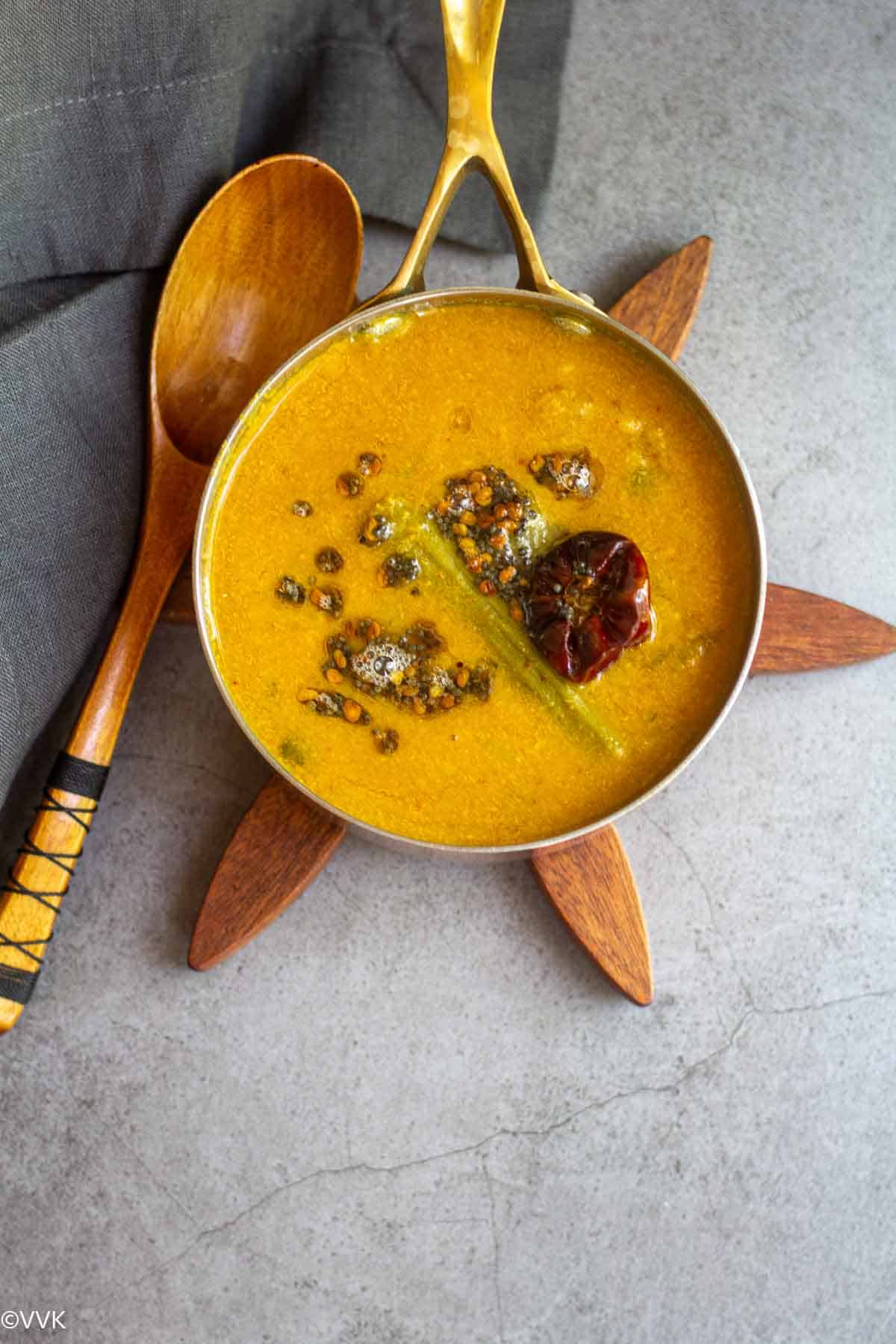
How to make drumsticks sambar
- Rinse the toor dal. Put it in a vessel with 1½ cups of water, turmeric powder, and oil. Rinse the sona masoori rice and place it in a separate vessel with 1½ cups of water. Stack both vessels pot-in-pot in your pressure cooker with frozen shallots. Pressure-cook for 3 whistles. After the pressure releases, mash the dal and stir in 1 tsp rice flour. Set aside.
- Grind frozen coconut, tomato, dried red chili, and sambar powder into a smooth paste. No need to thaw the coconut. Set aside.
- Combine 1½ cups of water and ½ tsp tamarind paste in a deep pan or kadai. Add frozen drumsticks and salt. Cover and cook over medium heat until tender, about 10–12 minutes.
- Once the drumsticks are cooked, add the ground coconut masala, followed by curry leaves and cilantro. Stir well to mix everything. Bring the mixture to a gentle boil, then let it simmer for 3–4 minutes.
- Add mashed dal and jaggery. Stir and bring to a gentle boil. Adjust salt as needed.
- Heat oil in a pan. Add mustard seeds, fenugreek, dried red chilies, asafoetida, and curry leaves. When the mustard seeds splutter and the fenugreek turns light golden, pour the tempering over the sambar. Serve hot.
Tips & Notes
- Rice flour trick — Stir 1 tsp of rice flour into the mashed dal for a thicker, restaurant-style sambar. Skip it if you prefer a thinner consistency.
- Jaggery — Don’t skip it! Just a small piece balances the tamarind and rounds out all the flavors beautifully.
- Frozen vs fresh drumstick — Both work. Fresh drumsticks need a slightly longer cook time. With frozen, there’s no prep — straight into the pan.
- Frozen coconut — You don’t need to thaw before grinding. It blends well and delivers a fresh coconut flavor.
- Veggie swaps — This masala works well with brinjal (eggplant), okra, pumpkin, radish, or pearl onions, too. Radish and brinjal cook faster if you’re in a hurry.
- Make it thinner or thicker — Add more water for a thinner consistency, or reduce the heat for a thicker sambar.
- Tamarind — I use ½ tsp of tamarind paste for convenience. If using a tamarind block, soak a small gooseberry-sized piece in 1 cup of warm water and squeeze out the juice. Because of my dietary restrictions, I have used minimal tamarind. You can add up to 1 heaped tsp for this measure.
FAQs
Murungakkai (முருங்கைக்காய்) is the Tamil word for drumstick, a long, ridged vegetable used in South Indian cooking. Murungakkai sambar is simply drumstick sambar. It is one of the most beloved sambar varieties in Tamil Nadu. The drumstick adds a unique earthy sweetness and pairs beautifully with the tangy tamarind base.
Yes, though it will taste more like a regular sambar than an arachuvitta sambar. The coconut is what gives it that signature richness.
Absolutely. Chop fresh drumsticks into 3-inch pieces. Cook in the tamarind water until completely tender. It may take a few extra minutes than with frozen drumsticks.
Yes! I’ve made a similar version in the Instant Pot — check out this video for reference. You can sauté the drumsticks, cook them, and finish everything in one pot.
Yes, the shallots in the dal are optional. They add a subtle sweetness, but the sambar still tastes great without them too —especially on no-onion days.
I use my homemade sambar powder, which I always have on hand. Store-bought works too — Grand Sweets and 777 are good options.
It keeps well in the refrigerator for 2–3 days. The flavors actually deepen overnight. Reheat with a splash of water as it thickens in the fridge.
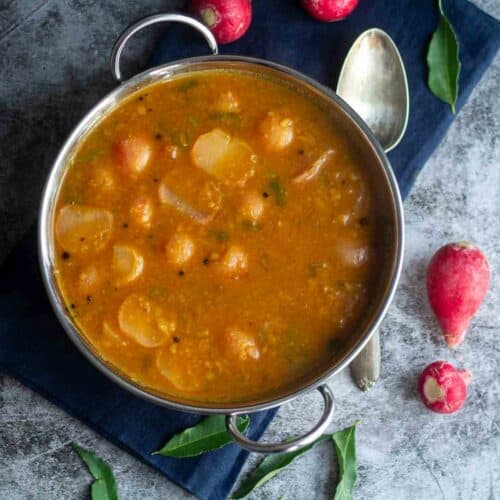
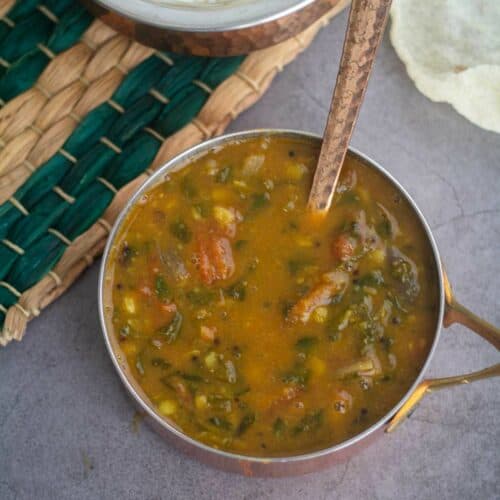
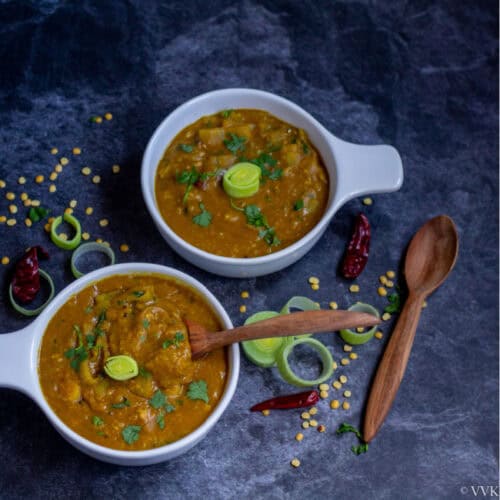
More Sambar Recipes
Looking for more easy lunch and dinner combinations? Check out these meal planner ideas:
- Simple Vegetarian Meal Planner
- Weekly Meal Planner With Simple Recipes
- Easy Instant Pot Vegetarian Meal Plan
- Veggie-Loaded Weekly Meal Planner
- Festive Special South Indian Vegetarian Meal Planner
📖 Recipe
Easy Arachuvitta Drumstick Sambar | Quick Coconut Masala Sambar
Ingredients
Measurement Details: 1 cup = 240ml; 1 tbsp = 15ml; 1 tsp = 5ml;
For the Dal
- ½ cup toor dal
- ¼ tsp turmeric powder
- ¼ tsp oil
- 3 shallots fresh or frozen, (optional)
- 1.5 cups water
For the Coconut Masala
- ½ cup frozen coconut
- 1 small tomato (approx. 50g)
- 1 dried Kashmiri red chili or byadgi red chili
- 1 tbsp sambar powder
For the Sambar
- ½ tsp tamarind paste
- 1.5 cups water
- 10 drumsticks frozen, 10 to 12
- 1½ tsp salt (or to taste)
- 10 curry leaves
- 2 tbsp cilantro chopped
- 1 tsp rice flour for a thicker consistency
- ¼ tsp jaggery a small i-inch piece
For the Tempering
- 2 tsp peanut oil
- ½ tsp mustard seeds
- ½ tsp fenugreek seeds
- ½ tsp asafoetida hing
- 2 dried red chilies
- 10 curry leaves
Instructions
- Rinse the toor dal. Put it in a vessel with 1½ cups of water, turmeric powder, and oil. Rinse the sona masoori rice and place it in a separate vessel with 1½ cups of water. Stack both vessels pot-in-pot in your pressure cooker with frozen shallots. Pressure-cook for 3 whistles. After the pressure releases, mash the dal and stir in 1 tsp rice flour. Set aside.
- Grind frozen coconut, tomato, dried red chili, and sambar powder into a smooth paste. No need to thaw the coconut. Set aside.
- Combine 1½ cups of water and ½ tsp tamarind paste in a deep pan or kadai. Add frozen drumsticks and salt. Cover and cook over medium heat until tender, about 10–12 minutes.
- Once the drumsticks are cooked, add the ground coconut masala, followed by curry leaves and cilantro. Stir well to mix everything. Bring the mixture to a gentle boil, then let it simmer for 3–4 minutes.
- Add mashed dal and jaggery. Stir and bring to a gentle boil. Adjust salt as needed.
- Heat oil in a pan. Add mustard seeds, fenugreek, dried red chilies, asafoetida, and curry leaves. When the mustard seeds splutter and the fenugreek turns light golden, pour the tempering over the sambar. Serve hot.
Video
Notes
- Rice flour trick — Stir 1 tsp of rice flour into the mashed dal for a thicker, restaurant-style sambar. Skip it if you prefer a thinner consistency.
- Jaggery — Don’t skip it! Just a small piece balances the tamarind and rounds out all the flavors beautifully.
- Frozen vs fresh drumstick — Both work. Fresh drumsticks need a slightly longer cook time. With frozen, there’s no prep — straight into the pan.
- Frozen coconut — You don’t need to thaw before grinding. It blends well and delivers a fresh coconut flavor.
- Veggie swaps — This masala works well with brinjal (eggplant), okra, pumpkin, radish, or pearl onions, too. Radish and brinjal cook faster if you’re in a hurry.
- Make it thinner or thicker — Add more water for a thinner consistency, or reduce the heat for a thicker sambar.
- Tamarind — I use ½ tsp of tamarind paste for convenience. If using a tamarind block, soak a small gooseberry-sized piece in 1 cup of warm water and squeeze out the juice. Because of my dietary restrictions, I have used minimal tamarind. You can add up to 1 heaped tsp for this measure.
Nutrition
I am not a nutritionist. The nutritional information is provided as a courtesy and is an estimate only. It varies depending upon the product types or brands.
Update Notes: Earlier posted on 2016. Now updated the post with video, recipe card and FAQ section.


I tried this out today.. have been looking for a really good drumsticks sambar recipe.. it worked out well.. and sambar powder is mind blowing!! Thank you
Thanks a lot. Glad it worked really well. Thanks again!
Bookmarked.
Thanks :-)
I love that bucket Vidhya :)
Thanks FV.. Got it from India this time. :-)
I love sambar and this looks super delicious. YUM!
Thanks Kushi.
Looks delicious… I can get the aroma
:-) :-) Thanks
Adding rice flour to sambar sounds interesting Sri- this looks so flavorsome as well…
Yeah chitra just for getting thicker consistency. If you can skip that also. Thanks :-)
yummy :) love this sambar..
Thanks Trupti. :-)
I can keep looking at any number of sambar recipes :) This looks great!
Oh yeah me too. Same pinch. A small difference or a variation makes a huge change na. Thanks
Yum I love this particular sambar preparation ??
Thanks :-)