

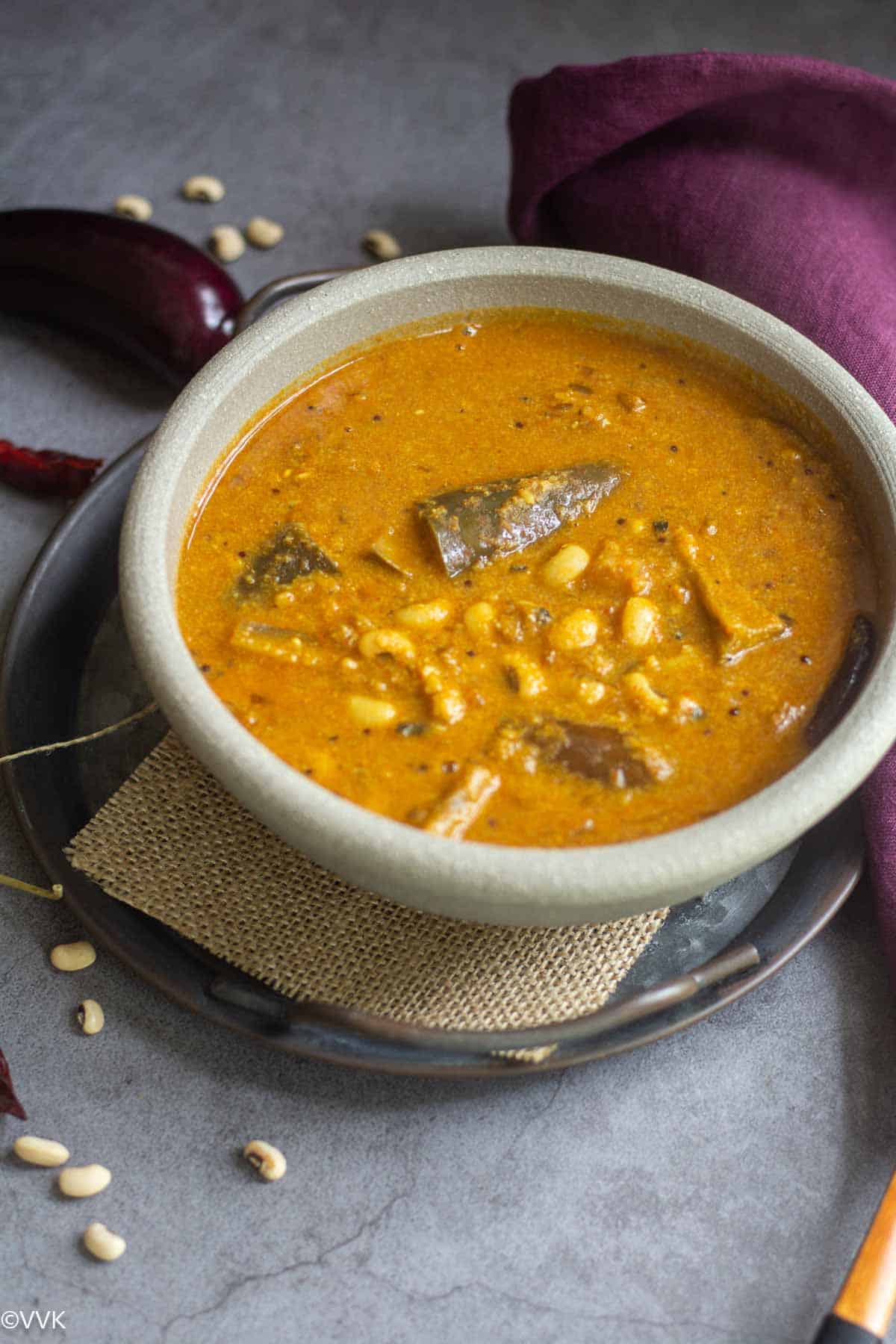
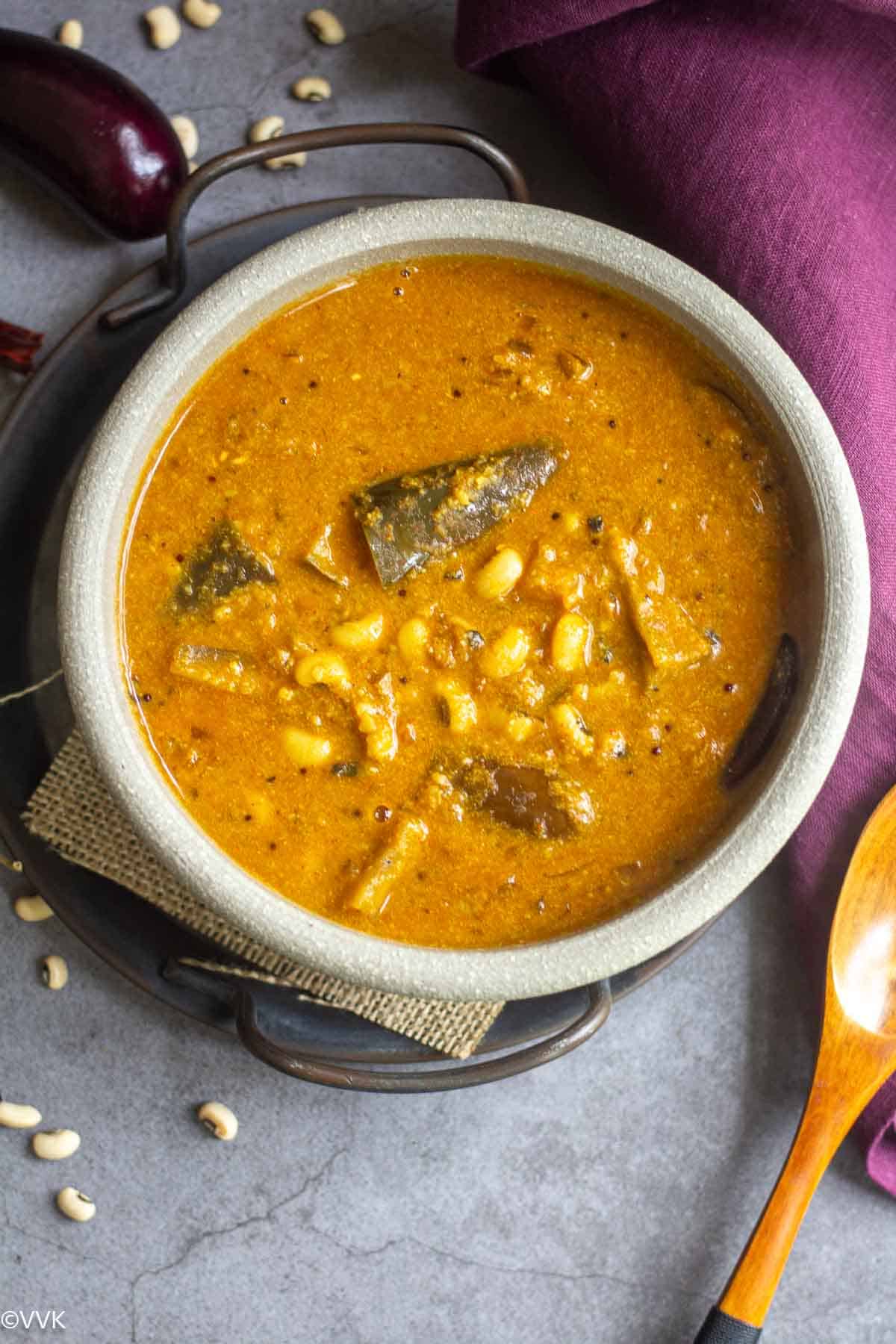
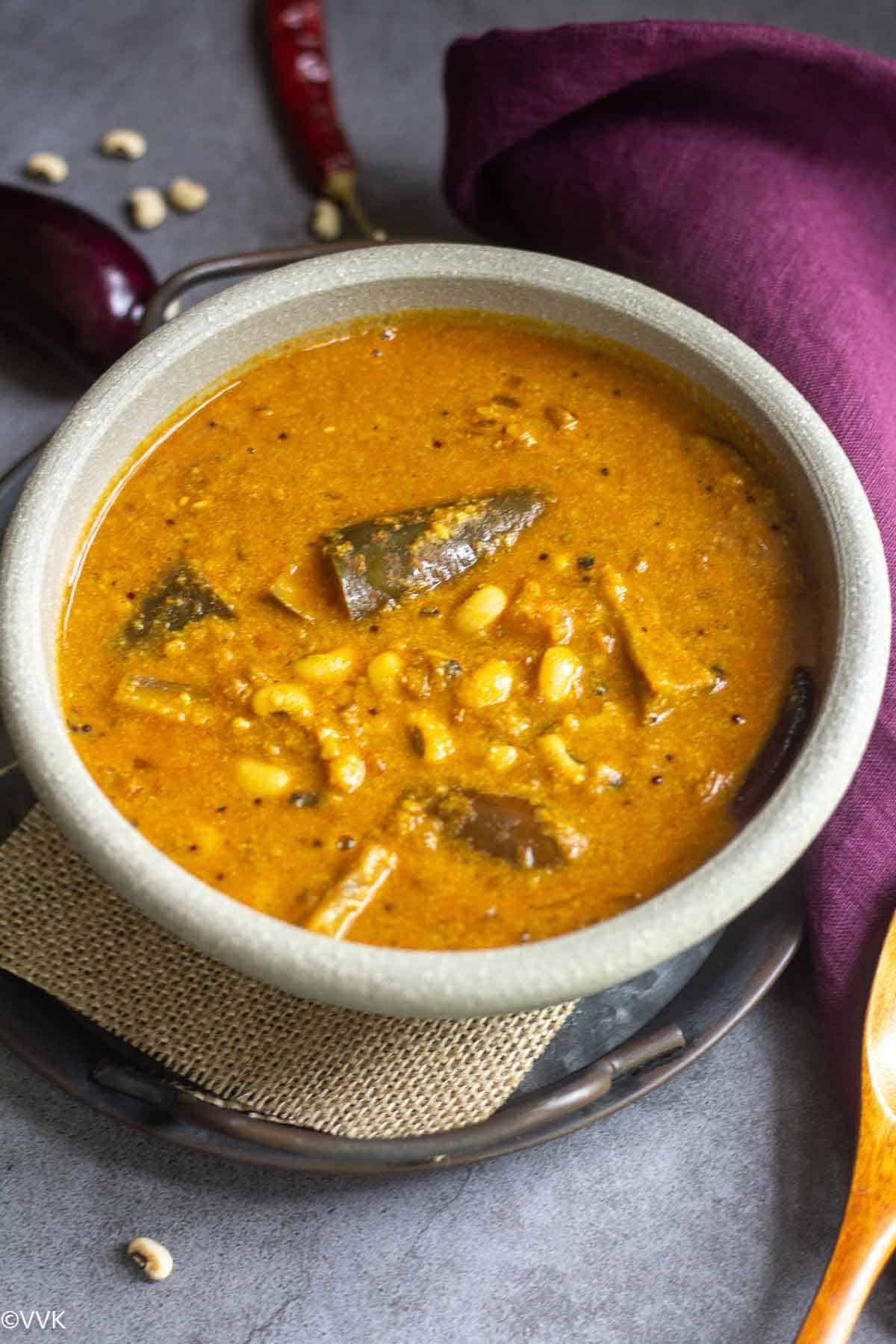
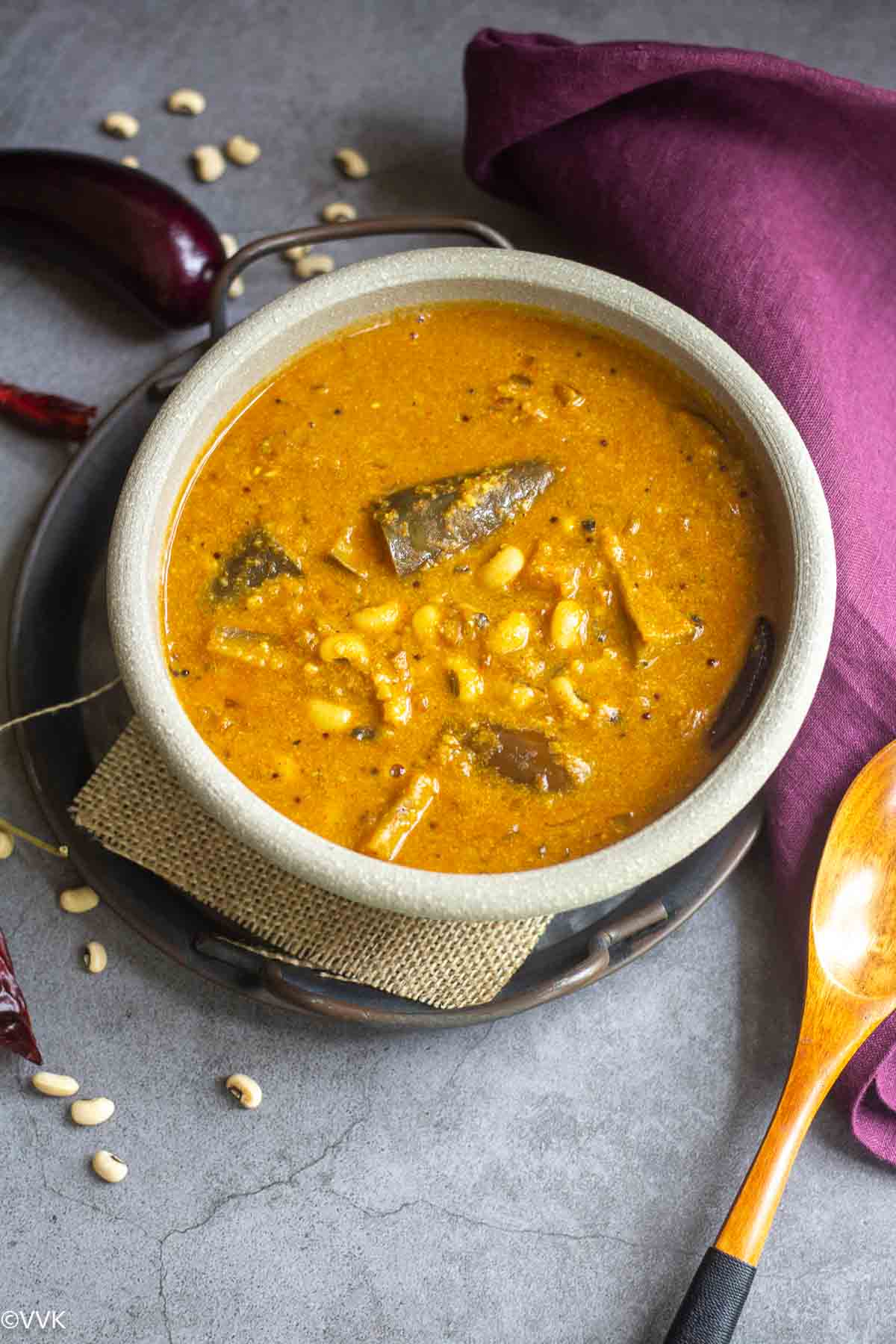
Kathirikai kuzhambu, the Kongu Nadu way. This one pairs brinjal with black-eyed peas (thattapayaru) in a tangy tamarind gravy, finished with fresh coconut-fennel masala. A traditional kongu veg recipe that goes perfectly with hot steamed rice.
Jump to:
Kongu Recipes
This is the third recipe from the Kongu Nadu set my friend S shared with me. The other two are the famous arisi paruppu sadam and kollu paruppu kadaiyal.
You might be wondering about another brinjal recipe — yes, I know. But this one’s different. Regular sambar uses mashed toor dal. Here you use black-eyed peas two ways: half cooked whole, half pulsed coarse. That’s what makes it distinct. And there’s very minimal sambar powder, which is optional too. Just red chili powder, coriander powder, and a fresh coconut-fennel masala that balances the heat and adds richness.
Food As Medicine
Here’s the fun part. My friend told me to add a drop of edible castor oil while cooking the peas. I was surprised too. Apparently, in the Kongu and Thanjai region, they do add edible castor oil. It’s a natural laxative and helps with digestion and other gut issues. I really believe in Unave Marundu — food as medicine — and these little touches prove it again and again. I couldn’t find edible castor oil, so I used gingelly oil instead. Black-eyed peas are the key in this kuzhambu. You can swap the brinjal for other vegetables like drumstick or okra, but I fell in love with this combo, so I never skip it. I love both black-eyed peas and kathirikai too much. Thank you again to my friend S for these three Kongu Nadu recipes.
Ingredients overview
The base
- Black-eyed peas (thatta payaru) — the protein star; cooked, then half kept whole and half coarsely pulsed. I used the white ones; you can also use the red ones, popularly known as red cow peas or red field peas. Thatta Payaru is the Tamil name for cow peas.
- Brinjal (kathirikai) — tender ones are best. This time I used my homegrown ones. Traditionally, people use small baby brinjals, but you can use purple, green, or graffiti varieties. This time I went with the slender Asian variety and chopped them into chunks.
- Onion and garlic — for the body of the gravy. Pressure-cook the garlic with the peas. Cook the onion down in the tempering until translucent.
- Tamarind — can’t imagine kuzhambu without tamarind. That’s where the tang comes from. Soaked pulp or paste both work. You can also check out my homemade tamarind paste recipe.
The spices
- Coriander powder and red chili powder — these spice the gravy. I used a little sambar powder because I went with Kashmiri red chili powder which is mild. You can swap both for 2.5 to 3 tbsp sambar powder if you like.
- Turmeric, salt, curry leaves — the usual base seasoning.
For tempering — add mustard seeds, fenugreek seeds, hing, and cinnamon to hot oil first. Once they splutter, add the broken red chilies and curry leaves. Fry for a minute, then add the onions.
For grinding — grind fresh coconut and fennel seeds with a little water. Add it at the end. It balances the heat and adds richness.
Dietary specs + storage
This kathirikai kuzhambu is naturally vegan and nut-free. For a gluten-free version, use gluten-free asafoetida or leave it out.
This kuzhambu stays good for up to three days in the fridge, and it freezes well too.
Serving recommendations
Serve it hot with steamed rice and appalam — that combo is hard to beat. I personally like this kuzhambu with a mild poriyal, like cabbage, carrot, or beetroot poriyal. It also goes well with kootu varieties like peerkangai kootu or chow chow kootu.
How to make kathirikai kuzhambu
- Soak the black-eyed peas overnight or at least 5 hours. Pressure cook with 2 garlic cloves and 1 tsp of gingelly oil for 3 whistles, with 2 cups of water.
- Once cooled, set aside half the cooked peas — don’t discard the water. Pulse the other half coarsely and keep aside. I usually grind the two garlic cloves along with half of the cow peas.
- Heat oil in a kadai. Add mustard seeds, fenugreek seeds, hing, and cinnamon. As they splutter, add the broken red chilies and curry leaves. Fry for a minute.
- Add the onions and cook till translucent. Add the brinjals and cook for 4–5 minutes till semi-soft.
- Add turmeric, coriander powder, red chili powder, and sambar powder (if using). Mix well.
- Mix the tamarind paste with 1 cup of water, add this tamarind water, and simmer for 3–4 minutes.
- As it boils, add the whole and pulsed peas. Mix well. Add water to your preferred consistency. Add salt to taste. Check salt and spice at this stage, and bring to a boil.
- Grind the coconut and fennel seeds with about ¼ cup water. Stir in the ground coconut masala, bring to a second boil, then turn off the heat. Done.
Recipe Notes
- Adjust salt and spice to your taste.
- Instead of chopping the brinjals, you can slit them as you do for ennai katharikai.
- Swap the coriander and red chili powder for 2.5–3 tbsp sambar powder if you prefer. Since I used Kashmiri red chili powder, I also used 1 tsp sambar powder, but that’s optional.
- Also, you can add up to 3 tsps of tamarind paste. We are using coconut paste plus ground cowpeas, which balances it. But since I am trying to reduce my tamarind intake for health reasons, I reduced it to 1.5 tsp.
- I use a full cup of black-eyed peas because we love them. You can drop to ½ cup and reduce the spices by ½ tbsp.
- A drop of castor oil while cooking the peas is traditional. I used gingelly oil. Use edible castor oil if you can find it.
Frequently Asked Questions
Yes. Black-eyed peas are the main player here, so the kuzhambu works without brinjal. But I never skip it.
Yes. Use 2.5–3 tbsp sambar powder in place of the coriander and red chili powder.
It’s a traditional Kongu touch. Edible castor oil is a natural laxative and helps digestion. Gingelly oil is a fine substitute.
A full cup makes it hearty. Drop to ½ cup for a lighter gravy.
Yes, you can use up to 3 tsp. I keep mine at 1.5 tsp because I’m cutting back on tamarind for health reasons — and it still tastes balanced, since the coconut paste and ground cow peas mellow the tang. Add more if you like it sharper.
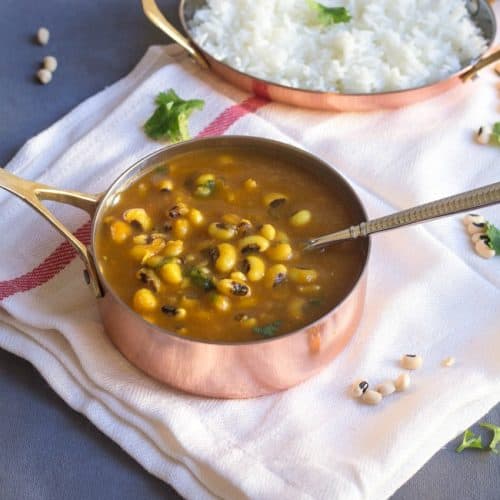
More Black-Eyed Peas Recipes


Loved this recipe?
If you try this kathirikai kuzhambu, please leave a comment and rate the recipe below — it helps more than you know. Got a question? Drop it in the comments, and I’ll get to it ASAP.
Follow me on Pinterest for more healthy and delicious ideas, and on Instagram for the latest from my kitchen.
📖 Recipe
Kathirikai Kuzhambu with Black-Eyed Peas | Kongu Nadu Thattapayaru Kuzhambu
Ingredients
Measurement Details: 1 cup = 240ml; 1 tbsp = 15ml; 1 tsp = 5ml;
To pressure cook
- 1 cup black-eyed peas
- 5 cups water divided (soaking, cooking, grinding)
- 1 tsp gingelly oil
- 2 garlic cloves
To Temper & Base
- 2 tbsp gingelly oil
- 1 tsp mustard seeds
- 1 tsp fenugreek seeds
- 1 small piece of cinnamon a small 1-inch broken piece
- 2 dried red chilies broken into small pieces
- ⅛ tsp asafoetida
- 1 cup onion finely chopped
- 10 curry leaves 1 strand
- 200 grams brinjal chopped
- ½ tsp turmeric powder
- 1 tbsp red chili powder or to taste I used Kashmiri red chili powder
- 2 tbsps coriander powder
- 1 tsp sambar powder optional
- 1.5 tsp tamarind paste; you can use up to 2 to 2.5 heaped tsp
- 1 cup water to mix it with tamarind paste
- 2.5 tsp salt or to taste
- ½ more cup water
To grind
- ½ cup coconut
- 2 tsp fennel seeds
- ¼ cup water
Instructions
- Soak the black-eyed peas overnight or at least 5 hours. Pressure cook with 2 garlic cloves and 1 tsp of gingelly oil for 3 whistles, with 2 cups of water.
- Once cooled, set aside half the cooked peas — don’t discard the water. Pulse the other half coarsely and keep aside. I usually grind the two garlic cloves along with half of the cow peas.
- Heat oil in a kadai. Add mustard seeds, fenugreek seeds, hing, and cinnamon. As they splutter, add the broken red chilies and curry leaves. Fry for a minute.
- Add the onions and cook till translucent. Add the brinjals and cook for 4–5 minutes till semi-soft.
- Add turmeric, coriander powder, red chili powder, and sambar powder (if using). Mix well.
- Mix the tamarind paste with 1 cup of water, add this tamarind water, and simmer for 3–4 minutes.
- As it boils, add the whole and pulsed peas. Mix well. Add water to your preferred consistency. Add salt to taste. Check salt and spice at this stage, and bring to a boil.
- Grind the coconut and fennel seeds with about ¼ cup water. Stir in the ground coconut masala, bring to a second boil, then turn off the heat. Done.
Notes
- Adjust salt and spice to your taste.
- Instead of chopping the brinjals, you can slit them as you do for ennai katharikai.
- Swap the coriander and red chili powder for 2.5–3 tbsp sambar powder if you prefer. Since I used Kashmiri red chili powder, I also used 1 tsp sambar powder, but that’s optional.
- Also, you can add up to 3 tsps of tamarind paste. We are using coconut paste plus ground cowpeas, which balances it. But since I am trying to reduce my tamarind intake for health reasons, I reduced it to 1.5 tsp.
- I use a full cup of black-eyed peas because we love them. You can drop to ½ cup and reduce the spices by ½ tbsp.
- A drop of castor oil while cooking the peas is traditional. I used gingelly oil. Use edible castor oil if you can find it.
Nutrition
I am not a nutritionist. The nutritional information is provided as a courtesy and is an estimate only. It varies depending upon the product types or brands.
Update Notes: Earlier posted on 2016. Now updated the blog post with new pictures, recipe card with nutritional information.


Kuzhambu with black eyed peas is very very interesting. Adding caster oil is even more interesting :-). Love all your Kongu nadu special dishes Vidhya. Thank you for sharing them.
Thanks a lot Pavani. Yeah even I was surprised when my friend asked me to add castor oil. Love these traditional recipes.
Such a comforting dish, my mouth is just watering here. Need some rice and papads now to have this kuzhambu.
That’s a lovely combination… Appalam and this kuzhmabu rice.. yum Thanks Priya.
I love and always looking for chutney and sambar like recipes… i am bookmarking your recipes and will let you know
Thanks a lot Priya.. :-) Would love to hear your feedback.
I love Brinjals and this recipe of kuzhambu looks so yummy! Great recipe.
Thanks a lot :-)
nice kuzhambu. nice clicks. I am the fan of this kuzhambu. brinjal with black eyed peas is a nice combination.
:-) Thanks Gayathri.
So nice and comforting – its been ages I tried this Sri :) Your post is tempting me!
:-) Please do try. Thanks.
Love your recipes dear. Its so traditional and delicious, YUMMY!
:-) Thankoooo
This looks like a recipe to try for sure. I too like the pulses plus eggplant combination
:-) Thanks Rajani.
Sambar with black eyed beans of koorg region is totally new dish for me.. Looks delicious and tasty..
Hi Seena, welcome to my space. Actually its the kongu region the western side of TN. Thanks a lot. :-)
Its looks soo delicious.
Thanks a lot. :-)
Sounds new and interesting recipe to me ! e prepare black eyed beans usually at our home but never used any veggies in it especially Brinjal. .it looks so delicious and very well explained, beautiful share Sri :)
Thanks a lot Jolly. We use lentils in some sambar recipe like Pitlai and in puli kuzhambu (that’s again tangy sambar) :-)
Wow Vidya, just Wow!!! This is THE AUTHENTIC recipe of thatyapayiru kathrikkai! Right from the dollop of castor oil, garlic, soaked tamarind, to one boil after coconut is added. Exactly how my great grandma cooked and how all cooking members of the family were taught! Keep up the good work!!
Thanks a lot Boomerang. :-) :-) Glad to hear. I would like to thank my friend for this authentic recipe. Thanks a ton for your encouraging words and thanks for stopping by. :-)
We make exactly the same in Andhra cuisine, or atleast thats how my Mom and MIL do..:)..we love it with both rice and roti..very good..
oh cool.. Yeah this goes well with both roti and rice. Thanks Valli.
We in Punjab make baigan bharta and aloo baigan only and kids don’t like to eat either of them. so I put brinjal in sambar and they don’t come to know. This is another good option you have given. Thanks for that.
oh for us brinjals goes into sambar and these gravies mainly and then as dry curries and kootu. Thanks a lot Ritu.
This is something new and intriguing to me!
This sounds so full of flavor! I’m totally in love with your excellent share. Delicious and very well explained recipe. It seems you are also big fan of brinjal like my mom and your this recipe will also going to be superhit in my house. Will be making very soon.
Ps: Tried your Mango sweet and sour coconut Curry on the very same day when I had left comment on ur webpage, as i was super excited to make that curry, i have used fresh coconut powder which is always available in my kitchen after soaking it for few minutes… and believe me it was super awesome and very very delicious curry. Thank you soooooo much for such excellent, healthy and innovative recipes.
Oh yeah I go crazy with brinjals. Love them to the core. And thanks again for trying the recipe. Really happy and your comment made my day. Using coconut powder is a great idea.. Thanks for sharing that tip. :-) :-)
wow! mouthwatering share Sri, Kuzhambu looks super delicious and healthy! also love your serving bowls..awesome :-)
Thanks a lot Rani. :-)
Priya @asmallbite
Never heard of this combination before,bookmarked it.
:-) Thanks pa. This is one of the popular combo in Kongu Region.
This is one our fav combos at home…delicious share vidhya :)
Thanks a lot Padma.
The ingredients speaks for its uniqueness – castor oil is a great addition to the recipe, and has numerable benefits too!
Yup.. thanks a lot. A drop of castor oil has tons of benefits. :-)