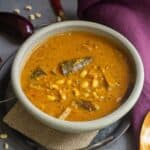
Kathirikai Kuzhambu with Black-Eyed Peas | Kongu Nadu Thattapayaru Kuzhambu
Kathirikai kuzhambu the Kongu Nadu way — a protein-rich, tangy, spicy brinjal and black-eyed peas gravy ground with fresh coconut-fennel masala.
Servings: 6
Calories: 150kcal
Ingredients
Measurement Details: 1 cup = 240ml; 1 tbsp = 15ml; 1 tsp = 5ml;
To pressure cook
- 1 cup black-eyed peas
- 5 cups water divided (soaking, cooking, grinding)
- 1 tsp gingelly oil
- 2 garlic cloves
To Temper & Base
- 2 tbsp gingelly oil
- 1 tsp mustard seeds
- 1 tsp fenugreek seeds
- 1 small piece of cinnamon a small 1-inch broken piece
- 2 dried red chilies broken into small pieces
- ⅛ tsp asafoetida
- 1 cup onion finely chopped
- 10 curry leaves 1 strand
- 200 grams brinjal chopped
- ½ tsp turmeric powder
- 1 tbsp red chili powder or to taste I used Kashmiri red chili powder
- 2 tbsps coriander powder
- 1 tsp sambar powder optional
- 1.5 tsp tamarind paste; you can use up to 2 to 2.5 heaped tsp
- 1 cup water to mix it with tamarind paste
- 2.5 tsp salt or to taste
- ½ more cup water
To grind
- ½ cup coconut
- 2 tsp fennel seeds
- ¼ cup water
Instructions
- Soak the black-eyed peas overnight or at least 5 hours. Pressure cook with 2 garlic cloves and 1 tsp of gingelly oil for 3 whistles, with 2 cups of water.
- Once cooled, set aside half the cooked peas — don't discard the water. Pulse the other half coarsely and keep aside. I usually grind the two garlic cloves along with half of the cow peas.
- Heat oil in a kadai. Add mustard seeds, fenugreek seeds, hing, and cinnamon. As they splutter, add the broken red chilies and curry leaves. Fry for a minute.
- Add the onions and cook till translucent. Add the brinjals and cook for 4–5 minutes till semi-soft.
- Add turmeric, coriander powder, red chili powder, and sambar powder (if using). Mix well.
- Mix the tamarind paste with 1 cup of water, add this tamarind water, and simmer for 3–4 minutes.
- As it boils, add the whole and pulsed peas. Mix well. Add water to your preferred consistency. Add salt to taste. Check salt and spice at this stage, and bring to a boil.
- Grind the coconut and fennel seeds with about ¼ cup water. Stir in the ground coconut masala, bring to a second boil, then turn off the heat. Done.
Notes
- Adjust salt and spice to your taste.
- Instead of chopping the brinjals, you can slit them as you do for ennai katharikai.
- Swap the coriander and red chili powder for 2.5–3 tbsp sambar powder if you prefer. Since I used Kashmiri red chili powder, I also used 1 tsp sambar powder, but that’s optional.
- Also, you can add up to 3 tsps of tamarind paste. We are using coconut paste plus ground cowpeas, which balances it. But since I am trying to reduce my tamarind intake for health reasons, I reduced it to 1.5 tsp.
- I use a full cup of black-eyed peas because we love them. You can drop to ½ cup and reduce the spices by ½ tbsp.
- A drop of castor oil while cooking the peas is traditional. I used gingelly oil. Use edible castor oil if you can find it.
Nutrition
Calories: 150kcal | Carbohydrates: 17g | Protein: 4g | Fat: 8g | Saturated Fat: 3g | Polyunsaturated Fat: 3g | Monounsaturated Fat: 2g | Sodium: 1012mg | Potassium: 365mg | Fiber: 6g | Sugar: 5g | Vitamin A: 657IU | Vitamin C: 62mg | Calcium: 67mg | Iron: 2mg