

Vazhaipoo vadai — crispy, golden, earthy, and endlessly adaptable. Masala vadai meets falafel energy. Deep-fried Tamil Nadu-style lentil fritters with the goodness of banana blossom and the amazing flavors of fennel seeds.
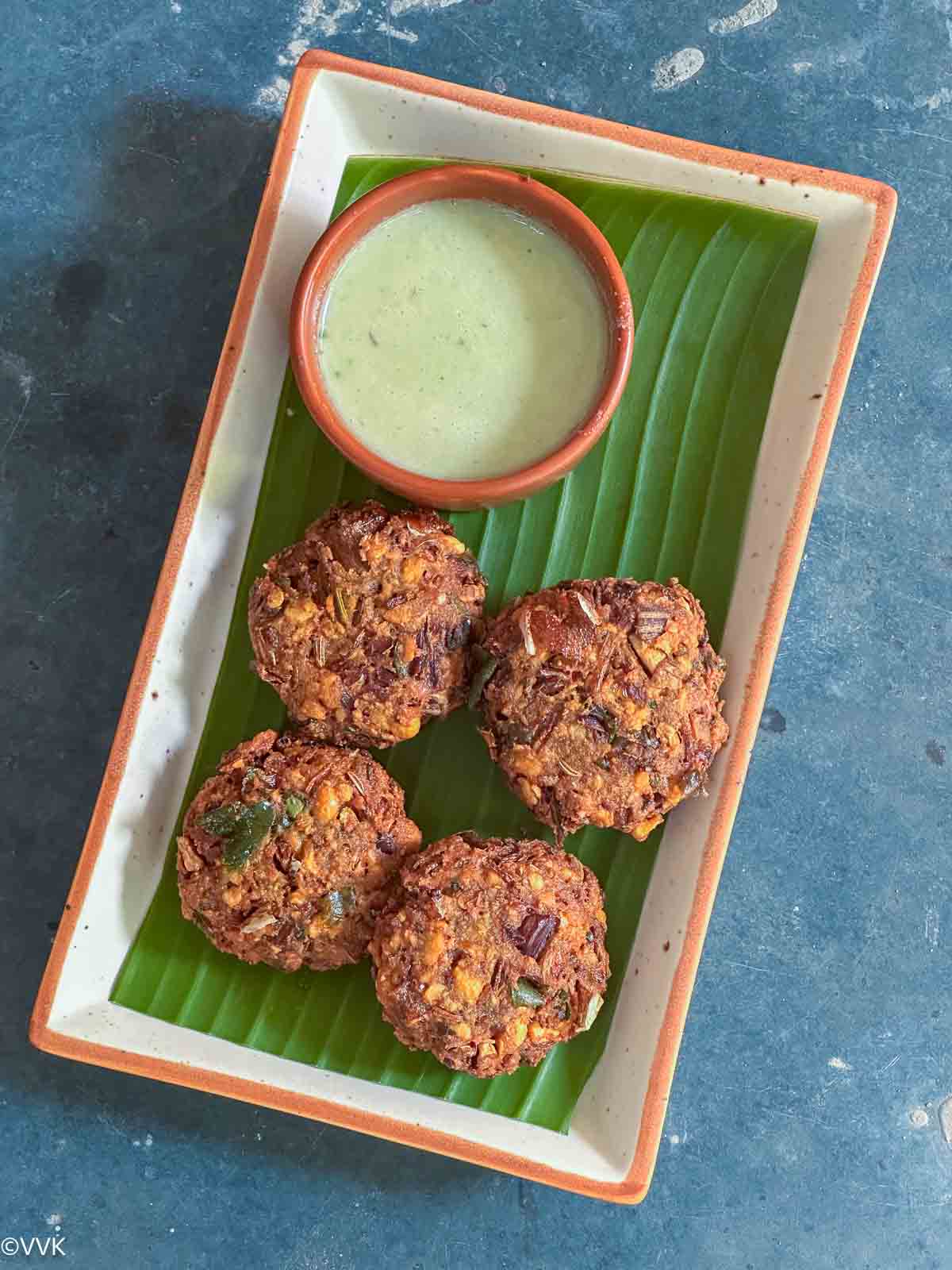
Have you tried making vadai at home with banana blossom? This vaazhai poo vadai is one of those recipes that looks impressive but is surprisingly simple to put together once you have the banana blossom cleaned and ready — and it’s completely vegan, can be easily made gluten-free, and nut-free.
Jump to:
- Vadai — The Lentil Fritters
- What Is a Banana Blossom or Banana Flower?
- How to Clean and Prep the Banana Flower
- Dietary Specifications
- Storage Suggestions
- Ingredients Required
- How to Make Vaazhai Poo Vadai
- Recipe Notes
- Frequently Asked Questions
- More Appetizers From My Archives
- 📖 Recipe
- Vaazhai Poo Vadai | Crispy Banana Flower Vadai Recipe
Vadai — The Lentil Fritters
Vadai is a general term for deep-fried lentil fritters. We have ulundu vadai or medu vadai, which uses urad dal; thavala vadai, which uses a combination of lentils; and masala vadai, which predominantly uses chana dal, the Indian split chickpea. With the basic recipes, you can make several variations — vadai without onion and garlic, which are perfect for auspicious days; masala vadai with the flavors of fennel and onion, which makes it perfect for vadacurry; or this vazhaipoo vadai, the same base but with the goodness of banana blossom.
Vadai can be an evening tiffin, perfect with tea or coffee, served as a starter, or as part of your full-course meal — aka the Indian thali.
What Is a Banana Blossom or Banana Flower?
If there is one plant whose every part can be used, it would be the banana. While it yields delicious fruits, its flowers are edible too. The stem — the tender part — is what we call vaazhai thandu. The hard parts are cut into fibers used to tie garlands. While the leaves are not edible, they are the most natural serving plate — in South India, a typical thali is served on a banana leaf.
So, what exactly is a banana blossom? They are the large, dark purple, teardrop- or cone-shaped flowers that grow at the end of a banana bunch on the plant. Also known as a “banana heart,” banana blossom is commonly used as a vegetable in Southeast Asian and Indian cuisine. It is edible, highly nutritious, slightly bitter, and starchy. The florets need to be cleaned thoroughly before cooking.
Banana flowers are rich in vitamins C and E, flavonoids, protein, and minerals like potassium, calcium, iron, copper, phosphorus, and magnesium, and are a good source of dietary fiber. The high magnesium content helps boost mood and reduce anxiety, and it also helps regulate blood pressure. (Referred here)
How to Clean and Prep the Banana Flower
I won’t deny it — it’s not a quick task. It’s easy enough, but it’s definitely time-consuming. No pain, no gain. To reap all its benefits, we need to set aside some time.
Banana flower can stain your hands and get slightly sticky, so apply a little oil to your palms before you start.
- Remove the outer purple layer — inside, you’ll find the banana florets. Pull them away from the bottom part.
- Rub them between your palms until the flowers open, then remove the stamens. This is the tedious part.
- Keep repeating the above two steps until you reach the center. As you work inward, opening the flowers and removing the stamens gets harder — you can skip that part, since the inner ones are very tender and fully edible, unlike the outer layers.
- Chop the cleaned flowers. Since they darken quickly, it’s better to store them in turmeric water or buttermilk water until ready to use.
I made a short video years ago — here it is to help you understand the process.
Love cooking with banana blossom? Try my vazhaipoo usili too —it’s simple and satisfying.
Dietary Specifications
This vaazhai poo vadai is naturally vegan. For a nut-free version, swap the peanut oil with any vegetable oil. For a gluten-free version, use gluten-free asafoetida or skip it altogether.
Storage Suggestions
Like all deep-fried goodies, these vadai are best enjoyed hot and fresh, when they’re at their crispiest. If you’re making a big batch, you can refrigerate the leftovers and reheat them in a microwave — just know they won’t be as crisp. Prefer the oven? Bake at 375°F for 10 minutes, flipping halfway through. I’ve never frozen them, so I can’t vouch for that. And if you find yourself with just 5 or 6 vadai left — which is why I always make extra on purpose — use them to make vadacurry!
Ingredients Required
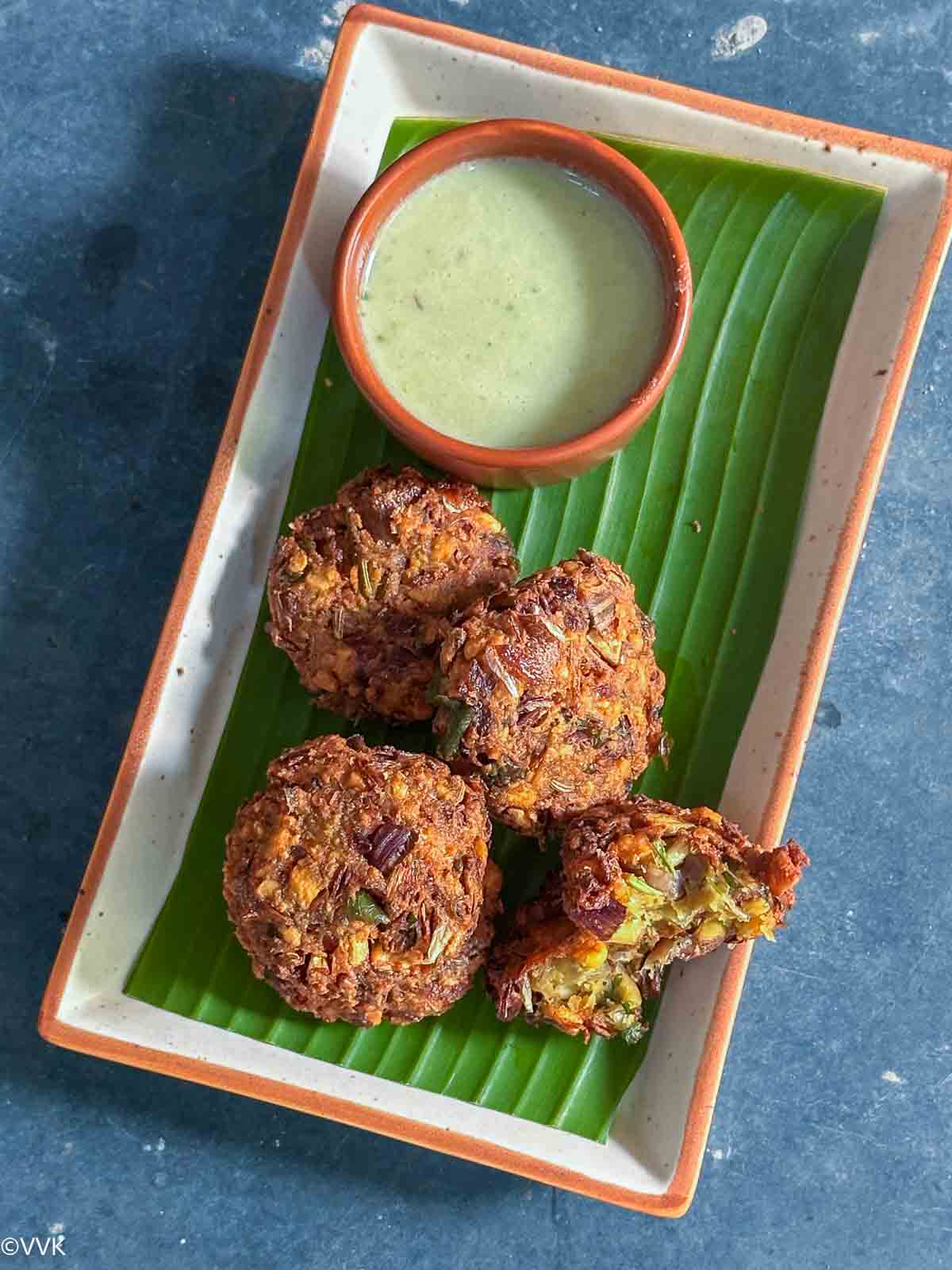
Chana dal — The base of the vadai. Soaking it for an hour is key to getting that coarse grind that holds the shape without being pasty.
Banana blossom (vazhaipoo) — The star ingredient! Clean it thoroughly, removing the stamens before chopping. You’ll add it in two parts — a little goes into the grinder, and the rest is mixed in by hand for texture.
Dried red chilies — Soaked along with the dal for heat. Adjust the quantity to your preferred spice level.
Fennel seeds — Adds a subtle sweetness and that classic South Indian vadai aroma.
Onion & fresh herbs — Chopped onion, cilantro, and curry leaves are folded in at the end for freshness and crunch.
Rice flour — Just half a tablespoon to help bind the mixture and keep the vadai crispy.
Spices — Turmeric and a pinch of hing round out the flavor. Simple but essential.
Oil — For deep frying. Medium-low heat is the secret to getting them evenly golden without burning. I usually use cold-pressed peanut oil.
How to Make Vaazhai Poo Vadai
- Soak chana dal and dried red chilies together for 1 hour. Drain completely.
- Add the drained dal to a mixer jar along with fennel seeds, salt, ¼ cup banana blossom, turmeric, and hing. Grind coarsely — no water needed.
- Transfer the ground mixture to a bowl. Mix in the remaining ¾ cup of banana blossom, chopped onion, cilantro, curry leaves, and rice flour. The mixture should hold together without any water.
- Wet your palms and pinch small lemon-sized portions of the mixture. Shape each into a small disc.
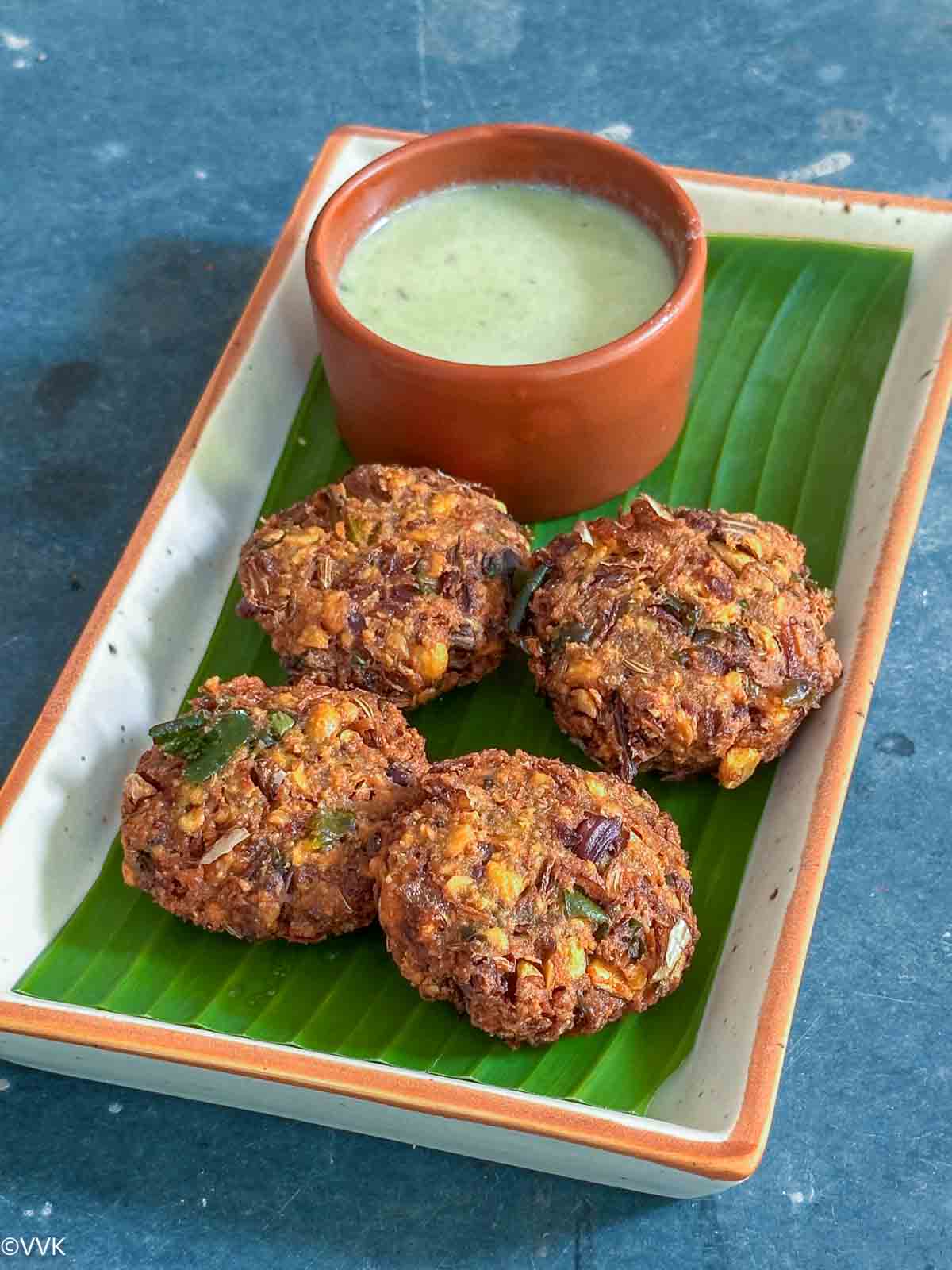
- Deep-fry on medium-low heat until golden and the bubbling slows. Serve hot and crispy with coconut chutney, or enjoy as is.
Recipe Notes
- Adjust the salt and spices to taste.
- I haven’t added garlic, but finely chopped or grated garlic can be used. I would add just one big garlic clove.
- Make sure you deep-fry on medium-low heat, slowly flipping and cooking until the bubbling stops. Don’t rush this process or overcrowd the pan.
- While grinding, do not add water and grind the vazhai poo masala vadai batter coarsely.
If you plan to bake:
- Preheat the oven to 375°F.
- Prepare the mixture as above. Wet your palms, pinch small lemon-sized portions, and shape into discs. When baking, flatten them slightly thinner than you would for deep-frying. Place on a baking tray lined with parchment paper or greased aluminum foil.
- Bake for 15 minutes, flip, spray again, and bake for another 10 minutes or until crisp.
Frequently Asked Questions
Yes, you can! A mix of cabbage and carrots works well — though I wouldn’t grind them, just fold them in directly. You can also make it without any vegetables, but adjust the spices accordingly.
Rice flour is added to make the vadai extra crispy. Since we already use chana dal (which is essentially chickpea), I’d recommend sticking with rice flour for the best texture.
I wouldn’t recommend it. I tried it once, and it was a disaster — the canned version uses the inner part of the flower, which is very soft and simply won’t hold its shape in the vadai.
The key is not to add any water while grinding. The moisture from the soaked dal and banana blossom is more than sufficient. If needed, drizzle in just a tablespoon of water. If the batter still feels too loose, add a little more rice flour until it comes together and holds its shape.
I haven’t personally tried air frying these, but if you do, try 375°F for 12-15 minutes, flipping halfway through. Since air fryers vary, keep a close eye on them. If you give it a go, let me know in the comments how it turned out!
More Appetizers From My Archives

Loved this recipe?
If you try this vazhai poo vadai recipe, please leave a comment and rate the recipe. If you have questions, drop them in the comments, and I’ll respond as soon as possible. Follow me on Pinterest for more healthy, delicious ideas, and on Instagram for regular updates, behind-the-scenes moments, and a peek into my kitchen!
📖 Recipe
Vaazhai Poo Vadai | Crispy Banana Flower Vadai Recipe
Ingredients
Measurement Details: 1 cup = 240ml; 1 tbsp = 15ml; 1tsp = 5ml;
Instructions
- Soak chana dal and dried red chilies together for 1 hour. Drain completely.
- Add the drained dal to a mixer jar along with fennel seeds, salt, ¼ cup banana blossom, turmeric, and hing. Grind coarsely — no water needed.
- Transfer the ground mixture to a bowl. Mix in the remaining ¾ cup of banana blossom, chopped onion, cilantro, curry leaves, and rice flour. The mixture should hold together without any water.
- Wet your palms and pinch small lemon-sized portions of the mixture. Shape each into a small disc.
- Deep-fry on medium-low heat until golden and the bubbling slows. Serve hot and crispy with coconut chutney, or enjoy as is.
Video
Notes
- Adjust the salt and spices to taste.
- I haven’t added garlic, but finely chopped or grated garlic can be used. I would add just one big garlic clove.
- Make sure you deep-fry on medium-low heat, slowly flipping and cooking until the bubbling stops. Don’t rush this process or overcrowd the pan.
- While grinding, do not add water and grind the masala vadai batter coarsely.
Nutrition
I am not a nutritionist. The nutritional information is provided as a courtesy and is an estimate only. It varies depending upon the product types or brands.


These are really good. I’ve never had anything like them before. This is why I love your site so much.
Thanks :-)
You had me at “deep fried” and “falafel”. Made this last night, and it’s amazing.
Thanks so much
These look really good. I can’t wait to make them.
Thanks
I would love to try this! I definitely need to locate some of these ingredients…Indian food is so delicious and comforting!
Thanks a lot.
I tried this recipe for the first time and was amazed by the crispy texture. The spices gave the vadai such wonderful flavor!
Thank you
This was clear and practical on “Vaazhai Poo Vadai Crispy Banana Flower Vadai Recipe”. I liked the step-by-step details.