

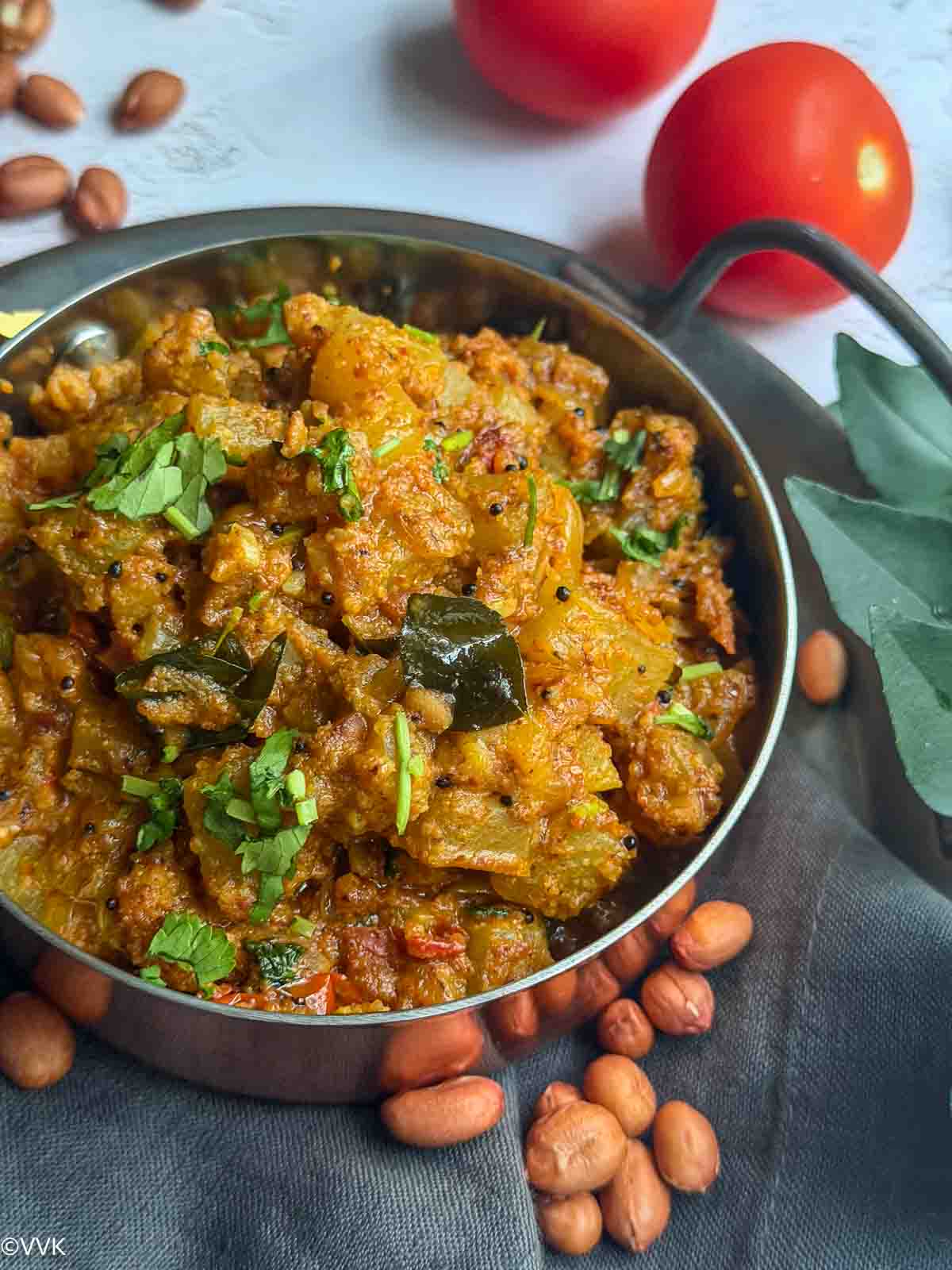
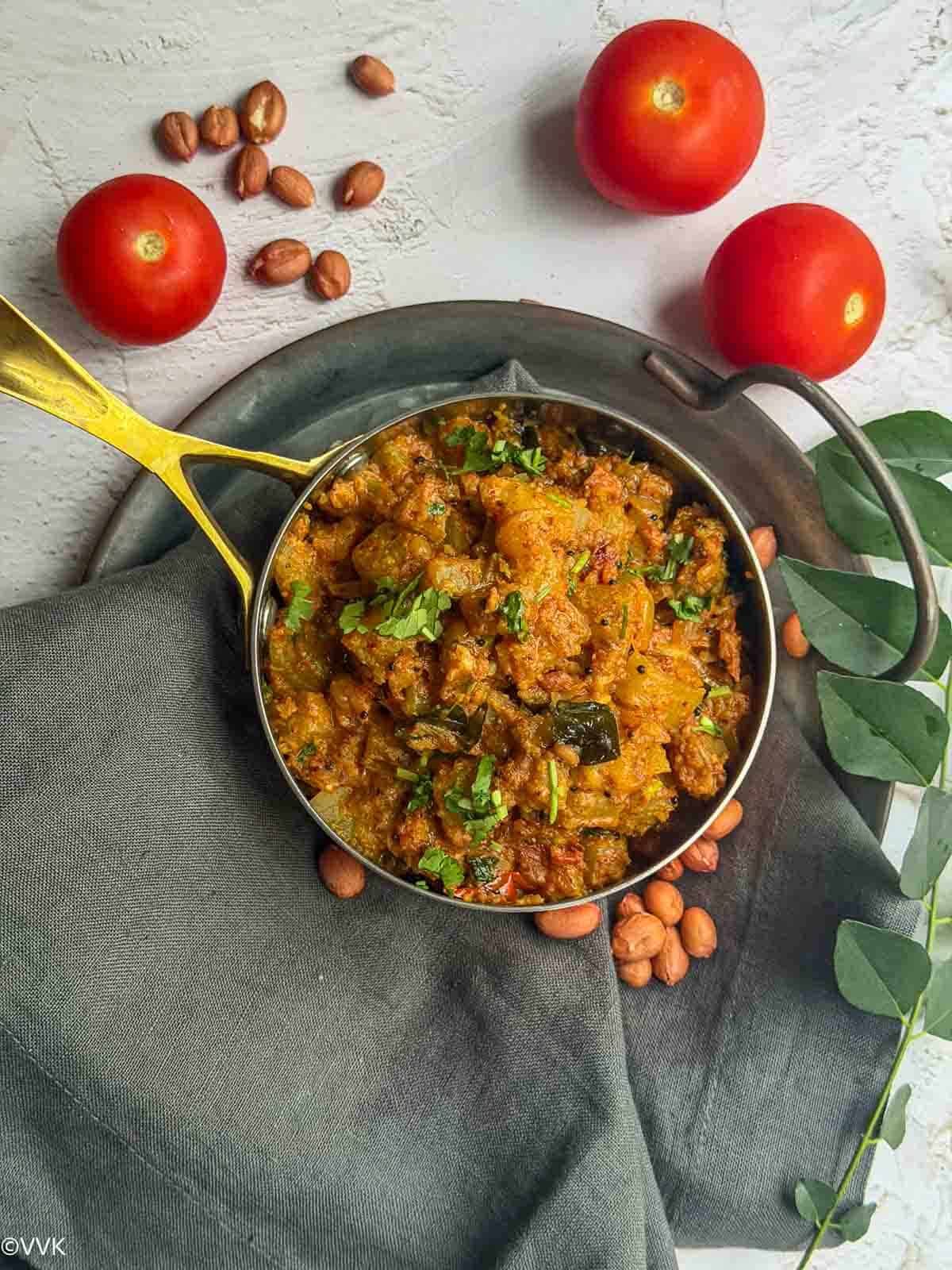
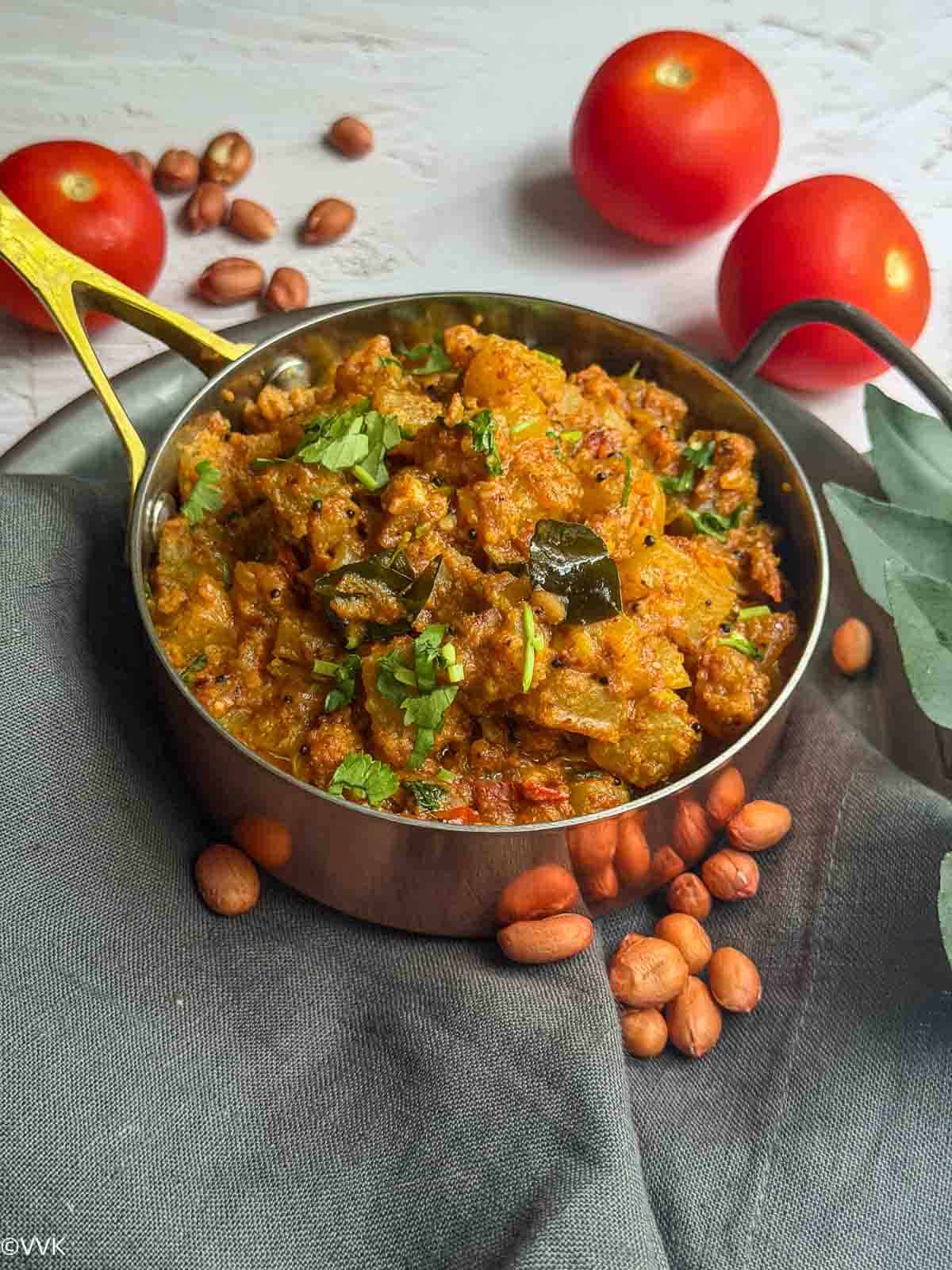
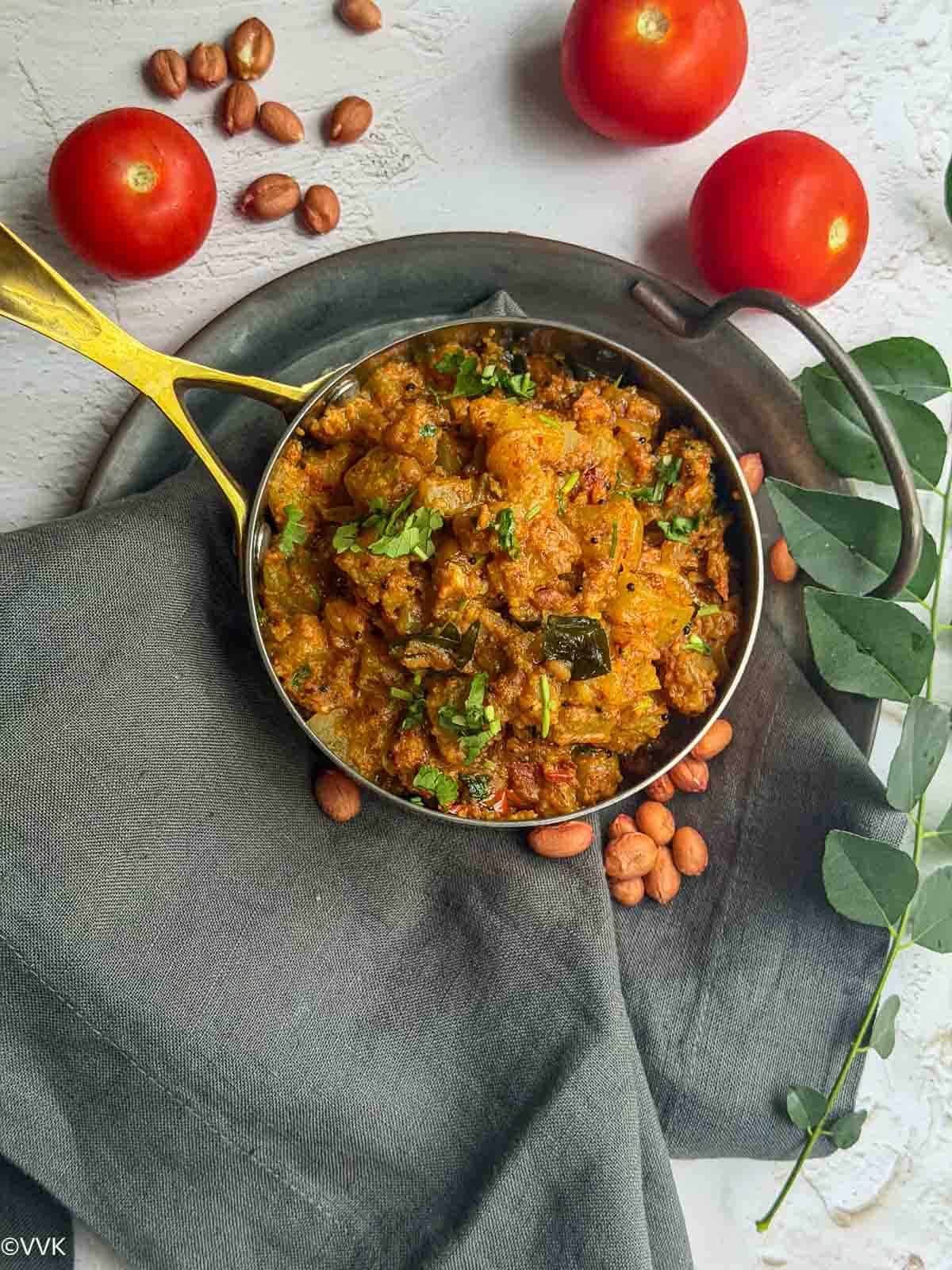
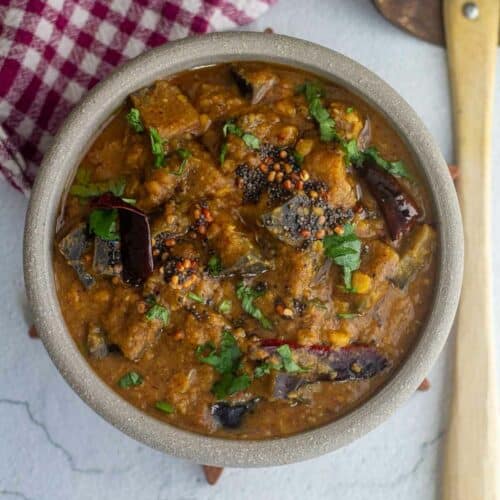
Sorakkai verkadalai masala is a nutty, creamy Tamil Nadu-style bottle gourd curry made with roasted peanuts. This easy South Indian bottle gourd recipe goes well with both rice and roti. I’ve added a detailed video, plus how to turn this sorakkai poriyal into a gravy.
Jump to:
- How This Sorakkai Masala Came About
- All About Bottle Gourd (Sorakkai)
- Ingredients for Sorakkai Verkadalai Masala
- Dietary Info and Storage
- What to Serve with Sorakkai Masala
- How to Make Bottle Gourd Peanut Masala
- Recipe Notes
- VVK Tips For The Best Texture
- Frequently Asked Questions
- More South Indian Curries
- 📖 Recipe
How This Sorakkai Masala Came About
If you follow me on Instagram or my Tamil YouTube channel, you already know I’ve had a big bottle gourd harvest this year. So far I’ve shared doodhi muthiyas (Steamed bottle gourd dumplings) (doodhi is bottle gourd in Hindi), and bottle gourd masala dosa. I was still looking for new ways to use it when this sorakkai verkadalai masala showed up on YouTube Shorts. I made a note of it right away.
I’m not sure if it’s trending. But I saw so many versions of the bottle gourd and peanut combo that I couldn’t credit just one. So this is my take, inspired by all of them. You can also call it sorakkai verkadalai pirattal or sorakkai poriyal. It’s a semi-dry curry. Want it as a gravy? Check the variation section below.
Honestly, I was a bit skeptical the first time I tested it. I love bottle gourd. I love peanuts. Together? I wasn’t sure. But it turned out delicious. I really liked the texture and the flavor. We had it with roti and with rice, and it was amazing with both. I tweaked the spices and the method and kept it one-pot. This is my version of this bottle gourd masala.
All About Bottle Gourd (Sorakkai)
Bottle gourd is also called calabash. In Tamil, it’s sorakkai. It’s also called as lauki, doodhi and opo squash. Bottle gourd is mostly water, so it’s light and low in calories. It also has fiber, vitamin C, and potassium. It’s easy to digest, which is why it shows up so often in everyday South Indian cooking. Pairing it with peanuts adds plant protein and healthy fats, so this curry is more filling than a regular sorakkai poriyal.
Shapes and varieties
- Long bottle gourd — The most common kind in Indian stores. Straight or slightly curved, light green, and smooth. This is what I grow.
- Round bottle gourd — Short and round, almost like a small pumpkin. Same taste, just a different shape.
- Bottle or flask-shaped — Narrow at the top and wide at the bottom. This shape gives the gourd its name.
Once fully mature and dried, the shell turns hard. That’s why dried gourds have long been used as water containers.
How to pick a good one
Look for light green, smooth skin with no soft spots. It should feel firm and heavy for its size. If your fingernail goes into the skin easily, it’s tender. Tender bottle gourd has soft seeds, so you don’t need to remove them.
A quick note on bitterness
Always taste a tiny piece of raw bottle gourd before cooking. If it’s bitter, throw it out. Don’t cook it. Bitter bottle gourd can make you sick.
How to peel and cut bottle gourd
Wash and trim both ends. Peel with a regular vegetable peeler. Cut it in half lengthwise, then into strips and small cubes. If the seeds are hard, scoop them out. Tender ones can go in as is.
Ingredients for Sorakkai Verkadalai Masala
- Bottle gourd — The star ingredient. I’m using my homegrown long bottle gourd, but any shape works.
- Peanuts — The other star. Peanuts and bottle gourd together are what make this curry special.
- Dried red chilies — Roast these with the peanuts, then grind them together to spice the curry. Kashmiri or byadgi chilies also give it a lovely color. Adjust to your taste and the variety you have.
- To temper — The usual. Peanut oil (or any oil you like), mustard seeds, urad dal, and chana dal.
- Aromatics — Just onion. No garlic, no ginger-garlic paste.
- Tomatoes — They add tang and color, and help bind everything together with the peanuts.
- Spices — Along with the dried red chilies, I use Kashmiri red chili powder and turmeric powder for color.
- Herbs — Curry leaves and cilantro.
You’ll also need water and salt. Check the recipe card for exact measurements.
Dietary Info and Storage
This sorakkai poriyal is naturally vegan and gluten-free. Just make sure your asafoetida is gluten-free. I haven’t tried freezing it. It keeps in the fridge for 2-3 days.
What to Serve with Sorakkai Masala
- Roti and raita
- Jeera rice and raita
- Plain steamed rice and raita
- Sambar and rice
- Rasam and rice
How to Make Bottle Gourd Peanut Masala
- Dry roast ½ cup peanuts with 2 dried red chilies. Grind into a coarse powder.
- Heat 2 teaspoons of oil. Temper mustard seeds, urad dal, chana dal, and a pinch of asafoetida.
- Add the onions and curry leaves. Sauté until soft.
- Add 2 small tomatoes and salt. Cook until the tomatoes turn completely mushy. That’s where the flavor builds.
- Add turmeric and red chili powder. Mix, cover, and cook for 2 minutes.
- Add the chopped bottle gourd with ¼ cup water. Cover and cook until soft.
- Now for the best part. Add the roasted peanut powder and mix well. Add ¼ cup more water to bring it together.
- Finish with fresh cilantro. That’s it, your masala is ready. Enjoy.
Recipe Notes
- Adjust salt and spices to taste.
- You don’t need both dried red chilies and red chili powder. I use 2 regular dried chilies for heat and Kashmiri chili powder for color. You can skip the dried chilies and use 1 tsp regular red chili powder plus ½ tsp Kashmiri chili powder. Or use 2 dried red chilies plus 1 Kashmiri or byadgi chili for color.
- I did add garam masala when testing. But I wanted the bottle gourd flavor to come through, so I skipped it here and kept the spices light. You can still add ½ tsp if you like.
- I didn’t use garlic. You can add 2 small crushed garlic cloves or 1 tsp ginger-garlic paste.
- To make it a gravy:
- Set aside a few whole roasted peanuts before grinding.
- Once the bottle gourd softens, add ½ cup coconut milk and ½ cup water toward the end, instead of ¼ cup water.
- You can also add ½ tsp garam masala for the gravy version.
VVK Tips For The Best Texture
- Grind the peanuts coarsely, in short pulses. Over-grinding turns them into peanut butter.
- Bottle gourd releases water as it cooks, so add water only a little at a time.
- Don’t overcook it. It should be soft but still hold its shape.
Frequently Asked Questions
A classic sorakkai poriyal is a dry stir-fry, usually finished with coconut. This masala uses tomatoes and roasted peanut powder, so it’s semi-dry and a little saucy. It works as a side for rice and as a curry for roti.
I peel it for this recipe. The skin can be tough, especially on bigger gourds.
Bitterness comes from natural compounds in the gourd. Don’t cook or eat bitter bottle gourd. Taste a small raw piece before cooking and discard it if it’s bitter.
Yes. Just roast the dried red chilies separately, and reduce the salt if the peanuts are salted.
Yes, the same method works with chow chow (chayote), zucchini, ash gourd, or ridge gourd. Cooking time will vary.
More South Indian Curries
Loved this recipe?
If you try this bottle gourd masala, please leave a comment and rate the recipe below — it helps more than you know. Got a question? Drop it in the comments, and I’ll get to it ASAP. Follow me on Pinterest for more healthy and delicious ideas, and on Instagram for the latest from my kitchen.
📖 Recipe
Sorakkai Verkadalai Masala | South Indian Bottle Gourd Recipe
Ingredients
Measurement Details: 1 cup = 240ml; 1 tbsp = 15ml; 1 tsp = 5ml;
To roast and grind
- ½ cup peanuts
- 2 dried red chilies
To temper
- 2 tsp oil
- ½ tsp mustard seeds
- ½ tsp urad dal
- ½ tsp chana dal
- ¼ tsp asafoetida
Other ingredients
- 100 grams onion about ⅔ cup
- 10 curry leaves
- 90 grams tomatoes 2 small tomatoes
- 1.25 tsp salt or to taste
- ½ tsp turmeric powder
- ½ tsp red chili powder I used Kashmiri red chili powder
- 300 grams bottle gourd peeled and cubed
- ½ cup water divided
- 2 tbsp cilantro
Instructions
- Dry roast ½ cup peanuts with 2 dried red chilies. Grind into a coarse powder.
- Heat 2 teaspoons of oil. Temper mustard seeds, urad dal, chana dal, and a pinch of asafoetida.
- Add the onions and curry leaves. Sauté until soft.
- Add 2 small tomatoes and salt. Cook until the tomatoes turn completely mushy. That’s where the flavor builds.
- Add turmeric and red chili powder. Mix, cover, and cook for 2 minutes.
- Add the chopped bottle gourd with ¼ cup water. Cover and cook until soft.
- Now for the best part. Add the roasted peanut powder and mix well. Add ¼ cup more water to bring it together.
- Finish with fresh cilantro. That’s it, your masala is ready. Enjoy.
Notes
- Adjust salt and spices to taste.
- You don’t need both dried red chilies and red chili powder. I use 2 regular dried chilies for heat and Kashmiri chili powder for color. You can skip the dried chilies and use 1 tsp regular red chili powder plus ½ tsp Kashmiri chili powder. Or use 2 dried red chilies plus 1 Kashmiri or byadgi chili for color.
- I did add garam masala when testing. But I wanted the bottle gourd flavor to come through, so I skipped it here and kept the spices light. You can still add ½ tsp if you like.
- I didn’t use garlic. You can add 2 small crushed garlic cloves or 1 tsp ginger-garlic paste.
- To make it a gravy:
- Set aside a few whole roasted peanuts before grinding.
- Once the bottle gourd softens, add ½ cup coconut milk and ½ cup water toward the end, instead of ¼ cup water.
- You can also add ½ tsp garam masala for the gravy version.
Nutrition
I am not a nutritionist. The nutritional information is provided as a courtesy and is an estimate only. It varies depending upon the product types or brands.


Leave a Reply