

Palakottai sambar is a comforting Tamil Nadu-style jackfruit seeds sambar simmered with toor dal, tamarind, and aromatic spices. Naturally vegan and simple to make.
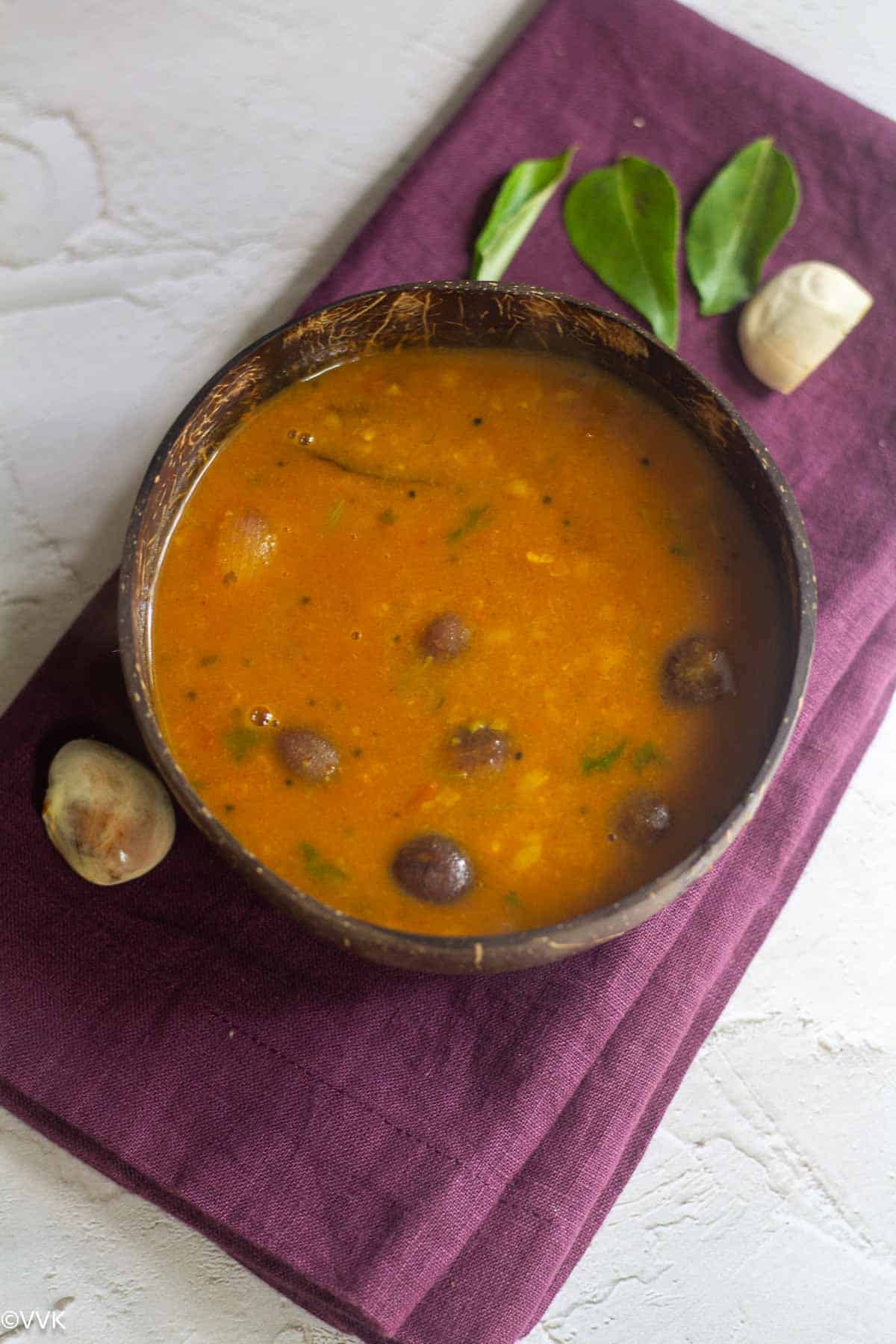
Nothing goes to waste in an Indian kitchen. We use as much as we can, and jackfruit seeds are a perfect example. This palakottai sambar turns those humble seeds into a comforting, flavor-packed jackfruit seed sambar — and you’ll see how a few simple ingredients can bring subtle but delicious changes to every spoonful.
Jump to:
Jackfruit grows everywhere in Kerala and Tamil Nadu. It’s that common. I grew up on mangoes and jackfruit, and those two fruits still mean summer to me. The tender, unripe jackfruit makes some really good dishes, and lately everyone knows it as mock meat too. If you haven’t tried it that way, take a look at my tender jackfruit curry and tender jackfruit biryani.
But my favorite part of the jackfruit is actually the seeds. I buy the whole fruit whenever it’s in season — this time I found one at Costco — and once we finish the fruit, I never throw the seeds away. That’s just how we cook. We use everything. And those saved seeds are exactly what go into this sambar.
About Jackfruit Seeds (Palakottai)
Now, jackfruit itself may not be the best fruit if you’re watching your sugar, but the seeds are good for everyone. They’re full of fiber and resistant starch, with a decent amount of B vitamins and a few minerals too.
Once boiled, the seeds taste like potatoes—soft and creamy. That’s why they work so well in curries and gravies. I pressure-cook mine until they turn soft and tender. One thing to remember: peel off the hard outer skin. The thin layer underneath is edible, so don’t worry about it.
Storing Jackfruit Seeds
The seeds are sticky when they’re fresh, so I wash them well in warm water first. Then I sun-dry them for a couple of days and put them in the fridge. After that, they’re ready whenever I need them — I boil or dry-roast them depending on the recipe. I always keep some jackfruit seeds in stock at home. You’ll also see them in my jackfruit seed kootu and thoran.
Ingredients Required
Toor dal — The creamy base of the sambar. Pressure-cook it until soft, then mash it smooth so it blends right into the gravy.
Jackfruit seeds (palakottai) — The star of the dish. Pressure-cook and peel them, then chop into bite-sized pieces so they soak up all the flavor.
Tempering — mustard seeds, fenugreek seeds, cinnamon, curry leaves, shallots, and asafoetida — This is where the aroma comes from. The mustard and fenugreek splutter first, then the shallots and spices build the base. Cinnamon is optional, but it adds a lovely, subtle warmth.
Tomato — Cooked down until mushy to give the gravy body and a mild tang.
Sambar powder & red chili powder — The flavor backbone. Sambar powder brings that classic depth, while red chili powder adds heat you can adjust to taste.
Tamarind paste — The signature sour note every good sambar needs.
Rice flour — Just a teaspoon to thicken the sambar. Skip it if you prefer a thinner consistency.
Coconut milk — Optional, but it rounds out the sambar with a subtle richness.
Jaggery — A little touch of sweetness to balance the tang and spice.
Cilantro — Stirred in at the end for a fresh finish.
Please check the recipe card for exact measurements.
Dietary Specifications
This jackfruit seed sambar is naturally vegan and nut-free. To keep it gluten-free, skip the asafoetida or use a gluten-free asafoetida instead.
Storage Suggestions
Store this sambar in the fridge for up to 2 days. I haven’t tried freezing it, so I can’t vouch for how it holds up.
Serving Suggestions
Enjoy this palakottai sambar over hot rice with a dry curry on the side — cabbage poriyal or beetroot poriyal are lovely — or pair it with a kootu like chow chow kootu or radish kootu. It’s also great alongside a cooling raita such as cucumber raita or zucchini raita. Any of these combos makes for a truly comforting meal.
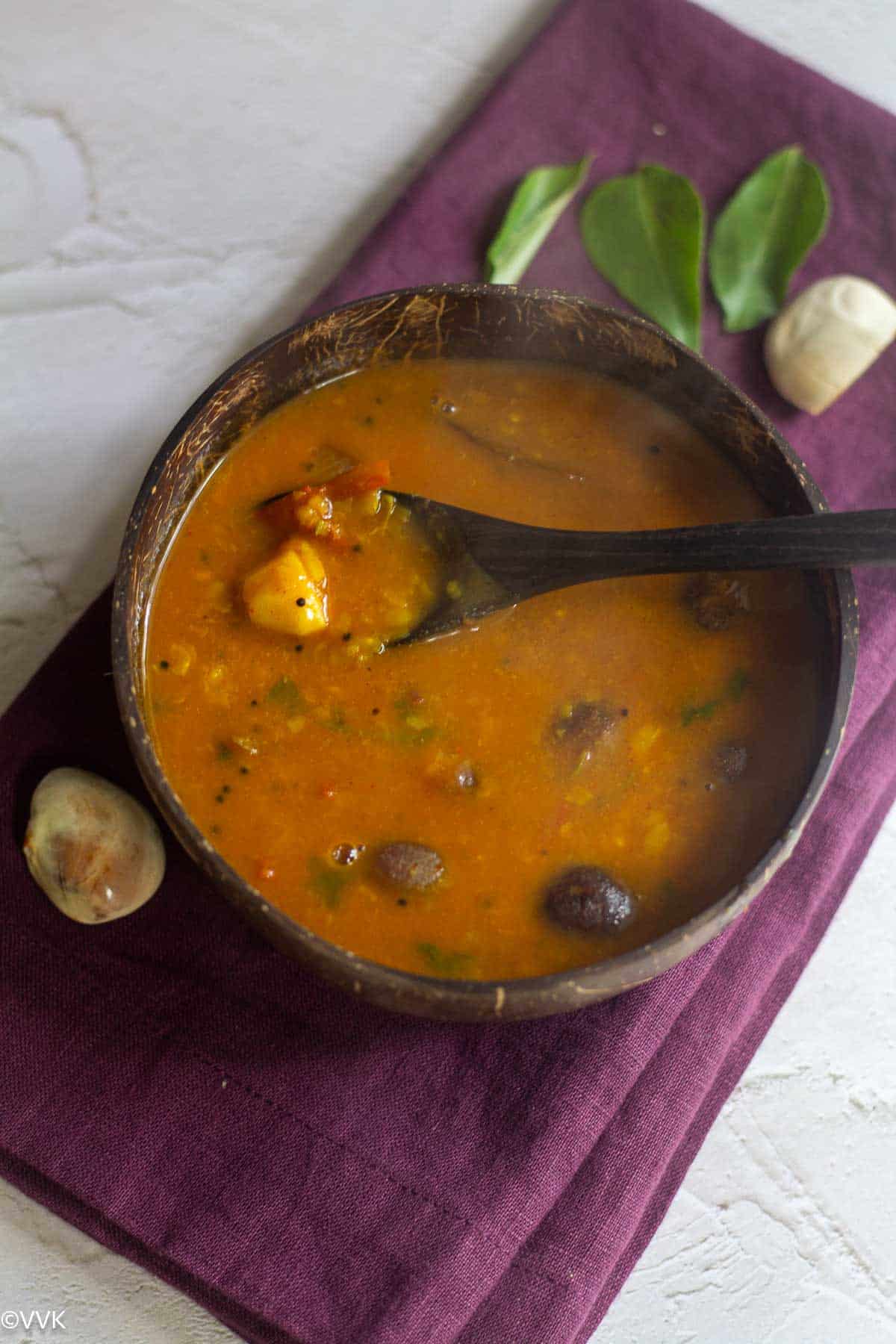
How to Make Palakottai Sambar (Jackfruit Seeds Sambar)
- I usually pressure-cook my dal and jackfruit seeds separately using stackable pots, as shown in the video. In the stackable pressure cooker pot, add the rinsed toor dal, gingelly oil, turmeric powder, and 1.5 cups of water. Now place a small trivet, and in a small bowl add the jackfruit seeds and ½ cup water. Pressure cook for 3 whistles and let the pressure release naturally.
- Once the pressure releases, peel the white layer off the jackfruit seeds. It comes away easily after pressure cooking — if it’s slimy or hard, a peeler works too. Chop the seeds into bite-sized pieces.
- Heat a pan and add the coconut oil. When the oil is hot, add the mustard seeds and fenugreek seeds and let the mustard seeds splutter. Now add the cinnamon piece, curry leaves, shallots, and asafoetida. Sauté until the shallots soften slightly.
- Add the chopped tomatoes, cover, and cook until mushy.
- Add the sambar powder, red chili powder, and salt, and mix well. Roast the spices for 30 seconds, then stir in the 1.5 tsp tamarind paste mixed with 1 cup of water. Add the jackfruit seeds too and let them soak up all the flavors. Bring it to a gentle boil.
- Add the rice flour and coconut milk to the cooked toor dal and mash well.
- Add this dal to the sambar along with the cilantro and mix well. Pour in ½ cup more water and the jaggery, bring to a boil, then turn off the heat. Your palakottai sambar is ready — enjoy it with any dry curry or kootu.
Recipe Notes
- Adjust the salt and spices to taste.
- Cinnamon and coconut milk are optional. They add a subtle flavor that enhances the sambar.
- Add the rice flour to thicken the sambar. If you prefer a thinner sambar, you can skip it.
- Along with jackfruit seeds, you can add brinjal or drumstick.
- If you have roasted fenugreek seed powder, add ½ tsp towards the end.
Frequently Asked Questions
While the jackfruit fruit itself isn’t always ideal for those managing diabetes, the seeds suit just about everyone. They’re rich in fiber and resistant starch, with a fair amount of B vitamins and small amounts of minerals.
Once boiled, jackfruit seeds taste a lot like potatoes — soft and creamy — which makes them perfect for folding into curries and gravies like this sambar.
Wash the seeds well in warm water to remove the stickiness, sun-dry them for a couple of days, then refrigerate. Whenever you need them, boil or dry-roast them according to your recipe.
Yes, this jackfruit seeds sambar is naturally vegan and nut-free. To make it gluten-free, skip the asafoetida or use a gluten-free asafoetida.
Absolutely. Along with the jackfruit seeds, you can add brinjal or drumstick.
It keeps in the fridge for up to 2 days. I haven’t tried freezing it.
More Sambar Varieties
Loved this recipe?
If you try this palakottai sambar recipe, please leave a comment and rate the recipe. If you have questions, drop them in the comments, and I’ll respond as soon as possible. Follow me on Pinterest for more healthy, delicious ideas, and on Instagram for regular updates, behind-the-scenes moments, and a peek into my kitchen!
📖 Recipe
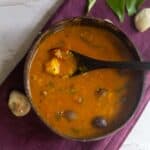
Palakottai Sambar | Jackfruit Seeds Sambar Recipe
Ingredients
Measurement Details: 1 cup = 240ml; 1 tbsp = 15ml; 1 tsp = 5ml;
To pressure cook the dal
- ⅓ cup toor dal
- ¼ tsp oil
- ¼ tsp turmeric powder
- 1.5 cups water
To pressure cook the jackfruit seeds
- 12 to 15 jackfruit seeds
- ½ cup water
For the sambar
- 1 tbsp coconut oil
- ½ tsp mustard seeds
- ½ tsp fenugreek seeds
- 1- inch cinnamon piece
- 10 curry leaves
- 10 shallots
- ¼ tsp asafoetida
- 75 grams tomato chopped (approx 1 cup)
- 1 tbsp sambar powder
- 1 tsp red chili powder
- 2 tsp salt or to taste
- 1.5 tsp tamarind paste
- 1.5 cups water divided
- 1 tsp rice flour
- 2 tbsp coconut milk
- 1 tsp jaggery
- 1 tbsp cilantro chopped
Instructions
- I usually pressure-cook my dal and jackfruit seeds separately using stackable pots, as shown in the video. In the stackable pressure cooker pot, add the rinsed toor dal, gingelly oil, turmeric powder, and 1.5 cups of water. Now place a small trivet, and in a small bowl add the jackfruit seeds and ½ cup water. Pressure cook for 3 whistles and let the pressure release naturally.
- Once the pressure releases, peel the white layer off the jackfruit seeds. It comes away easily after pressure cooking — if it’s slimy or hard, a peeler works too. Chop the seeds into bite-sized pieces.
- Heat a pan and add the coconut oil. When the oil is hot, add the mustard seeds and fenugreek seeds and let the mustard seeds splutter. Now add the cinnamon piece, curry leaves, shallots, and asafoetida. Sauté until the shallots soften slightly.
- Add the chopped tomatoes, cover, and cook until mushy.
- Add the sambar powder, red chili powder, and salt, and mix well. Roast the spices for 30 seconds, then stir in the 1.5 tsp tamarind paste mixed with 1 cup of water. Add the jackfruit seeds too and let them soak up all the flavors. Bring it to a gentle boil.
- Add the rice flour and coconut milk to the cooked toor dal and mash well.
- Add this dal to the sambar along with the cilantro and mix well. Pour in ½ cup more water and the jaggery, bring to a boil, then turn off the heat. Your palakottai sambar is ready — enjoy it with any dry curry or kootu.
Video
Notes
- Adjust the salt and spices to taste.
- Cinnamon and coconut milk are optional. They add a subtle flavor that enhances the sambar.
- Add the rice flour to thicken the sambar. If you prefer a thinner sambar, you can skip it.
- Along with jackfruit seeds, you can add brinjal or drumstick.
- If you have roasted fenugreek seed powder, add ½ tsp towards the end.
Nutrition
I am not a nutritionist. The nutritional information is provided as a courtesy and is an estimate only. It varies depending upon the product types or brands.


Such a helpful recipe! The steps are explained very clearly and are easy to follow.
How exotic! I didn’t even know that jackfruit seeds were edible…now I need to find some to try this sambar!