

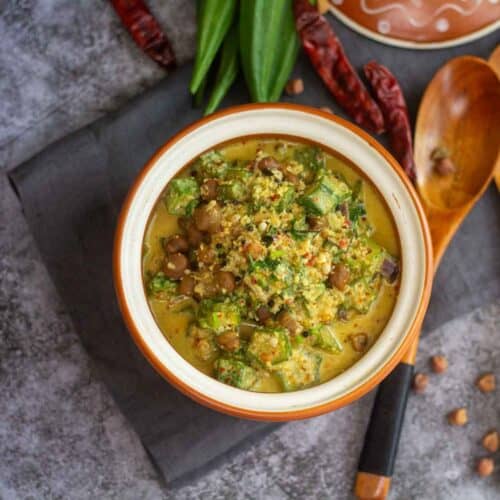
South Indian radish kootu made poricha kootu style with daikon radish, moong dal, chana dal, and a freshly roasted coconut masala. Vegan, nut-free, and perfect with steamed rice.
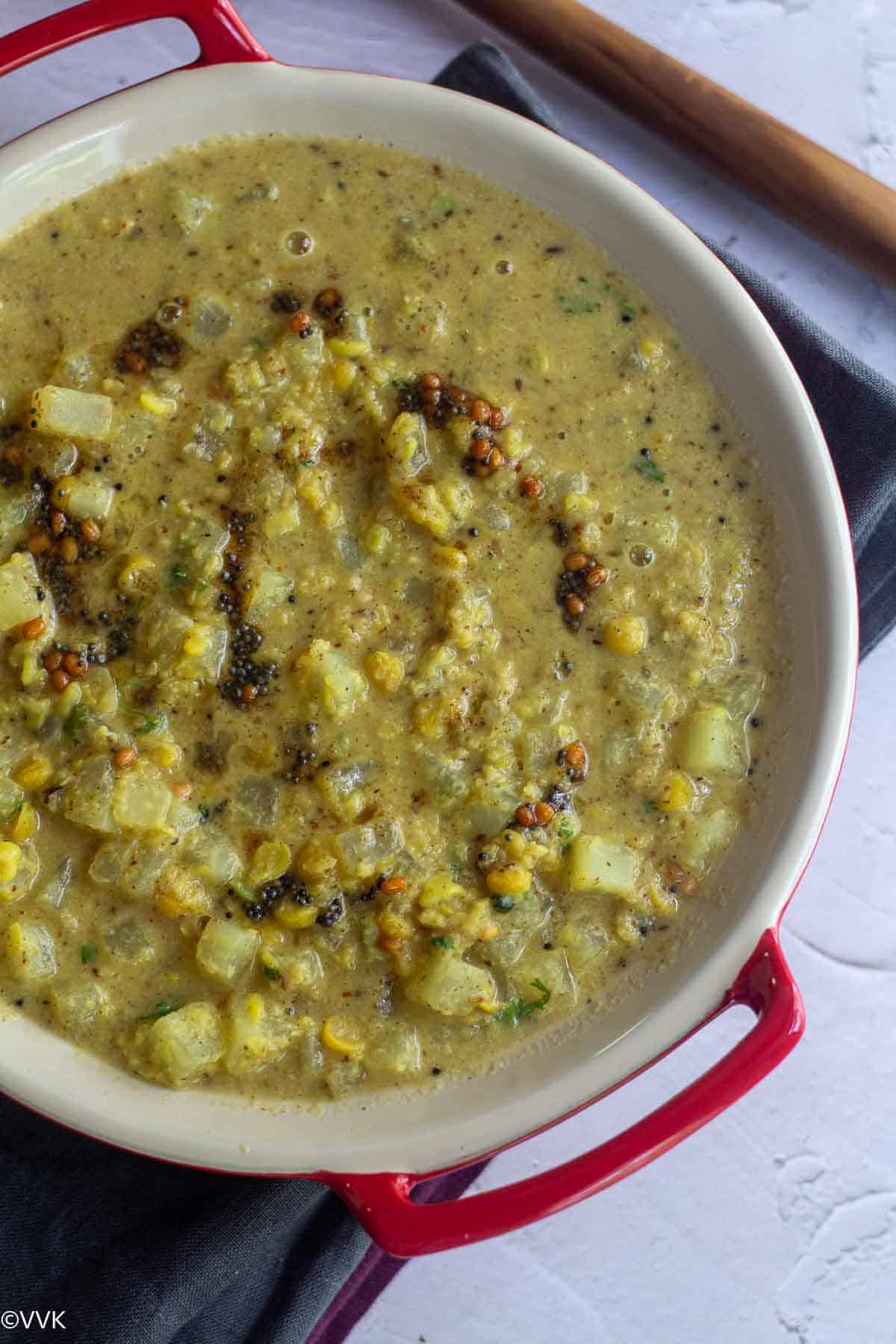
Radish kootu, or mullangi kootu, is a comforting South Indian kootu recipe made with daikon radish, moong dal, and chana dal, finished with a freshly ground roasted coconut masala. I am making it poricha kootu style today, which means the spices are dry-roasted before grinding, and that one step gives this humble radish recipe so much depth. It is vegan and nut-free, making it the perfect side for steamed rice.
Jump to:
A Kootu I Learned From My MIL
The moment I think about white daikon radish, my mind goes straight to sambar or poriyal. That is what I grew up eating, and honestly, both are still my absolute favorites. Radish in any other form did not really exist in my kitchen for the longest time.
This radish kootu is my MIL’s specialty. She makes it the way she makes any other kootu, simple and no-fuss. But today, I went a slightly different route and made it in the poricha kootu style, and I am so glad I did. The roasted urad dal and pepper change the whole character of the dish, and it no longer tastes like “just another kootu.”
What Is Kootu, and What Makes a Poricha Kootu Different?
I have mentioned this before, but it is worth repeating: kootu is a Tamil word that means “to combine.” In cooking, it refers to combining a vegetable with lentils, most often with moong dal. That said, you can very well swap the moong dal with masoor dal, toor dal, or chana dal. I have quite a few kootu recipes on the blog with all of these variations.
The process itself has room to play with, too. You can simply cook the lentils and vegetables together, prepare a fresh masala by grinding coconut, cumin, and green or dried red chilies, then stir it into the cooked veggies and dal and simmer, the way I do for my chow chow kootu.
Then there is poricha kootu, where you roast cumin, urad dal, dried red chilies, and a little whole pepper, then grind it with coconut before adding it to the kootu, as in my cauliflower poricha kootu. For poricha kootu, you can also swap the moong dal for toor dal and add a little tamarind, which works really well. It is a subtle variation, but it gives you a whole new dish with a whole new flavor.
Today I am making mullangi kootu (mullangi is the Tamil word for radish) in that poricha kootu style.
Ingredients Required
Radish – I am using white daikon radish here. I have used small red radish for radish sambar and radish poriyal, but I have not tried kootu with it yet.
Moong dal and chana dal – For this radish kootu, I am using both, with the chana dal at half the amount of the moong dal. I like the texture the chana dal adds here.
For the kootu masala – We roast cumin, urad dal, whole peppercorns, and dried red chilies, then grind them with coconut. Since we are using both pepper and red chilies, adjust the measurements to your taste.
To temper – I highly recommend coconut oil, but any neutral oil works too. Along with that, we need mustard seeds, urad dal, and asafoetida. I usually skip chana dal in the tempering for poricha kootu.
And of course, the standard ingredients: cilantro, curry leaves, water, salt, and turmeric powder. Please check the recipe card below for exact measurements.
Dietary Specifications & Storage Suggestions
This mullangi kootu is naturally vegan and nut-free. Use gluten-free asafoetida to make it gluten-free.
You can refrigerate this kootu for two to three days, and it freezes really well too.
Serving Suggestions
Enjoy this mullangi kootu with plain steamed rice, or pair it with raita and papad for a complete meal. It also works beautifully as a side with sambar and rice, kuzhambu and rice, or rasam and rice.
How to Make Radish Kootu
1. Pressure cook the dal and radish. Rinse the moong dal and chana dal thoroughly, then add them to the vessel you plan to make the kootu in. I always follow the pot-in-pot method, but you can also cook directly in the pressure cooker. Add the turmeric powder and water, mix well, and then add the chopped radish. One cup of water is enough here, so do not add more. Pressure cook for three whistles. If you are using an Instant Pot, cook for 5 minutes at high pressure and let the pressure release naturally.
2. Roast and grind the masala. Roast the urad dal, cumin seeds, whole pepper, and dried red chilies without any oil, until the urad dal turns light brown and the cumin smells fragrant. Turn off the heat, add the coconut, and mix well. The coconut does not need roasting. Let the mix cool, then grind it with ¼ cup of water.
3. Simmer. Add the ground masala to the cooked radish and dal, along with another ¼ to ½ cup of water and the salt. Mix well and bring it to a gentle boil.
4. Add cilantro. Stir in the cilantro, mix well, and turn off the heat.
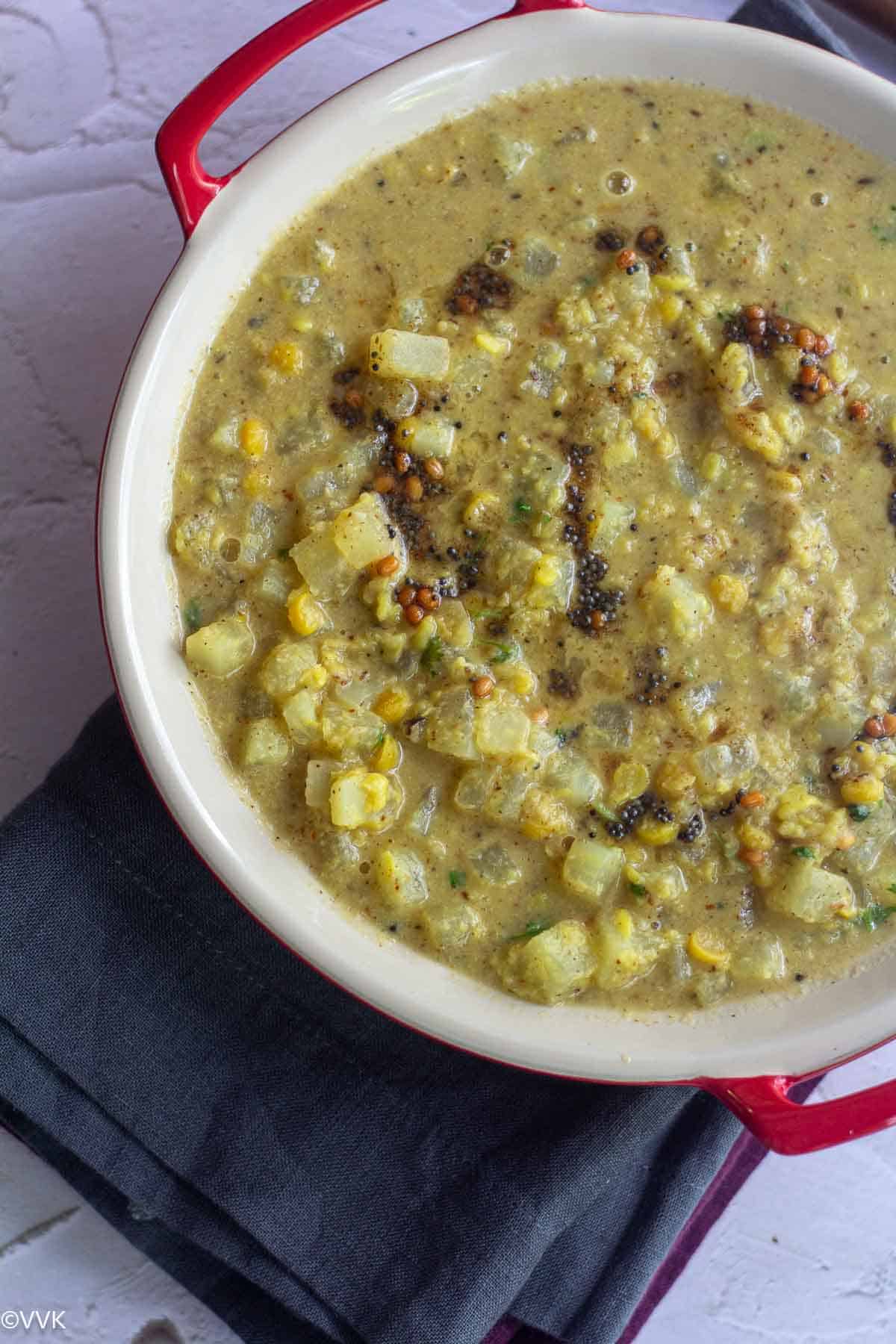
5. Temper. Heat the coconut oil and temper the mustard seeds, urad dal, and asafoetida. Once the mustard seeds splutter, pour the tempering over the kootu. That is it. Delicious radish kootu is ready. Serve it with rice.
Recipe Notes
- If you notice, I skipped the curry leaves in this batch, only because I did not have any that day. Add 5 to 10 curry leaves either while bringing the kootu to a gentle boil or along with the tempering.
- As always, adjust the salt and spices to your taste.
- I love the carrot and radish combination, and I have a carrot radish poriyal on the blog. You can use that same combo here and make mullangi-carrot kootu.
Frequently Asked Questions
Can I skip the chana dal?
Yes. Chana dal is optional. If you skip it, increase the moong dal to ⅓ cup.
Absolutely. Skip the roasting step and grind the coconut, cumin, and chilies fresh. In that case, leave out the urad dal from the masala as well.
Yes. Moong dal is the most common choice for kootu, but masoor dal, toor dal, and chana dal all work. For poricha kootu specifically, toor dal with a little tamarind is a lovely variation.
Yes. Pressure cook the dal and radish for 5 minutes at high pressure with natural pressure release, then continue with the masala and tempering on sauté mode or on the stovetop.
Use only 1 cup of water for pressure cooking. Radish releases water as it cooks, so extra water will make the kootu runny. Add another ¼ to ½ cup later when you stir in the ground masala.
I have used small red radish for sambar and poriyal, but I have not tested it in kootu yet. If you try it, let me know how it turns out.
No, any neutral oil works. But coconut oil really does make a difference in the tempering here, so I highly recommend it if you have it.
More Kootu Recipes


Loved This Recipe?
If you try this radish kootu, please leave a comment and rate the recipe. If you have questions, drop them in the comments, and I’ll respond as soon as possible. Follow me on Pinterest for more healthy, delicious ideas, and on Instagram for regular updates, behind-the-scenes moments, and a peek into my kitchen!
📖 Recipe
Radish Kootu | Mullangi Kootu
Ingredients
Measurement Details: 1 cup = 240ml; 1 tbsp = 15ml; 1 tsp = 5ml;
To Pressure Cook
- ¼ cup moong dal
- 2 tbsp chana dal
- ⅛ tsp turmeric powder
- 1 cup water
- 350 grams radish peeled and chopped
To Roast and Grind
- 1 tsp cumin seeds
- 1 tsp urad dal
- ¼ tsp whole pepper
- 2 dried red chilies
- ½ cup coconut grated or shredded
- ¼ cup water for grinding
To Temper
- 3 tsp coconut oil
- ½ tsp mustard seeds
- 1 tsp urad dal
- ⅛ tsp asafoetida
Other Ingredients
- 1.25 tsp salt
- 2 tbsp cilantro
- 5 to 10 curry leaves optional
- ¼ to ½ cup water
Instructions
- Rinse the moong dal and chana dal thoroughly and add them to the vessel you will make the kootu in. Add the turmeric powder and 1 cup of water, mix well, then add the chopped radish. Pressure cook for 3 whistles, or 5 minutes at high pressure in the Instant Pot with natural pressure release. (I use the pot-in-pot method, but you can cook directly in the cooker.)
- Dry roast the urad dal, cumin seeds, whole pepper, and dried red chilies until the urad dal is light brown and the cumin is fragrant. Turn off the heat, add the coconut, and mix. Cool, then grind with ¼ cup water.
- Add the ground masala to the cooked radish and dal. Add ¼ to ½ cup water and the salt. Mix well and bring to a gentle boil.
- Stir in the cilantro and turn off the heat.
- Heat the coconut oil, temper the mustard seeds, urad dal, and asafoetida. Once the mustard splutters, add it to the kootu. Serve with rice.
Video
Notes
- Chana dal is optional. Skip it and increase the moong dal to ⅓ cup.
- Add curry leaves while simmering or with the tempering.
- Use only 1 cup of water for pressure cooking.
- For a regular (non-poricha) kootu, skip the roasting and the urad dal in the masala.
- Adjust salt and spice to taste.
Nutrition
I am not a nutritionist. The nutritional information is provided as a courtesy and is an estimate only. It varies depending upon the product types or brands.


I was searching for a radish kootu recipe. I am so glad I found yours! Very delicious🤤