

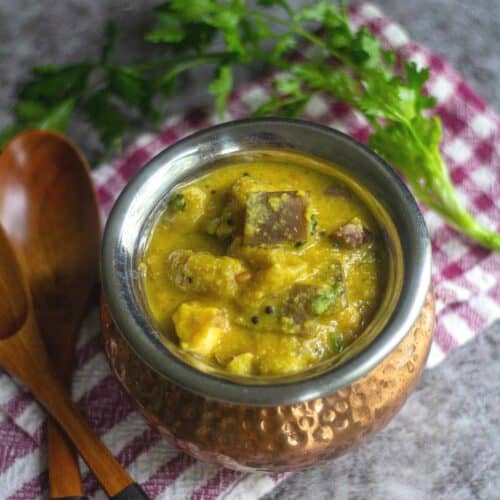
A delicious side dish for rice and roti – here’s the recipe for Green Papaya (Raw Papaya) Kootu, also known as Pappali Kai Kootu. You can follow the detailed instructions and video to make it easily at home.

Jump to:
What is kootu?
Kootu is a popular South Indian rice accompaniment made by cooking dal and vegetables together, then simmering them with a freshly ground coconut paste. It’s generally mild, not too spicy, and is considered an essential part of a South Indian thali. I already have several kootu variations on my blog, and this raw papaya version is one among them.
My twist on tradition
In our family, we usually don’t add onion or garlic to kootu. But for this recipe—just like my green tomato kootu—I’ve made an exception. I sauté onions and add them at the end, and I also include shallots and garlic while cooking the dal and raw papaya. These additions bring a subtle crunch and enhance the flavor, making it an excellent side for roti and even dosa. (Yes, I truly enjoy kootu with dosa! )
Why raw papaya?
While I enjoy ripe papaya, I love the flavor of green papaya—it tastes similar to squash or other gourds. You can use it for stir-fries (poriyal) or even chutneys. If ripe papaya isn’t your favorite, try this raw papaya kootu—you’ll be pleasantly surprised. It doesn’t resemble the taste of ripe papaya at all. Additionally, raw papaya is rich in health benefits, being low in calories, high in fiber, and a good source of vitamins A, C, and K, as well as minerals such as potassium, magnesium, and calcium.
A bit of nostalgia
I grew up eating a lot of papaya—it’s such a common backyard tree in my native place. Green papayas were a regular ingredient in Amma’s cooking, especially when we lived in Pannaipuram. We had three papaya trees in our backyard. (Yes, the same Pannaipuram that is the hometown of maestro Ilaiyaraaja!)
Appa was transferred there, and I spent three memorable years of my childhood (1st to 3rd grade) in that village. That’s where I picked up authentic Madurai slang and experienced the vibrant festivals often shown in Bharathiraja’s movies. During the Kaali temple festival, for instance, they celebrated Mulaipari—navadhanyam (nine grains) grown in a unique pot, placed in the temple while women sang kummi songs. On the final day, the pots would be carried to a nearby river or pond and immersed. I even had the chance to carry one myself.
Pannaipuram lies at the foot of the Western Ghats, and during the monsoons, floods rushing down from the hills were a common sight. Locals called it Oda Thanni, which would drain away in just a few hours. Those days left such a lasting impression on me, and I cherish the fact that I spent my early childhood there. After we moved to Periyakulam, I never went back—but it’s on my list to revisit someday.
Anyway, I’ve digressed (as always 😅), but I’m happy to share these cherished memories. Now, let’s get back to the recipe!
Ingredients required
Raw Papaya – The star ingredient here is a whole raw (green) papaya. I used it entirely by peeling the skin, removing the seeds, and chopping it into small cubes.
Lentils – I combined moong dal and chana dal. The chana dal is optional, but it adds a nice texture to the dish.
Shallots and Garlic – These are optional as well. I added 2 shallots and 1 garlic clove, pressure-cooking them along with the lentils and raw papaya.
Kootu Masala – For the spice base, you’ll need coconut, cumin seeds, and green chilies. Dried red chilies can also be used as an alternative.
Tempering – The tempering requires coconut oil, mustard seeds, urad dal, asafoetida, half a cup of chopped onion, and a few curry leaves.
Other essentials – Salt, water, turmeric powder, and fresh cilantro for garnish. For exact quantities, please refer to the recipe card.
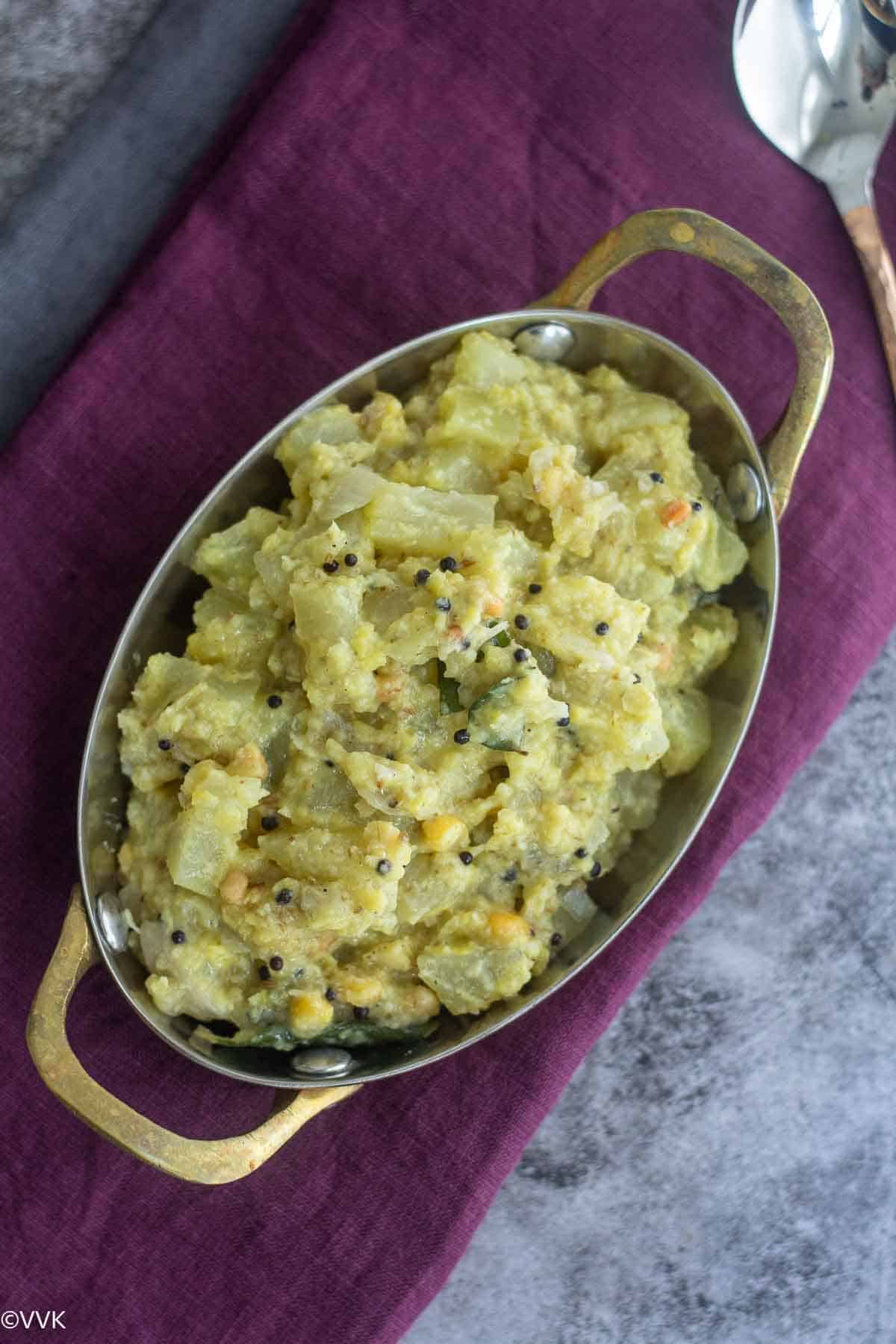
Dietary specifications
This raw papaya kootu (known as pappali kai kootu in Tamil) is naturally vegan and nut-free. For a gluten-free version, simply use gluten-free asafoetida. The dish keeps well in the refrigerator for up to 3 days and also freezes beautifully. When reheating, warm only the portion you need, rather than reheating the entire batch; refrigerate the remaining leftovers.
Serving suggestions
This kootu pairs wonderfully with plain rice, accompanied by a side of raita or papad. You can also include it in a mini thali with rice (or another grain of your choice) served alongside any kuzhambu or rasam variety.
How to make raw papaya kootu
- Peel the raw papaya, remove the seeds, and chop it into small cubes or bite-sized pieces.
- Rinse the moong dal and chana dal, then add them to the vessel you’ll be using for the kootu. Mix in turmeric powder, 1 cup of water, and the chopped shallots and garlic (if using).
- Add the chopped papaya on top, followed by another ¼ cup of water. This prevents the papaya from drying out while avoiding excess moisture.
- Pressure cook using the pot-in-pot method (as shown in the video) for 3 whistles. Let the pressure release naturally, then take out the cooked vegetable and dal mixture.
- Meanwhile, grind the coconut, cumin seeds, and green chilies into a smooth paste.
- Add this masala paste, along with salt, to the cooked dal–papaya mix. Pour in ¼ to ⅓ cup of water (I usually rinse the mixer jar and use the water from that rinse). Stir gently and let it simmer over medium heat until the mixture is well combined.
- Remove from heat. For tempering, heat coconut oil in a small kadai or tempering pan. Once hot, add mustard seeds, urad dal, and asafoetida. When the mustard seeds splutter, add chopped onions, curry leaves, and ¼ tsp salt (just for the onions). Sauté until translucent, then add this tempering to the kootu.
- Garnish with fresh cilantro and serve warm.
Recipe Notes
- Adjust salt and spice levels to suit your taste.
- This kootu can be made without onion and garlic if preferred.
- Coconut oil is my personal favorite for tempering, but peanut oil or any neutral oil works too.
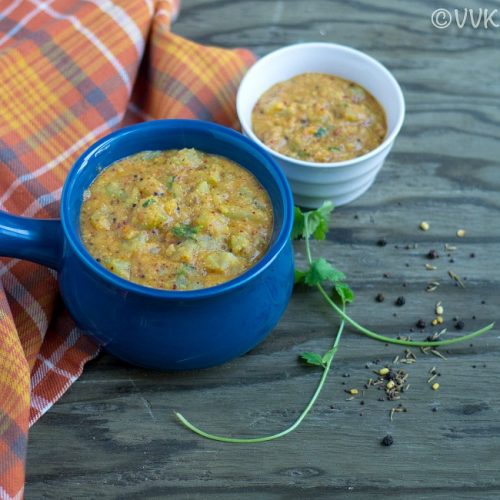
- You can prepare a similar kootu with other vegetables—check the list I’ve shared below, along with my kootu recipe collection.
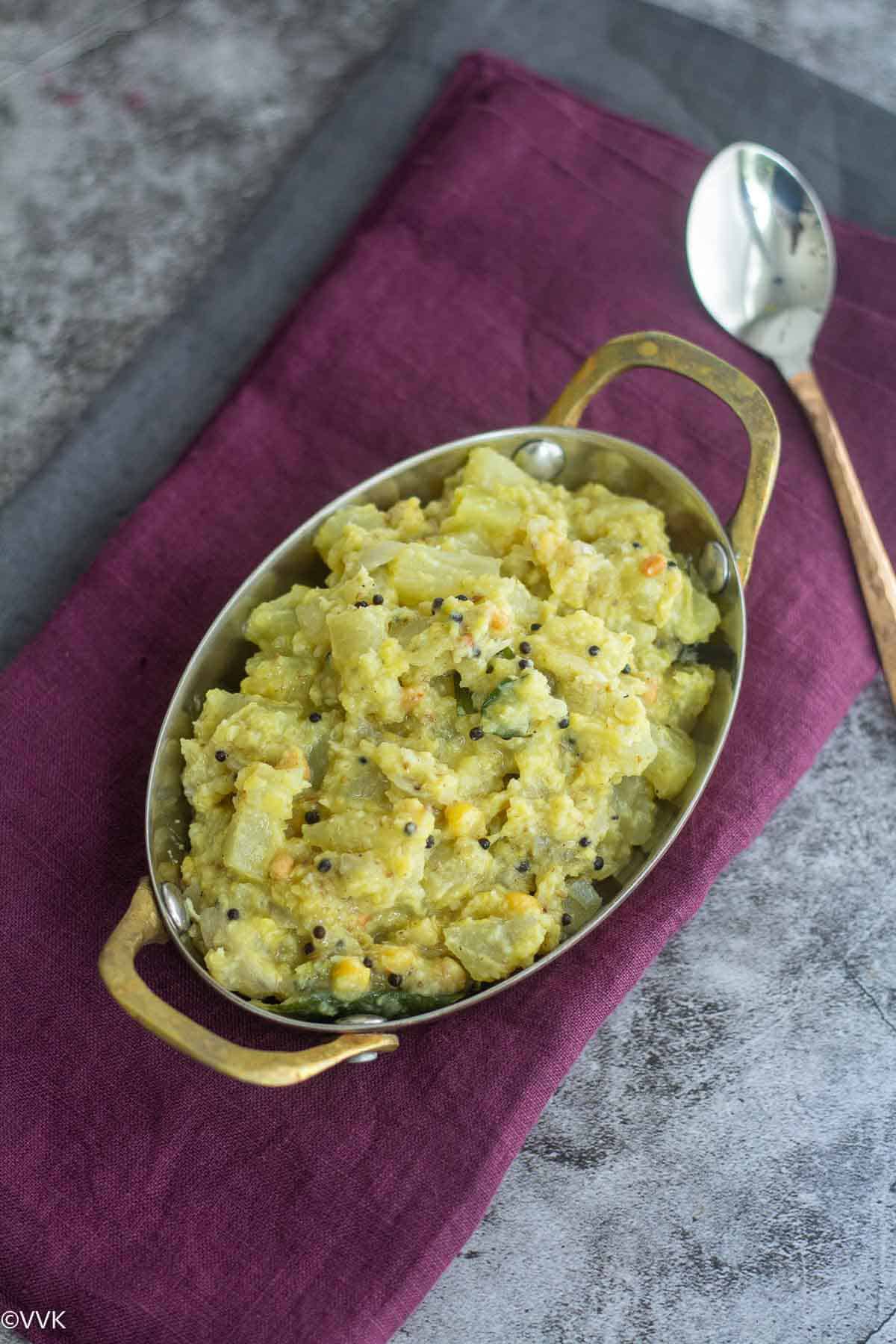
More kootu recipes

📖 Recipe
Raw Papaya Kootu | Pappali Kai Kootu
Ingredients
Measurement Details: 1 cup = 240 ml; 1 tbsp = 15ml; 1 tsp = 5ml;
To Pressure Cook
- 580 grams raw papaya 1 large, peeled, seeds removed, and chopped
- ½ cup moong dal
- 2 tbsp chana dal
- ⅛ tsp turmeric powder
- 2 shallots
- 1 garlic clove
- 1¼ cups water for cooking the raw papaya
For the Kootu Masala
- ½ cup coconut fresh or frozen
- 3 green chilies
- 2 tsp cumin seeds
- 2 tsp salt or to taste
To Temper
- 2 tsp coconut oil
- 1 tsp mustard seeds
- ½ tsp urad dal
- ⅛ tsp asafoetida
- ½ cup onion chopped
- 5 curry leaves
- ¼ tsp salt
Instructions
- Peel the raw papaya, remove the seeds, and chop it into small cubes or bite-sized pieces.
- Rinse the moong dal and chana dal, then add them to the vessel you’ll be using for the kootu. Mix in turmeric powder, 1 cup of water, and the chopped shallots and garlic (if using).
- Add the chopped papaya on top, followed by another ¼ cup of water. This prevents the papaya from drying out while avoiding excess moisture.
- Pressure cook using the pot-in-pot method (as shown in the video) for 3 whistles. Let the pressure release naturally, then take out the cooked vegetable and dal mixture.
- Meanwhile, grind the coconut, cumin seeds, and green chilies into a smooth paste.
- Add this masala paste, along with salt, to the cooked dal–papaya mix. Pour in ¼ to ⅓ cup of water (I usually rinse the mixer jar and use the water from that rinse). Stir gently and let it simmer over medium heat until the mixture is well combined.
- Remove from heat. For tempering, heat coconut oil in a small kadai or tempering pan. Once hot, add mustard seeds, urad dal, and asafoetida. When the mustard seeds splutter, add chopped onions, curry leaves, and ¼ tsp salt (just for the onions). Sauté until translucent, then add this tempering to the kootu.
- Garnish with fresh cilantro and serve warm.
Video
Notes
- Adjust salt and spice levels to suit your taste.
- This kootu can be made without onion and garlic if preferred.
- Coconut oil is my personal favorite for tempering, but peanut oil or any neutral oil works too.
- You can prepare a similar kootu with other vegetables—check the list I’ve shared below, along with my kootu recipe collection.
Nutrition
I am not a nutritionist. The nutritional information is provided as a courtesy and is an estimate only. It varies depending upon the product types or brands.
Update Notes: Earlier posted in 2014. Now updated with recipe card, new pictures and video.





A timely recipe Vidhya, will not waste the raw papaya anymore. Thanks a ton for this simple recipe.
Thanks :-)
Such a wholesome and satisfying dish for these cold wintery nights. I do recommend this dish..love the flavor profile so much!
Thank you
This looks so comforting and wholesome! I am always looking for new ways to cook with different vegetables, and using raw papaya in a flavorful kootu sounds delicious. I appreciate the detailed, authentic recipe!
Thank you so much.
Tried it today and it turned out great. Simple ingredients but so flavorful!
Thanks so much.
This sounds really good! If I can’t find green papaya could I use something like a squash, instead? I have NEVER seen green papaya at my store.
Oh yeah absolutely. Zucchini, butternut squash all works great.
Interesting. I’m eager to try this. I didn’t realize an unripe papaya would taste more like a gourd than other fruits that are just bitter.
Oh yeah unripe papaya are great in curries and also in salads.
I’m super excited to try this! I’ve tried a few of your other recipes, and they’ve been great. Looking forward to this one!
Thanks so much.
I’ve never used green papaya before. I’m eager to give this a try, since the way you described it doesn’t sound bitter.
No it doesn’t. You can definitely try them in any curries or in salads too.
I really enjoyed the aromatics of the onions and garlic with the sweetness of the papaya and the other ingredients. Yummy!
Thanks. The unripe ones are not as sweet as the ripe ones.
Thoroughly enjoy your writings along with the recipes…keep them coming girl!!!
Thanks :-) :-)
Yummy and healthy kootu
Thanks a lot Beena and welcome here. :-)
loved your write up as well healthy dish…
:-) :-) Thanks
Loved your intro Sri:-)
Thanks vidya :-)