

A bold and flavorful South Indian-style mint relish, also known as pudina thokku, that’s sure to awaken your taste buds! This spicy, tangy condiment is a pantry favorite in many Tamil homes and can be used in so many delicious ways. Here’s my detailed, tested recipe that’s both simple to make and deeply satisfying.
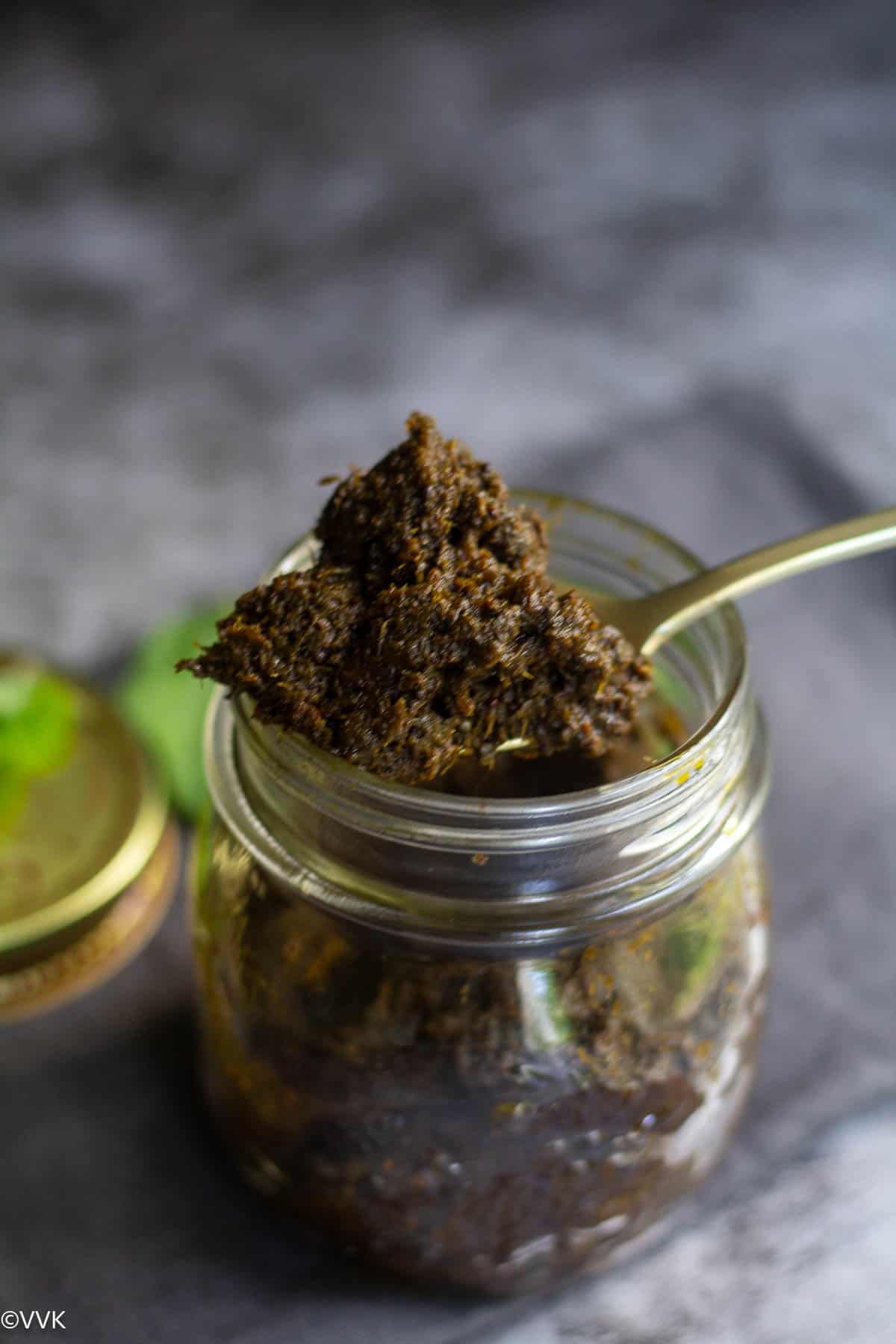
When life gives you mint leaves, make pudina thokku… seriously. I recently harvested a big batch of mint from my garden, and this thokku was at the top of my to-do list. After a few tweaks, I finally landed on our favorite version, and I’m so excited to share it with you. I’ve always loved the thokku varieties from Grand Sweets—especially their pudina and kothamalli (cilantro) ones—and while I wouldn’t call this a copycat, it’s definitely close enough to scratch that itch!
Jump to:
If you’re a mint lover like me, be sure to check out the other mint-based recipes on the blog, such as mint rice, mint chutney, and a refreshing mint lemonade. But today, we’re focusing on this spicy mint thokku, a flavorful relish with a decent shelf life—perfect for college kids or busy home cooks looking for a quick flavor boost.
What is pudina thokku
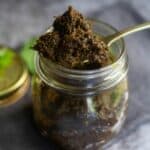
In Tamil, pudina means mint, and thokku refers to a semi-dry pickle or relish made by cooking down ground ingredients with oil and spices. This particular version features fresh mint leaves, roasted spices, tamarind, and shallots, all ground and slow-cooked into a thick, flavorful paste. It’s spicy, aromatic, and incredibly versatile.
Ingredients required
This thokku is made with everyday South Indian pantry staples. Here’s a quick glance at what goes into it:
- Whole spices, such as coriander seeds, fenugreek, cumin, and peppercorns, bring warmth and complexity.
- Dried red chilies add heat.
- Fresh shallots and mint leaves create a flavorful, herbaceous base.
- A touch of tamarind gives it that signature tang.
- Turmeric, mustard seeds, asafoetida, and plenty of sesame oil round out the flavors, helping to preserve the thokku.
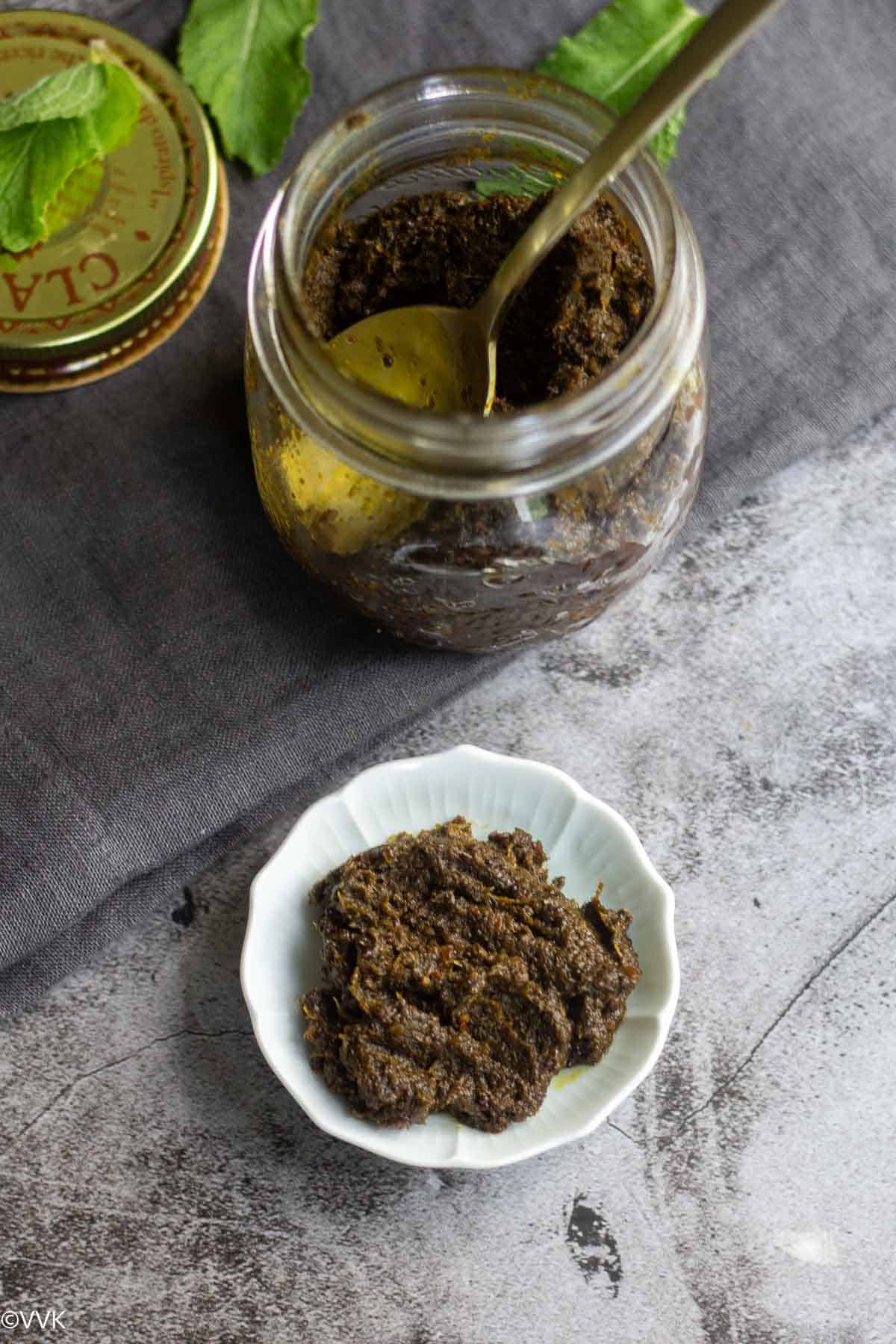
How to make pudina thokku
Roast the spices
- Take a heavy-bottomed pan or kadai and add the coriander seeds, fenugreek seeds, peppercorns, cumin seeds, and dried red chilies.
- Roast over medium-low heat until the spices turn fragrant and the fenugreek seeds deepen in color (a rich reddish-brown).
- Once roasted, remove the meat from the pan and transfer it to a mixer jar. Set aside to cool.
Saute mint and shallots
- In the same pan, heat 1 tsp of gingelly (sesame) oil. Once hot, add the shallots and sauté until they turn soft and slightly translucent.
- Add the mint leaves next and sauté until they wilt completely. Toss in the tamarind at this stage to let it soften with the residual heat.
- Once the mint has wilted nicely, turn off the heat and allow the mixture to cool to room temperature.
Grind all the ingredients
- Transfer the cooled mint mixture to the mixer jar with the roasted spices.
- Add ½ cup of water and grind everything into a semi-smooth paste. (It doesn’t have to be completely smooth—some texture is good!)
Temper and cook the thokku
- Reheat the same pan and add 3 tbsp of sesame (gingelly) oil. Once the oil is hot, add the mustard seeds and let them splutter.
- Add a generous pinch of asafoetida, then pour in the ground mint-spice paste.
- Rinse the mixer jar with ¼ cup of water and add that to the pan as well.
- Add salt and mix well.
- Reduce the heat to low and cook, stirring occasionally, until the moisture has evaporated and the oil starts to release from the sides. The thokku should come together into one cohesive mass or ball.
- This step usually takes 15 to 20 minutes, depending on your stove and cookware. Avoid leaving the thokku unattended during this stage—it’s crucial for flavor and shelf life.
- Turn off the heat and allow it to cool completely before storing or serving.
Recipe notes
- Adjust the spice level: This is intended to be a spicy relish. If you’re spice-sensitive, reduce to 3–4 red chilies, but don’t go below that if you want that traditional kick.
- No garlic version: This recipe doesn’t use garlic. The flavor comes entirely from mint and shallots. You can add 1–2 cloves of garlic if you prefer, but I love the clean taste without it.
- Shelf life: This thokku keeps well in the fridge for up to 2 weeks. Always use a clean, dry spoon to avoid spoilage.
- Cooking tip: The key to long shelf life and great flavor is slow cooking on low heat. Don’t rush it or use high heat.
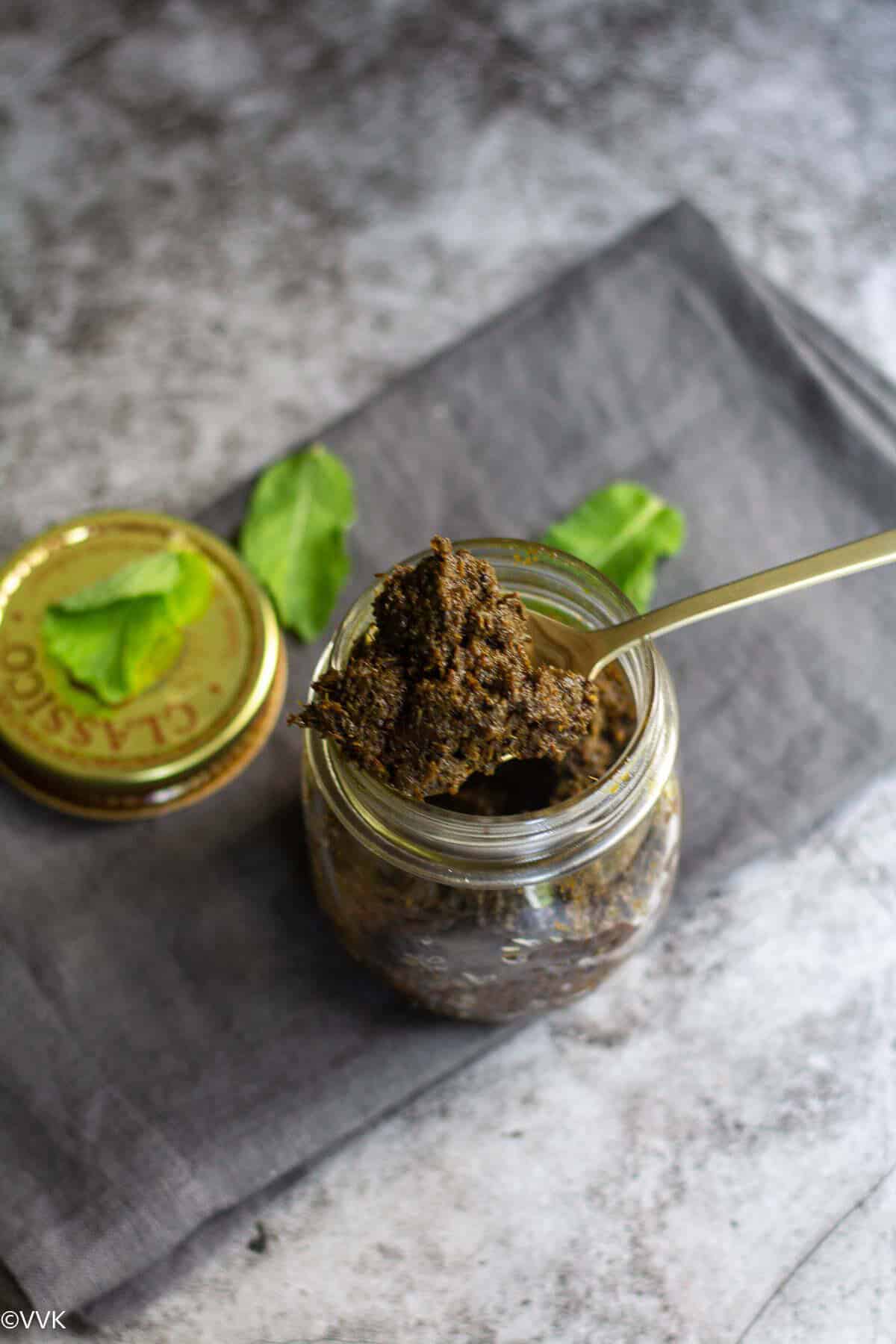
Serving suggestion
This spicy mint relish is incredibly versatile! Here are some great ways to enjoy it:
- With idli, dosa, upma, or curd rice – as a flavorful side.
- Mixed with hot rice and a spoonful of ghee or sesame oil, this is instant mint rice!
- Spread on sandwiches or wraps for a herby, spicy kick.
- Tossed with roasted potatoes, arbi (a type of yam), or vegetables to elevate dry curries.
- Paired with grilled paneer or tofu – makes a fantastic fusion snack or appetizer.
The options are endless, and once you try it, you’ll find yourself reaching for this thokku often!
Explore more pickles
PS: If you try this mint relish, please remember to comment and rate this recipe. Please comment if you have any questions, and I will get to it ASAP. Follow me on my Pinterest for more healthy and delicious ideas! Follow me on Instagram or join my Facebook Group for more recipe updates! You can also sign-up for my newsletter for weekly updates.
📖 Recipe
Pudina Thokku – South Indian Spicy Mint Relish
Ingredients
Measurement Details: 1 cup= 240ml; 1 tbsp= 15ml; 1 tsp = 5ml;
To roast:
- 2 tsp coriander seeds
- ½ tsp fenugreek seeds
- ¼ tsp peppercorns
- ¼ tsp cumin seeds
- 5 – 7 dried red chilies adjust to taste
For sautéing:
- 1 tsp sesame/gingelly oil
- 5 shallots peeled
- 60 g mint leaves cleaned, stems removed
- 5-7 g tamarind gooseberry-sized piece
To grind:
- ¾ cup water divided: ½ cup + ¼ cup
To cook the thokku:
- 3 tbsp sesame/gingelly oil
- 1 tsp mustard seeds
- ½ tsp asafoetida
- ¼ tsp turmeric powder
- 1¼ tsp salt or to taste
Instructions
- Take a heavy-bottomed pan or kadai and add the coriander seeds, fenugreek seeds, peppercorns, cumin seeds, and dried red chilies.
- Roast over medium-low heat until the spices turn fragrant and the fenugreek seeds deepen in color (a rich reddish-brown).
- Once roasted, remove the meat from the pan and transfer it to a mixer jar. Set aside to cool
- In the same pan, heat 1 tsp of gingelly (sesame) oil. Once hot, add the shallots and sauté until they turn soft and slightly translucent.
- Add the mint leaves next and sauté until they wilt completely. Toss in the tamarind at this stage to let it soften with the residual heat.
- Once the mint has wilted nicely, turn off the heat and allow the mixture to cool to room temperature.
- Transfer the cooled mint mixture to the mixer jar with the roasted spices.
- Add ½ cup of water and grind everything into a semi-smooth paste. (It doesn’t have to be completely smooth—some texture is good!)
- Reheat the same pan and add 3 tbsp of sesame (gingelly) oil. Once the oil is hot, add the mustard seeds and let them splutter.
- Add a generous pinch of asafoetida, then pour in the ground mint-spice paste.
- Rinse the mixer jar with ¼ cup of water and add that to the pan as well.
- Add salt and mix well.
- Reduce the heat to low and cook, stirring occasionally, until the moisture has evaporated and the oil starts to release from the sides. The thokku should come together into one cohesive mass or ball.
- This step usually takes 15 to 20 minutes, depending on your stove and cookware. Avoid leaving the thokku unattended during this stage—it’s crucial for flavor and shelf life.
- Turn off the heat and allow it to cool completely before storing or serving.
Video
Notes
- Adjust the spice level: This is intended to be a spicy relish. If you’re spice-sensitive, reduce to 3–4 red chilies, but don’t go below that if you want that traditional kick.
- No garlic version: This recipe doesn’t use garlic. The flavor comes entirely from mint and shallots. You can add 1–2 cloves of garlic if you prefer, but I love the clean taste without it.
- Shelf life: This thokku keeps well in the fridge for up to 2 weeks. Always use a clean, dry spoon to avoid spoilage.
- Cooking tip: The key to long shelf life and great flavor is slow cooking on low heat. Don’t rush it or use high heat.
Nutrition
I am not a nutritionist. The nutritional information is provided as a courtesy and is an estimate only. It varies depending upon the product types or brands.






This Pudina Thokku is absolutely delicious! The mint flavor is so vibrant and it adds the perfect zing to a simple meal of rice or idli. It’s definitely going to be a staple in my pantry.
Thanks so much.
I love how this turned out. It is so flavorful. I used it to spice up my roasted potatoes for extra flavor. I am going to try it on roasted cauliflower next.
Thanks a lot.
I love coriander and cumin so this was right up my alley. I love the spice of this spread so much. It’s great on an appetizer board with creamy cheeses and warm bread. So good!
Great idea to use with cheese board.
I made this and loved how fresh and spicy it tasted. A little goes a long way!
Thanks so much. Glad you liked it.
Great stuff. I was surprised to find everything I needed at our local chain grocery store. I made this and slapped it on a leftover ham sandwich. Good stuff.
Yeah this is a great sandwich spread.
This is so good! I made it as an appetizer spread, but it’s going on sandwiches next!
Thanks. Yeah it’s a perfect sandwich spread.
This sounds so good! I have a beef wrap that I think would perfect with it.
That sounds great