

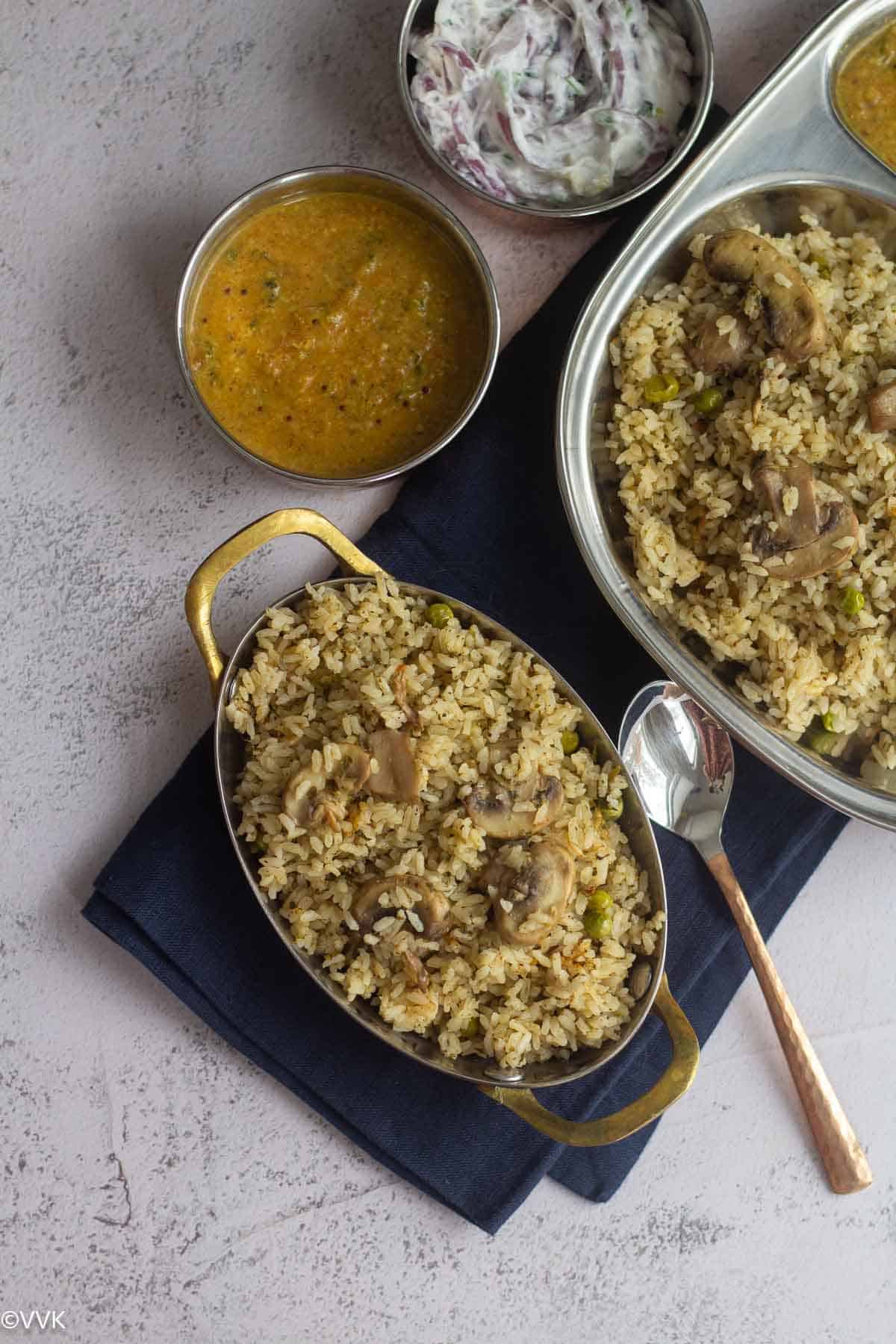
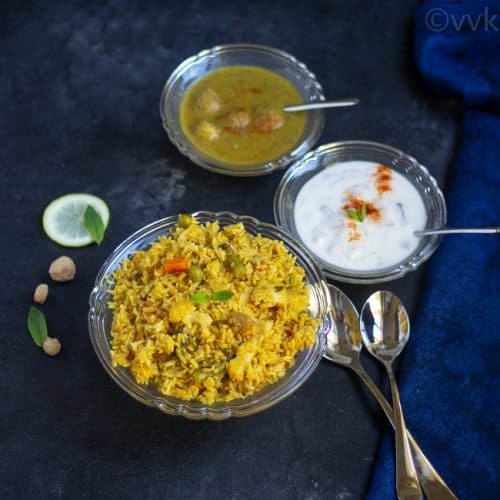
Here is my vegetarian take on the classic Dindigul Thalappakatti biryani, made with mushrooms and green peas. This version replaces the traditional meat with vegetables while retaining the dish’s signature flavors. Below, you’ll find the recipe along with detailed step-by-step pictures to help you make this delicious Veg Thalappakatti biryani at home.
Jump to:
About Dindigul Thalappakatti Biryani
Dindigul Thalappakatti Biryani is a flavorful, distinctive biryani originating in Dindigul, Tamil Nadu. It is traditionally prepared using seeraga samba rice and a generous amount of shallots and garlic. One of the things that makes this biryani unique is the use of both nutmeg and mace, which add a special depth of flavor. While it is usually made with meat, in this recipe, I’ve replaced the meat protein with vegetable protein, using mushrooms and green peas to create a vegetarian version.
Dindigul is about 1.5 hours from Periyakulam, and we usually catch the train to Chennai from there. I have a special memory connected to this city. I’m a big Harry Potter fan, and when Goblet of Fire was released, I entered a contest and won two tickets to the first-day show. And can you guess where the theater was? Of course — Dindigul! 🙂 I somehow convinced my parents to take me. Appa couldn’t come because of work, so Amma had to accompany me. We traveled all the way from Periyakulam to Dindigul just to watch Harry Potter.
You can read more about Dindigul biryani here. My inspiration for this recipe came from two blogs — Cooking from Heart and Kannamma Cooks. I made a few adjustments to suit our taste: I tweaked the spice levels, added a bit more cinnamon, and ground the mint and cilantro together. I also used 3 cups of rice so there would be leftovers, because biryani always tastes even better the next day.
Ingredients Required
Seeraga samba rice – To make this Veg Dindigul Thalappakatti Biryani, you will need 3 cups of seeraga samba rice, rinsed well and soaked for about 15 to 20 minutes. I highly recommend using seeraga samba rice for this recipe. These days, you can easily find it online or in most Indian grocery stores.
Fresh masalas – This biryani does not use garam masala. Instead, the whole spices are freshly ground, which gives the dish its distinct flavor. For the first ground masala, you will need cloves, green cardamom pods, cinnamon, ¼ of a nutmeg seed, mace, green chilies, and ginger.
Herb mixture – For the herb blend, you will need mint and cilantro. I usually pulse them together, but you can also finely chop them and add them directly if you prefer.
Onion–garlic paste – This recipe uses shallots and garlic. Shallots add a unique flavor to the biryani, so I highly recommend using them. If you can’t find shallots, you can substitute them with an equal amount of red onions.
Vegetables – For this vegetarian version, I have used mushrooms and green peas, which work really well in this biryani.
Fat – I use a combination of oil (peanut oil) and ghee. I recommend using a neutral oil, such as peanut oil, along with ghee for the best flavor.
Red chili powder – A small amount is added along with green chilies for additional heat.
Apart from these ingredients, you will also need yogurt, lemon juice, water, and of course, salt. Please refer to the recipe card for the exact measurements.
A Note About Mace and Nutmeg
Mace — known as Jathipathiri in Tamil and Javithri in Hindi — is actually the outer covering of the nutmeg seed.
When the nutmeg fruit is cut open, you’ll see the seed surrounded by a bright red outer covering. Once dried, that outer layer becomes mace, while the inner seed becomes nutmeg. If you are unable to find mace, you can simply increase the quantity of nutmeg slightly instead.
Dietary specifications and storing suggestions
This Veg Dindigul Thalappakatti Biryani is naturally gluten-free as it is made with rice, spices, vegetables, and dairy, and does not include any wheat-based ingredients. Since the recipe uses ghee and yogurt, you can substitute them with non-dairy alternatives to make a vegan version. For a nut-free option, use a seed oil or a neutral vegetable oil instead of peanut oil.
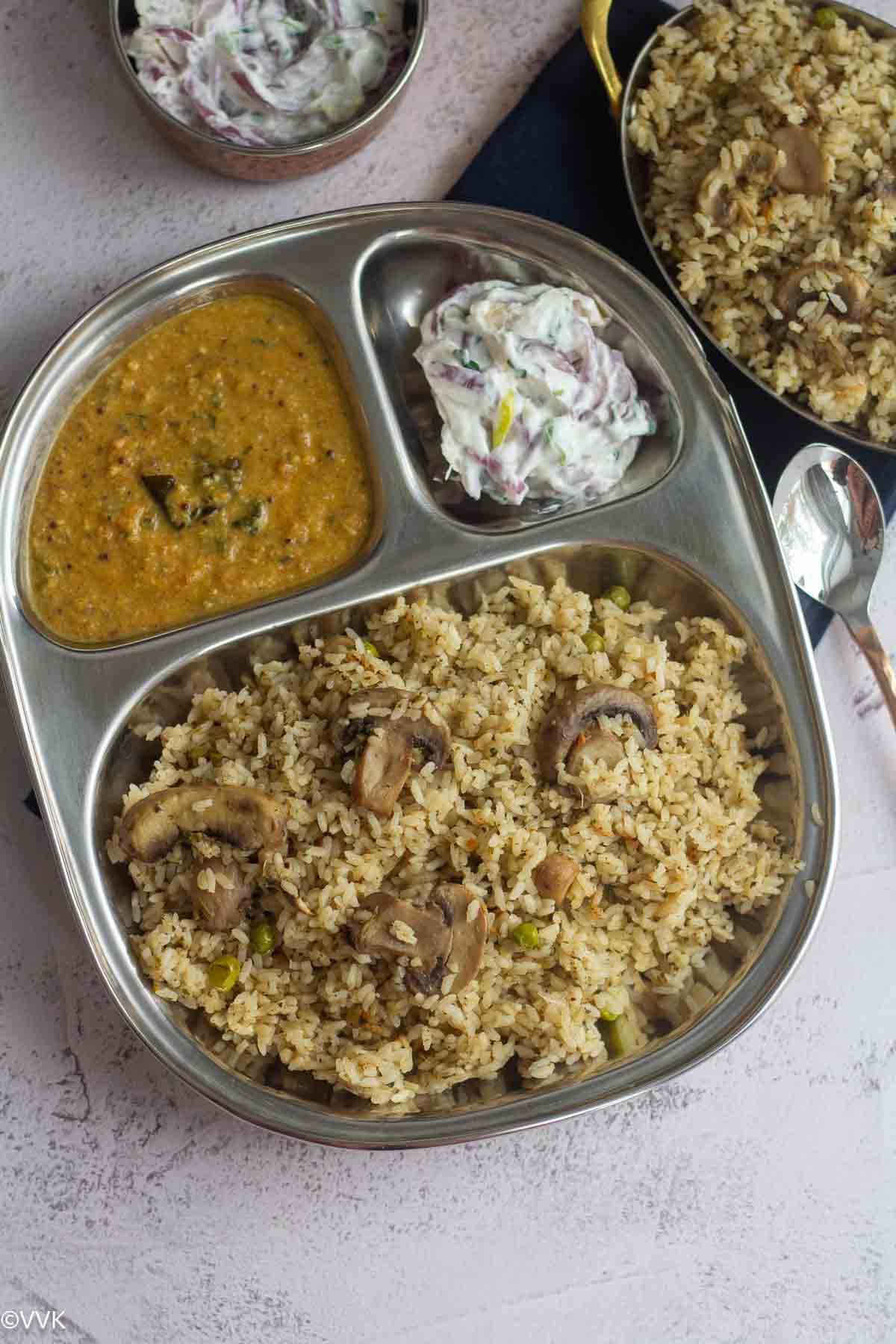
I usually store leftover biryani for up to two days, as it often tastes even better the next day. You can reheat it and serve it with kurma and raita. I personally haven’t tried freezing biryani.
Best sides for veg biryani
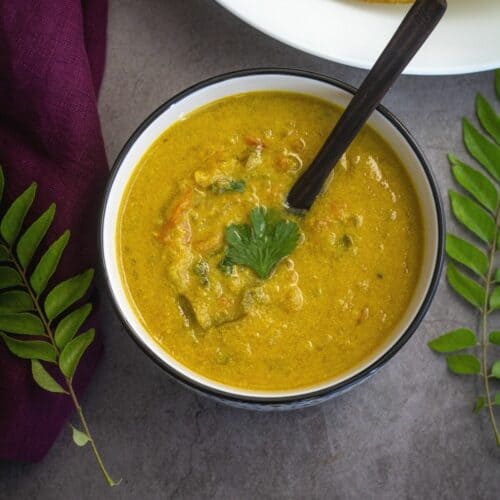
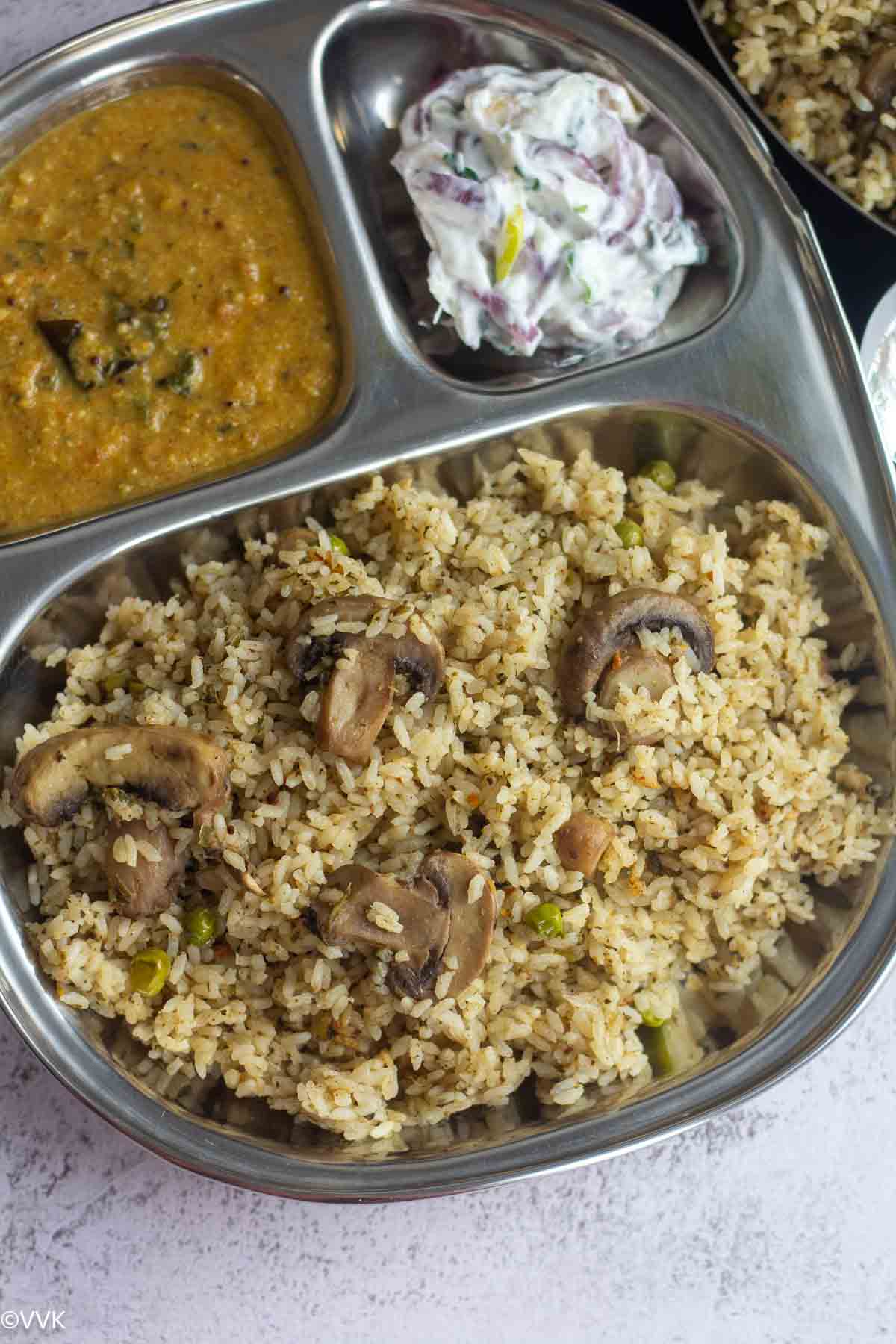
You can serve biryani with thick and creamy onion raita, and that’s how restaurants in Tamil Nadu serve and also with any kurma or salna of your choice. You can also try biryani chammanthi. Here are a few popular veg kurma that you can try with biryani.
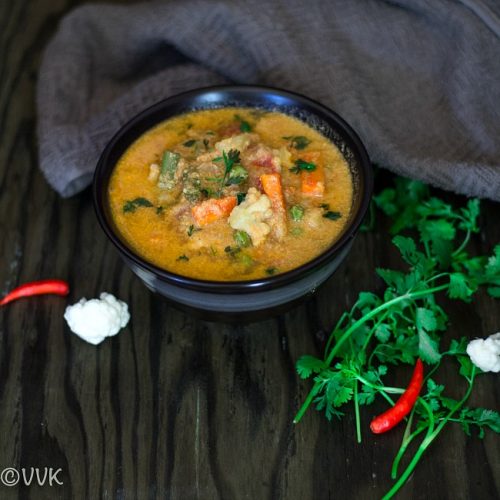
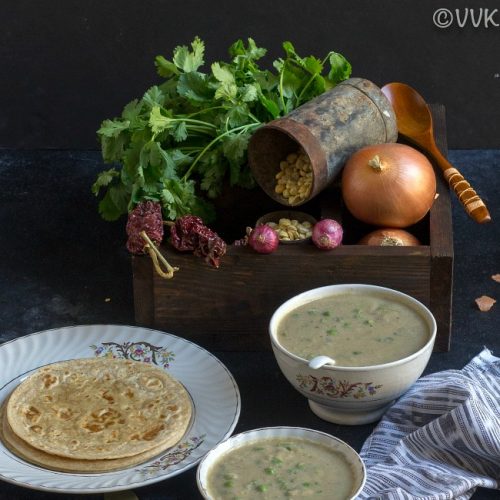
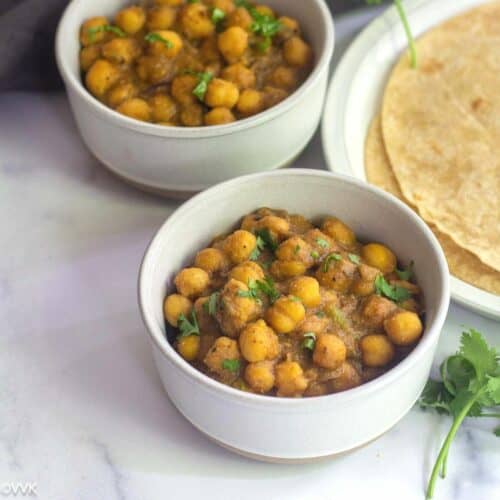
Now, without any further ado, let’s see how to make this biryani.
How to make Veg Dindigul Thalappakatti Biriyani
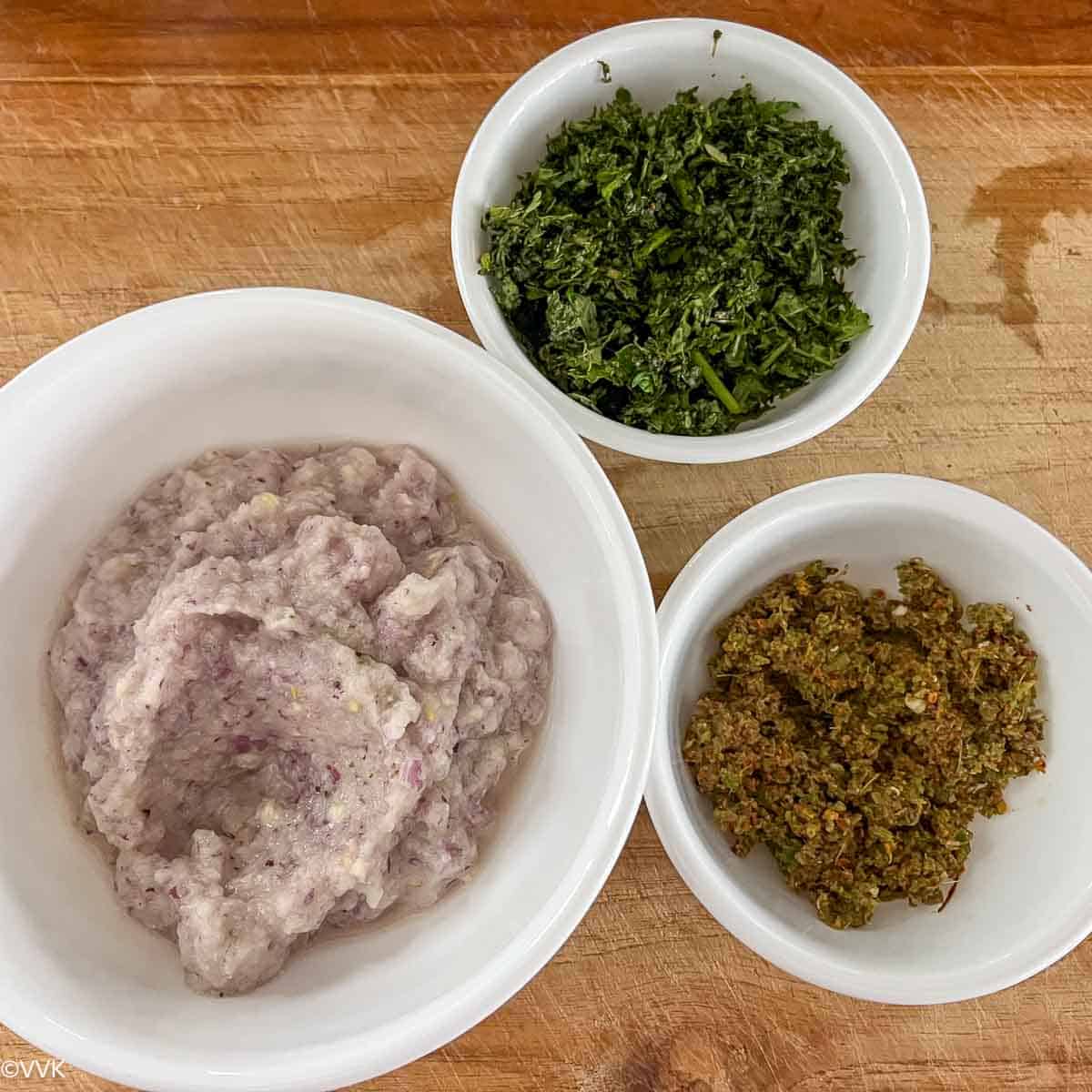
- Grind the dry masala ingredients given under “To grind set 1.” First grind cloves, cinnamon, cardamom, mace, and nutmeg without adding water. Then add the green chillies and ginger, along with about 2 to 3 tbsp of water, and grind them together. Set aside.
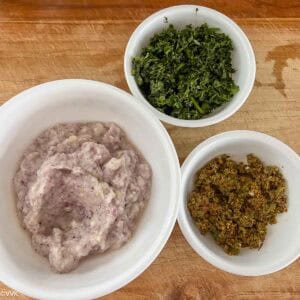
- Wash and clean the mint and cilantro leaves, then pulse them together without adding any water. I noticed that when I added mint directly, we weren’t really eating it, so I started pulsing it once without water.
- Peel the onions and garlic, grind them together, and set aside.
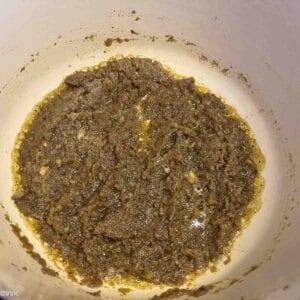
- Heat a wide pan or kadai and add oil and ghee. I used my Dutch oven to make this mushroom biryani. Once the ghee melts and becomes hot, add the ground onion–garlic paste along with the biryani masala.
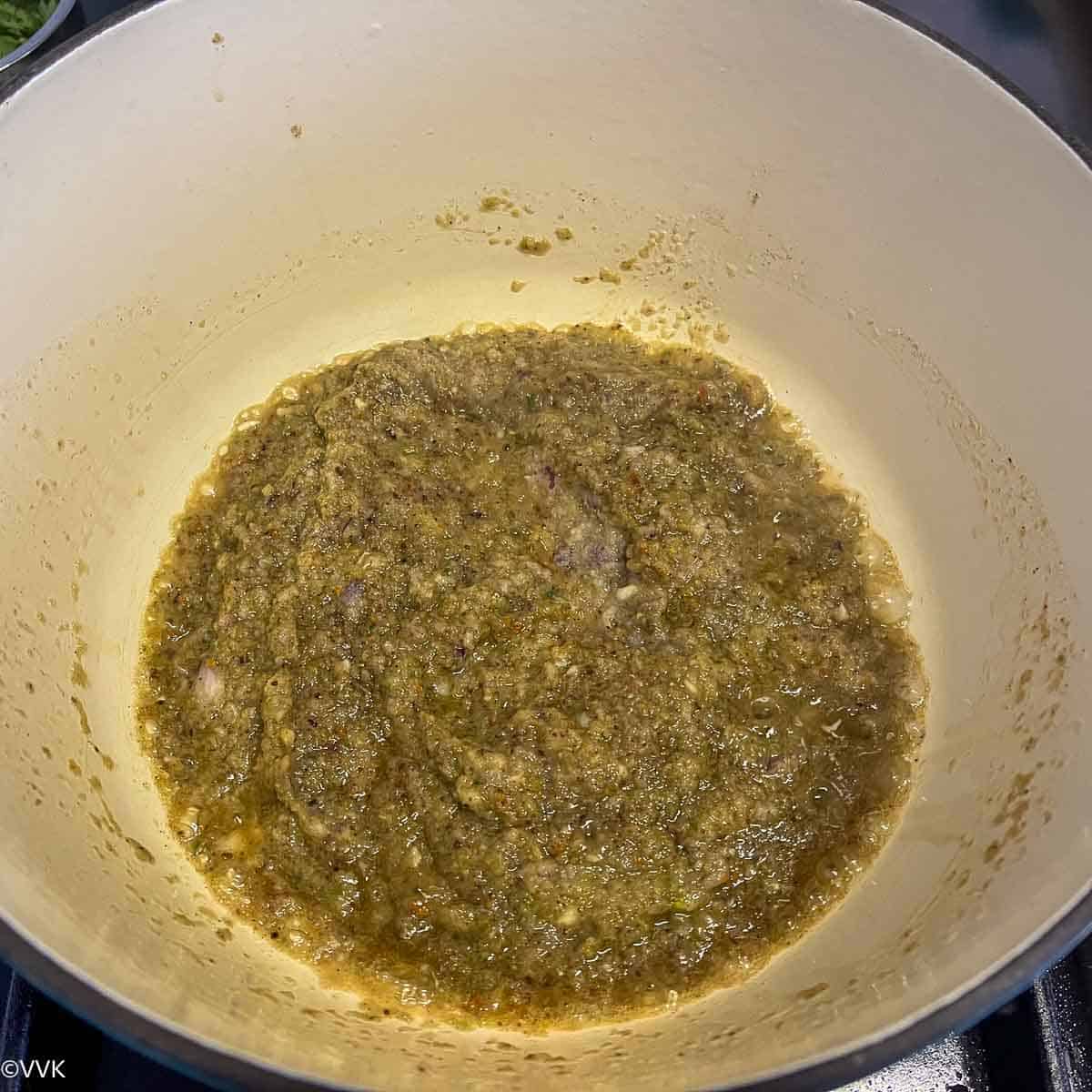
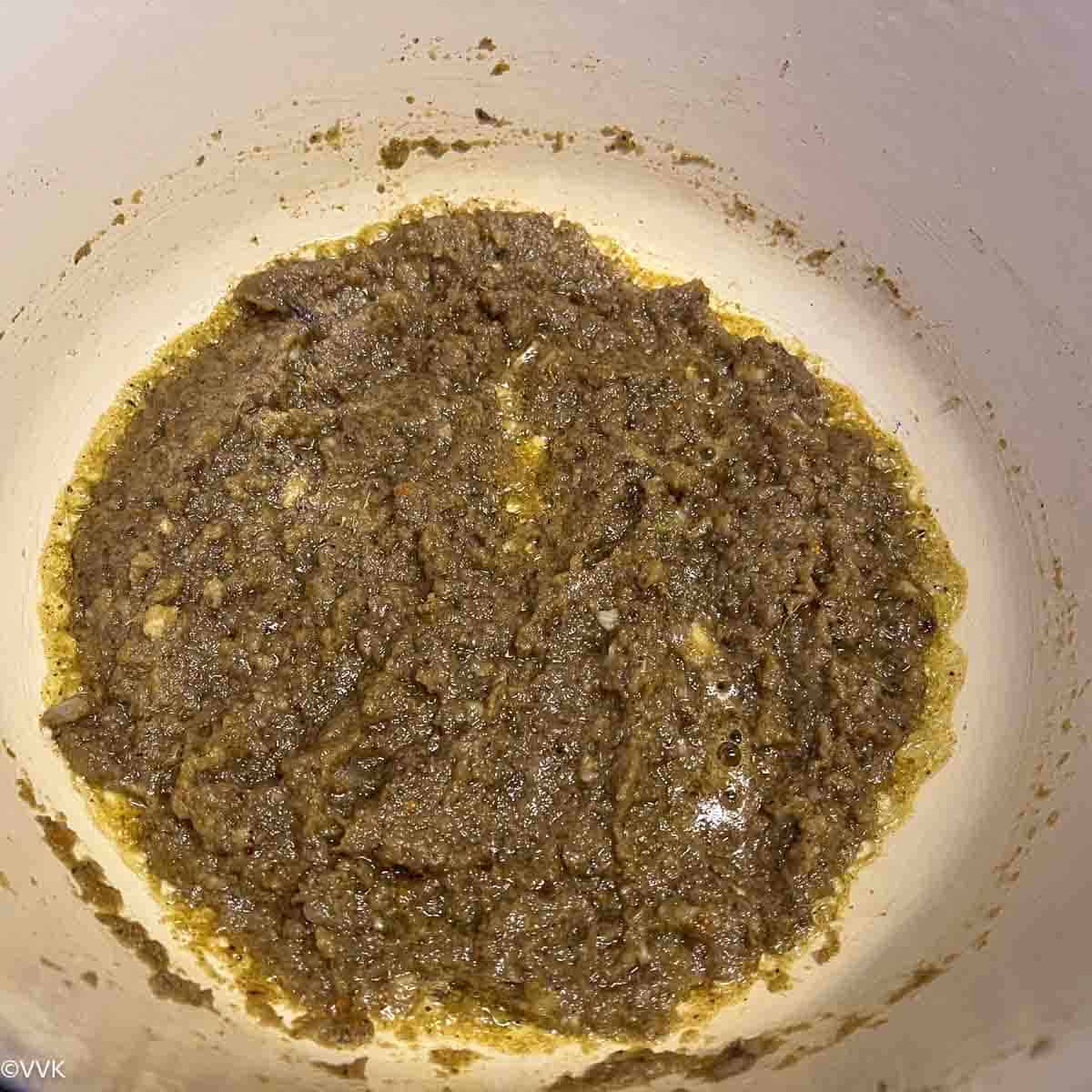
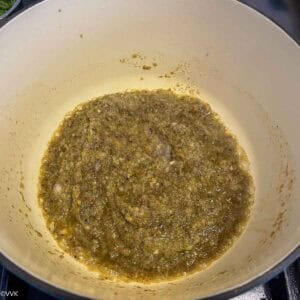
- Mix well, then cook until the raw smell dissipates and the oil begins to separate. Since we are using a lot of garlic and shallots, make sure they cook thoroughly until the raw smell goes away. I cooked this on medium heat, and it took about 12 minutes.
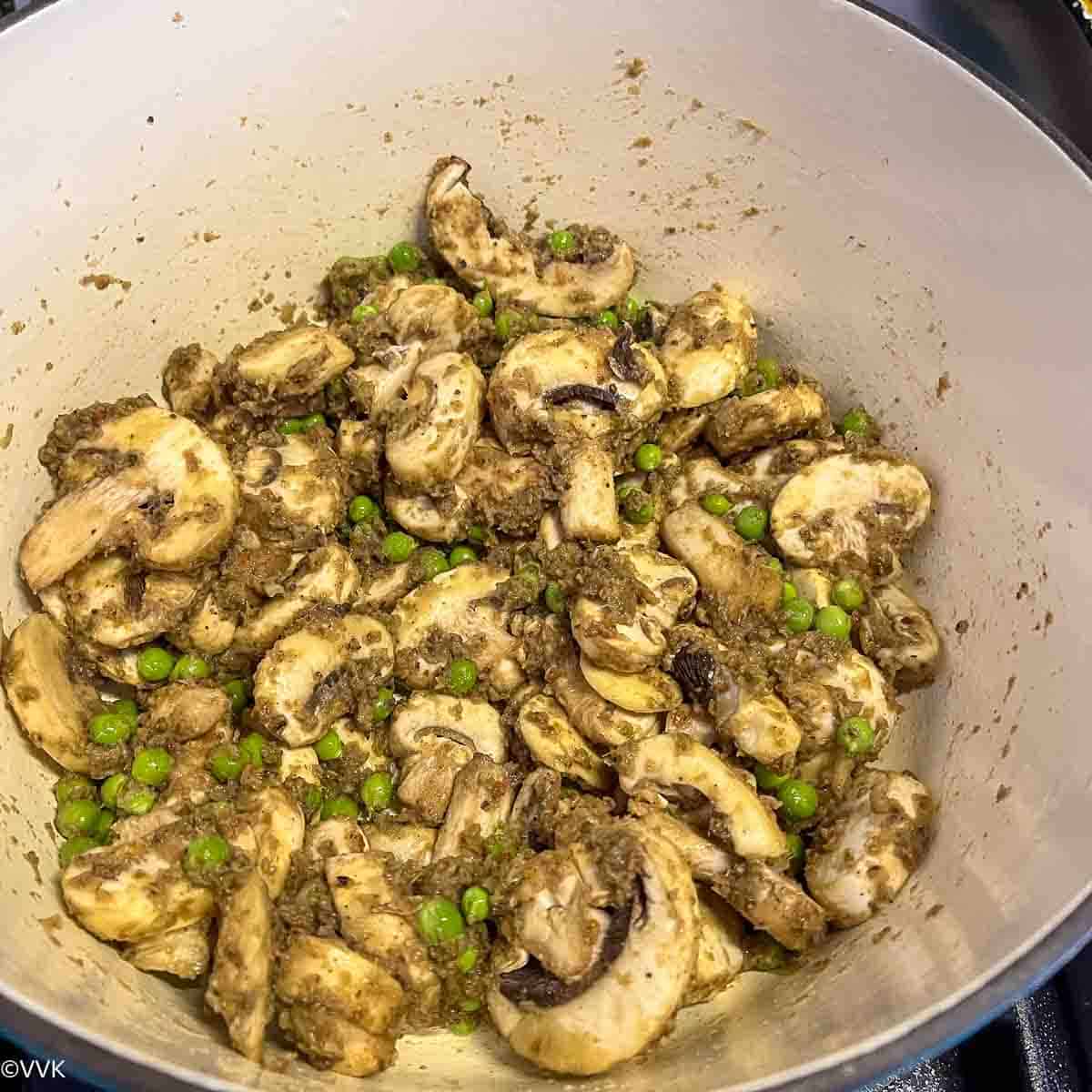
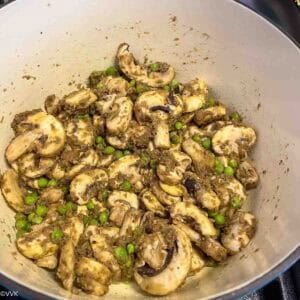
- Then add the mushrooms and green peas and mix well. There is no need to add water as the mushrooms will release moisture.
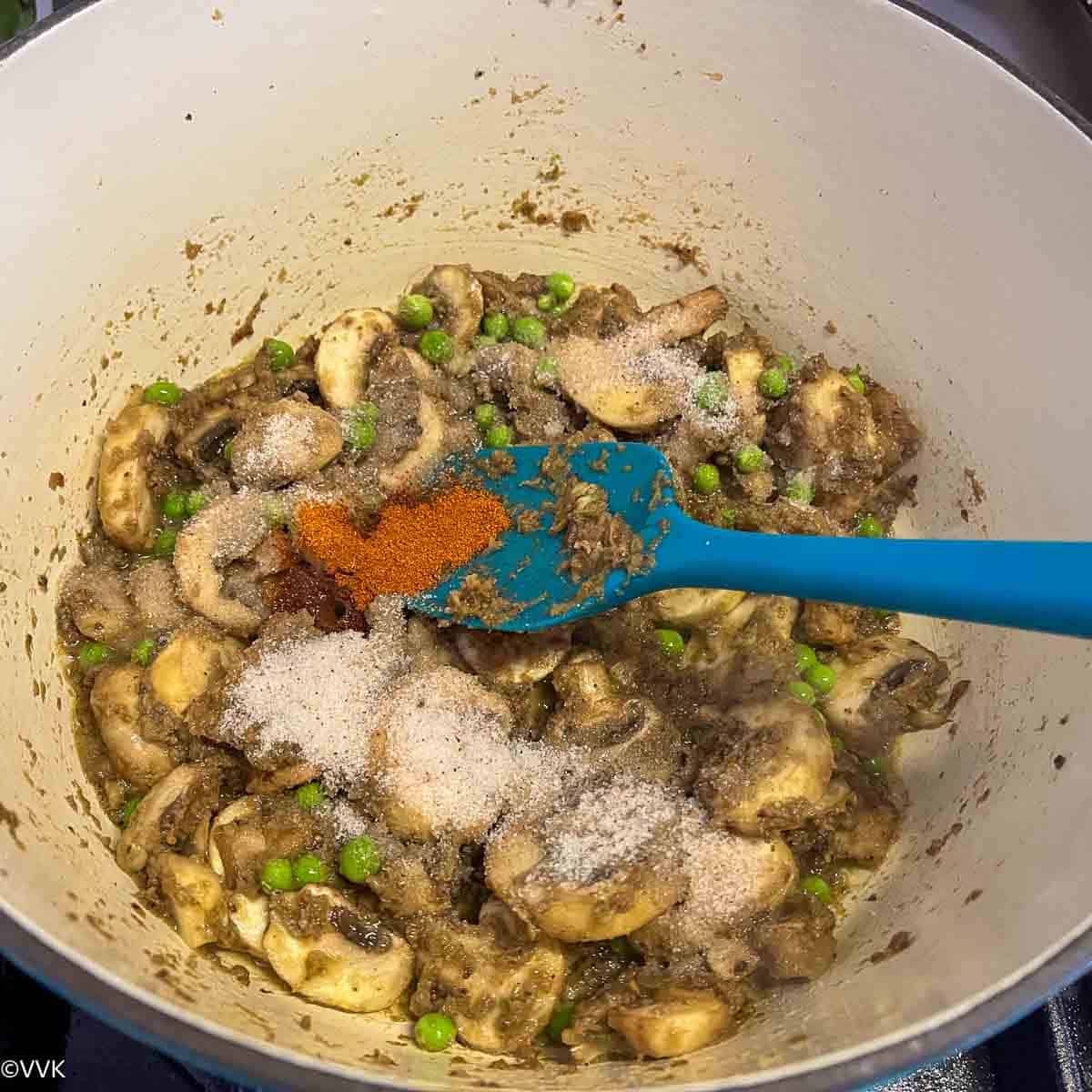
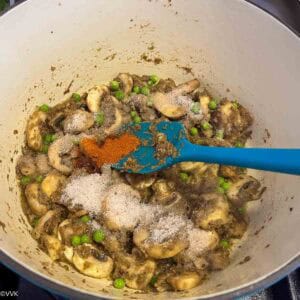
- Let it cook for 3 to 4 minutes, then add the salt and red chili powder. Mix well and cook for another couple of minutes.
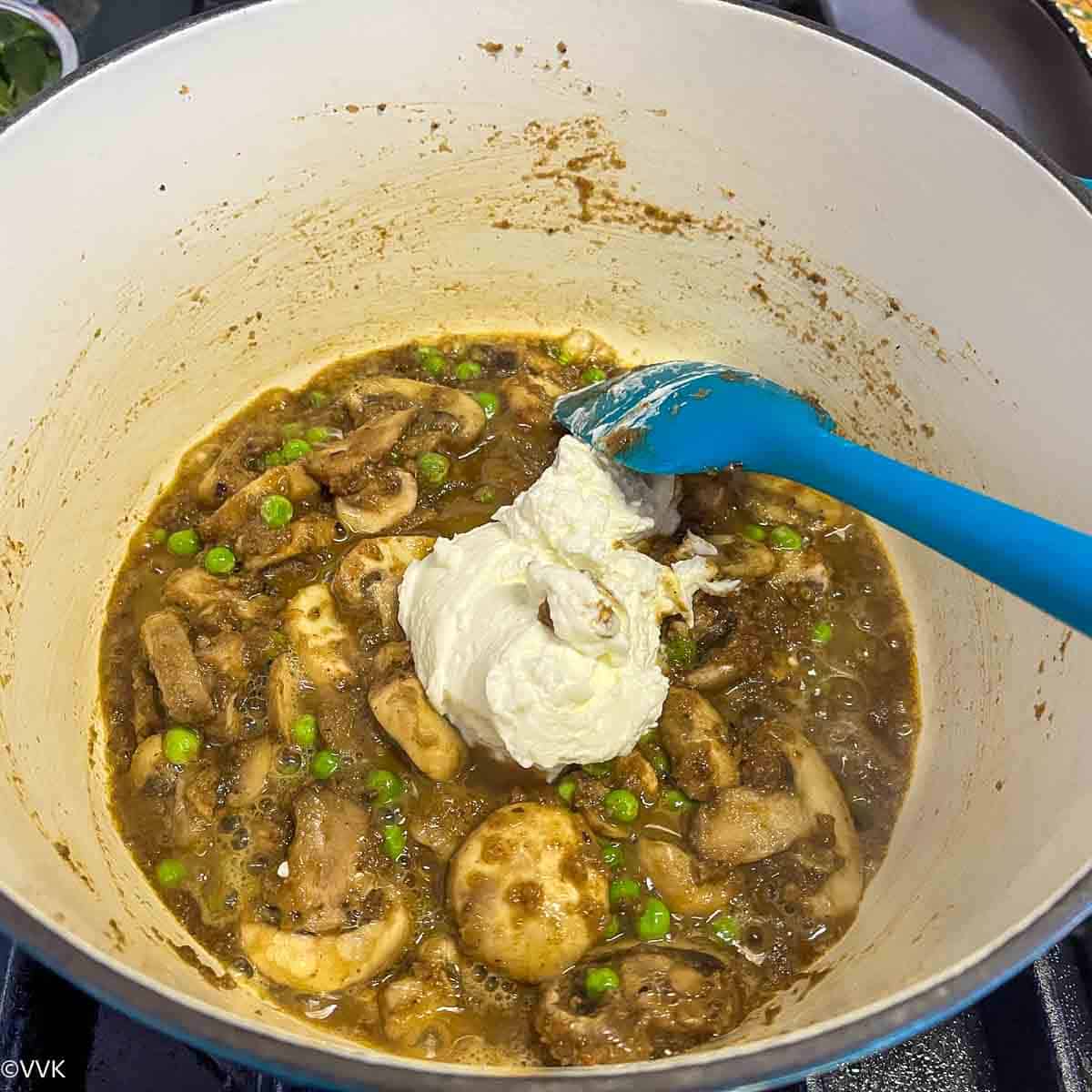
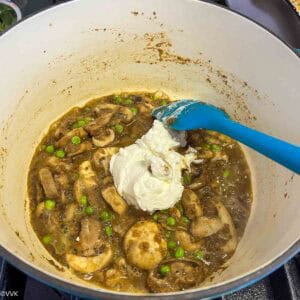
- Now add the yogurt and cook again until everything comes together and thickens slightly.
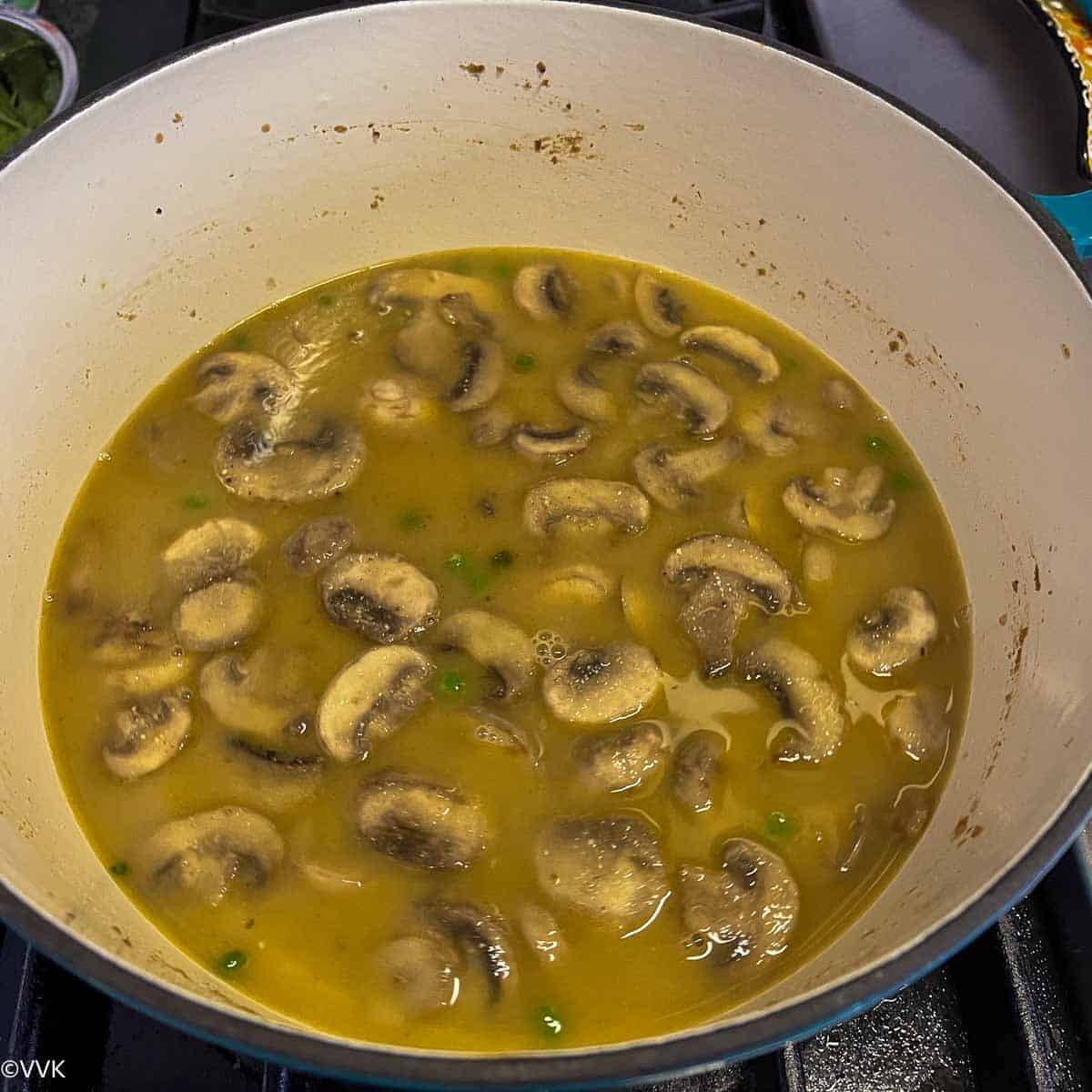
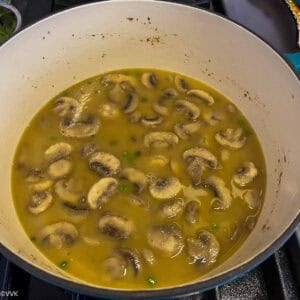
- Add 4.25 cups of water and mix well.
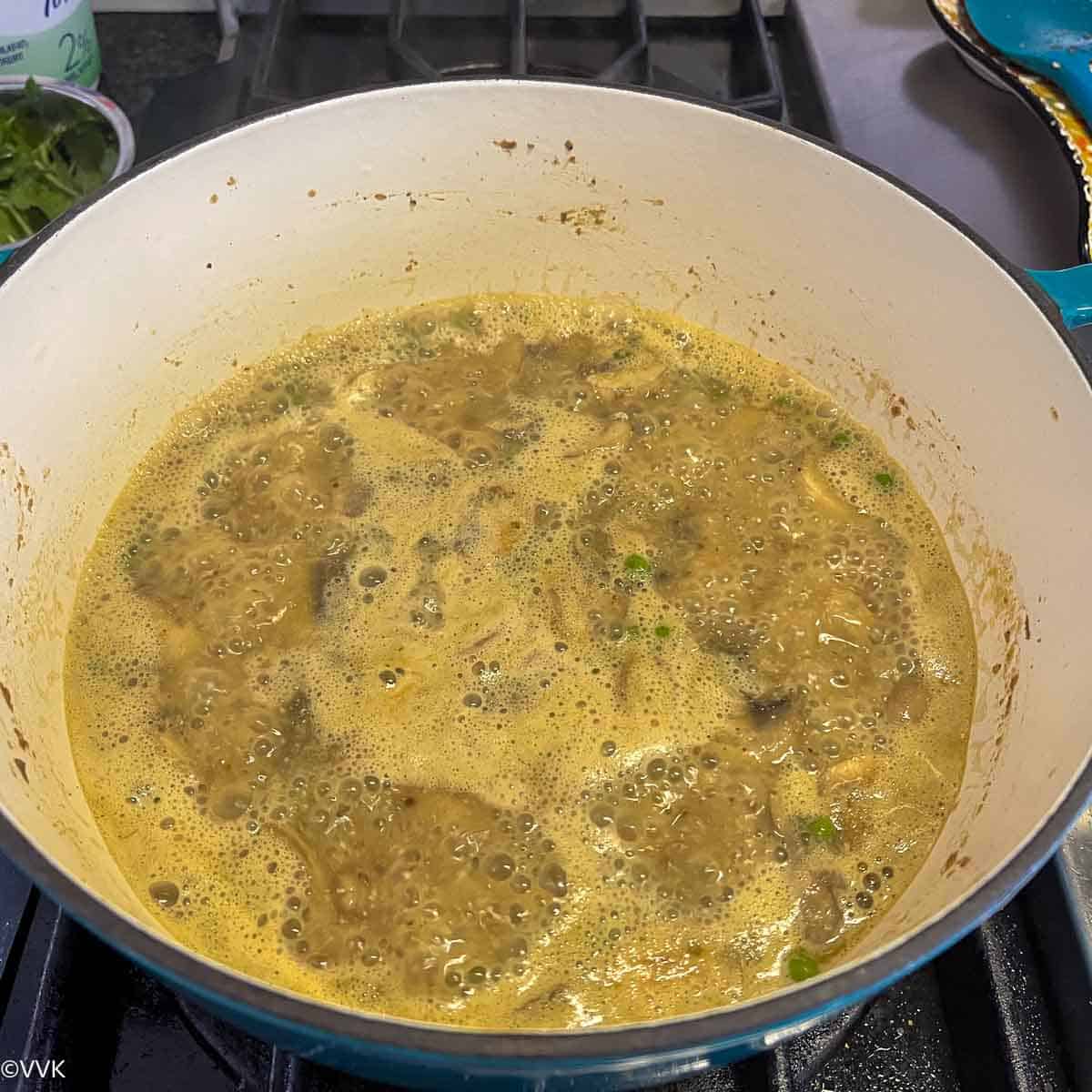
- Scrape the bottom and mix the vegetables and masalas well. Bring this mixture to a boil.
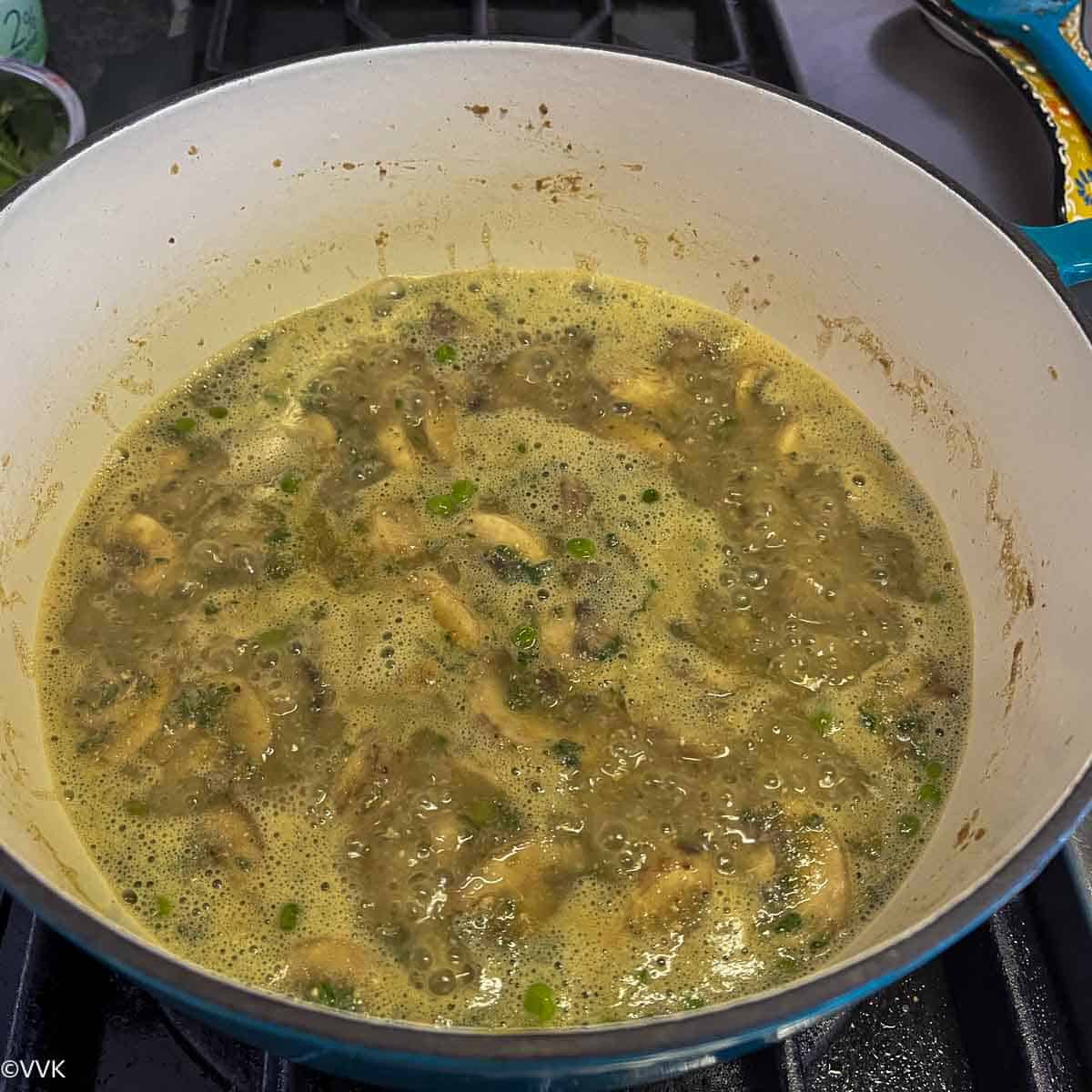
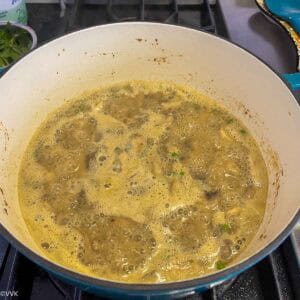
- When the water starts boiling, add the lemon juice and the pulsed mint and cilantro mixture, and cook for a couple of minutes.
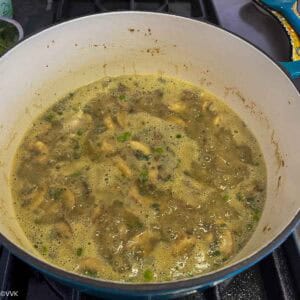
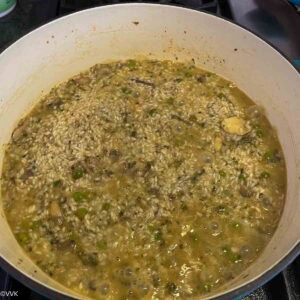
- Now add the seeraga samba rice and cook for 5 minutes on a high flame.
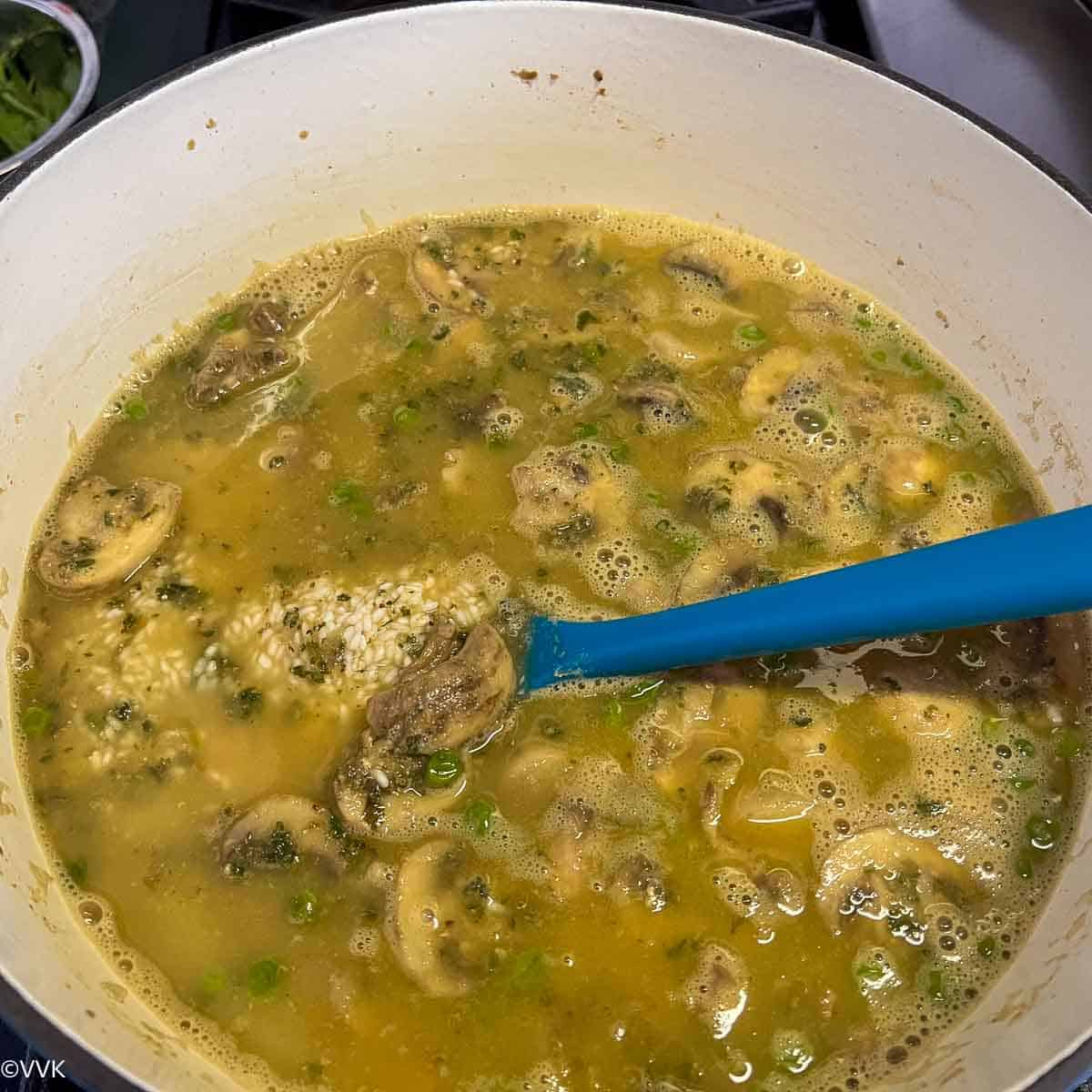
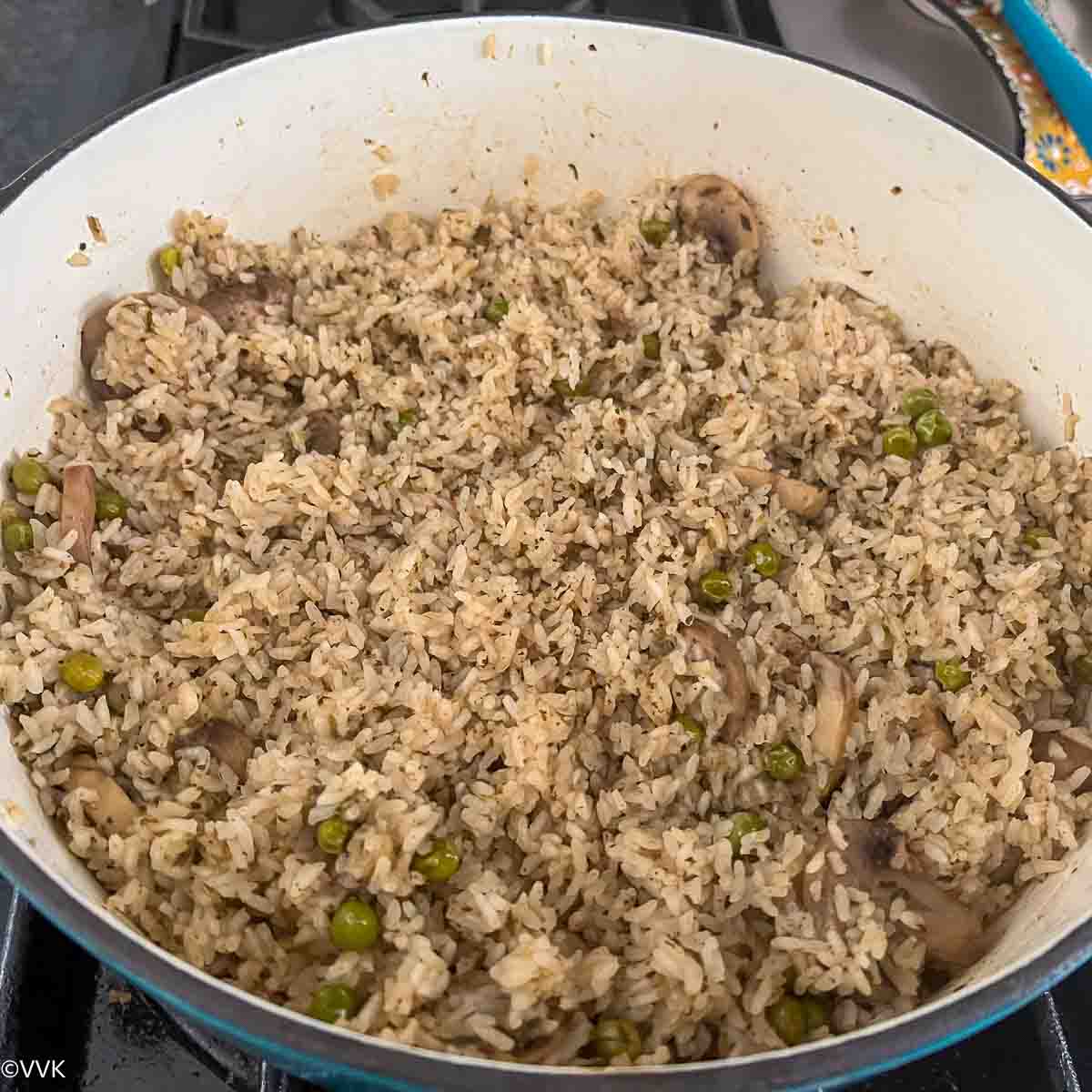
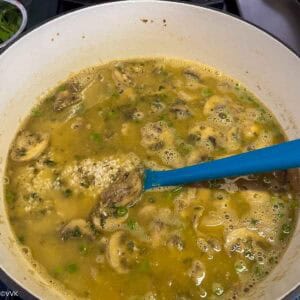
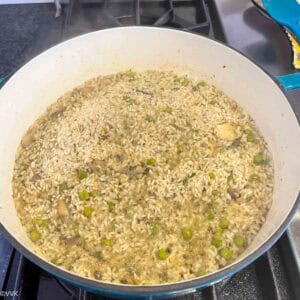
- Here is the biryani after 5 minutes of cooking.
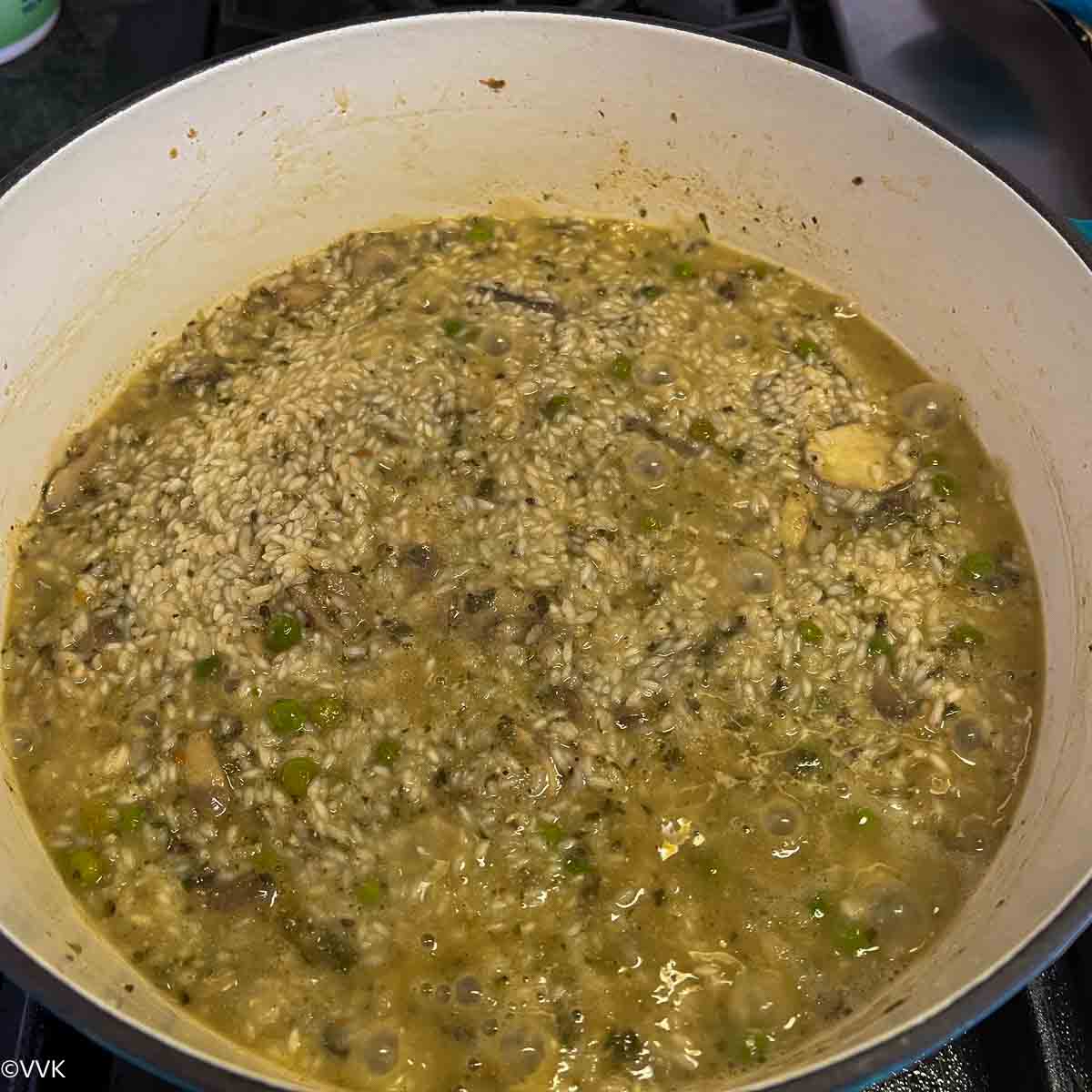
- Then cover the pan with a lid and cook on a low flame for 15 minutes.
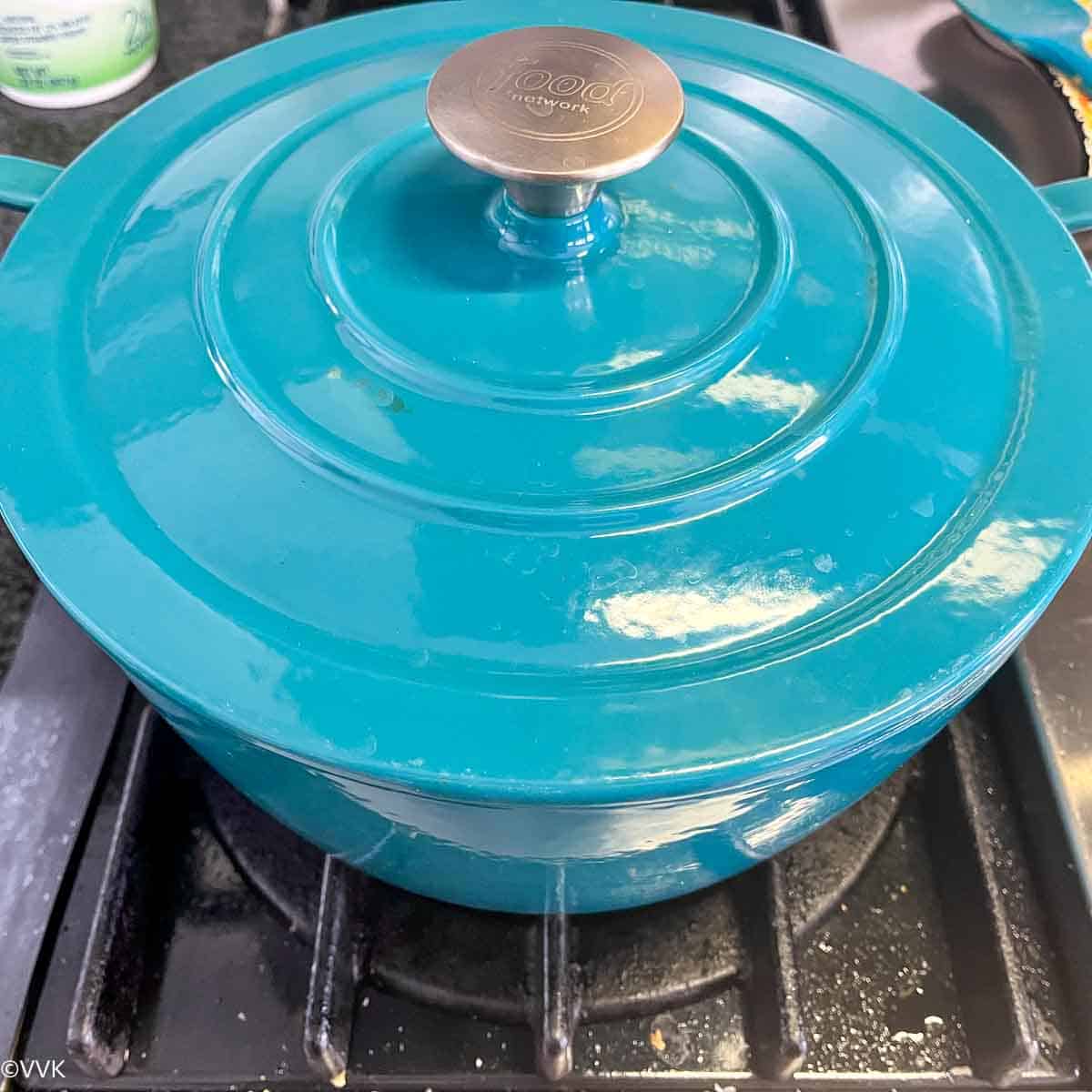
- Turn off the heat, partially open the lid, and let it sit for another 10 minutes.
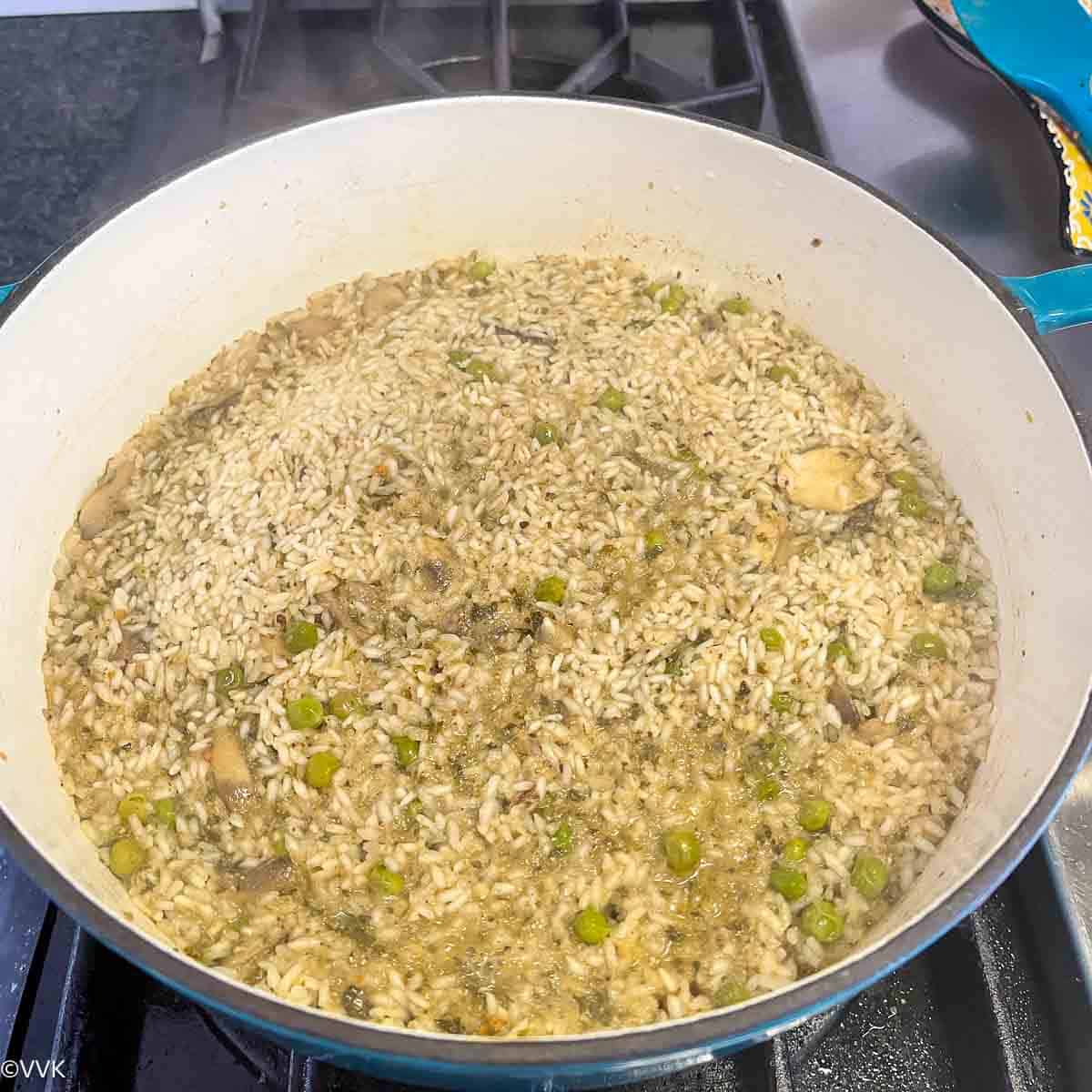
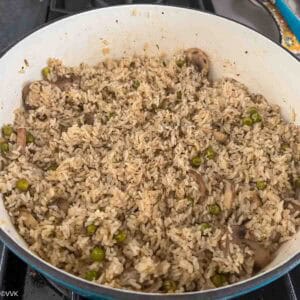
- Then gently fluff the rice with a fork.
- Serve hot with salna or kurma of your choice and raita.
Recipe Notes
- I know we all get different sizes of shallots and garlic, so I’ve provided the measurements in weight as well. That should help you get the right quantities.
- You can add up to 4.5 cups of water for medium-aged seeraga samba rice. If it’s new rice, add only 4 cups of water; if it’s aged, you can add up to 5 cups. Depending on the soaking time, the cooking time may vary. Do not soak for more than 30 minutes.
- Adjust the green chillies and salt according to your preference.
- Depending on the size of the shallots and garlic, adjust the quantity.
- If you are not able to find mace, increase the nutmeg to about ⅓ of a seed. If using nutmeg powder, around ½ tsp should be enough.
- Pulsing cilantro and mint is completely optional. You can also reduce the quantity of mint to 1 cup of leaves.
- I have used mushrooms and green peas. You can replace this combination with your choice of vegetables, soy chunks, or even paneer.
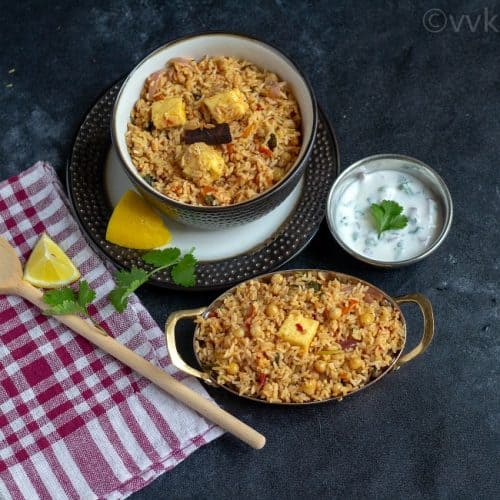
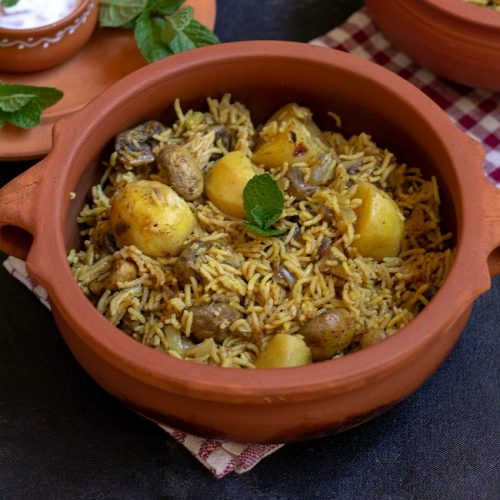
More Veg Biryani Recipes

Loved this recipe?
P.S. If you try this Dindigul Thalappakatti Biriyani, please leave a comment and rate the recipe. If you have questions, drop them in the comments, and I’ll respond as soon as possible. Follow me on Pinterest for more healthy, delicious ideas, and on Instagram for regular updates, behind-the-scenes moments, and a peek into my kitchen!
📖 Recipe
Veg Thalappakatti Biryani | Dindigul Style Mushroom Biryani
Ingredients
Measurement Details: 1 cup= 240ml; 1 tbsp = 15ml; 1 tsp = 5ml;
- 3 cups seeraga samba rice rinsed and soaked for 15 to 20 minutes
To grind: Set 1
- 4 cloves
- 3 green cardamom
- 4- inch cinnamon piece I used four one-inch pieces
- ¼ of a nutmeg seed
- 2 mace pieces
- 5 green chilies adjust to taste
- 1.5 to 2- inch ginger
To grind: Set 2
- 2 cups mint leaves loosely packed, approx 22 grams
- 1 cup cilantro loosely packed, approx 20 grams
To grind: Set 3
- 15 shallots adjust depending upon size. Approx 150 grams
- 15 garlic cloves adjust depending on size. Approx 15 to 20 grams
Instructions
- Grind the dry masala ingredients given under “To grind set 1.” First grind cloves, cinnamon, cardamom, mace, and nutmeg without adding water. Then add the green chillies and ginger, along with about 2 to 3 tbsp of water, and grind them together. Set aside. Wash and clean the mint and cilantro leaves, then pulse them together without adding any water. I noticed that when I added mint directly, we weren’t really eating it, so I started pulsing it once without water. Peel the onions and garlic, grind them together, and set aside.

- Heat a wide pan or kadai and add oil and ghee. I used my Dutch oven to make this mushroom biryani. Once the ghee melts and becomes hot, add the ground onion–garlic paste along with the biryani masala.
- Mix well, then cook until the raw smell dissipates and the oil begins to separate. Since we are using a lot of garlic and shallots, make sure they cook thoroughly until the raw smell goes away. I cooked this on medium heat, and it took about 12 minutes.
- Then add the mushrooms and green peas and mix well. There is no need to add water as the mushrooms will release moisture.
- Let it cook for 3 to 4 minutes, then add the salt and red chili powder. Mix well and cook for another couple of minutes.
- Now add the yogurt and cook again until everything comes together and thickens slightly.
- Add 4.25 cups of water and mix well.
- Scrape the bottom and mix the vegetables and masalas well. Bring this mixture to a boil.
- When the water starts boiling, add the lemon juice and the pulsed mint and cilantro mixture, and cook for a couple of minutes.
- Now add the seeraga samba rice and cook for 5 minutes on a high flame.
- Here is the biryani after 5 minutes of cooking.
- Then cover the pan with a lid and cook on a low flame for 15 minutes.
- Turn off the heat, partially open the lid, and let it sit for another 10 minutes. Then gently fluff the rice with a fork.
- Serve hot with salna or kurma of your choice and raita.

Notes
- I know we all get different sizes of shallots and garlic, so I’ve provided the measurements in weight as well. That should help you get the right quantities.
- You can add up to 4.5 cups of water for medium-aged seeraga samba rice. If it’s new rice, add only 4 cups of water; if it’s aged, you can add up to 5 cups. Depending on the soaking time, the cooking time may vary. Do not soak for more than 30 minutes.
- Adjust the green chillies and salt according to your preference.
- Depending on the size of the shallots and garlic, adjust the quantity.
- If you are not able to find mace, increase the nutmeg to about ⅓ of a seed. If using nutmeg powder, around ½ tsp should be enough.
- Pulsing cilantro and mint is completely optional. You can also reduce the quantity of mint to 1 cup of leaves.
- I have used mushrooms and green peas. You can replace this combination with your choice of vegetables, soy chunks, or even paneer.
Nutrition
I am not a nutritionist. The nutritional information is provided as a courtesy and is an estimate only. It varies depending upon the product types or brands.


Hi Vidhya! Awesome recipe. Thank you for sharing it and presenting the steps so clearly. It was definitely the best biryani that I have made at home.
Thanks a lot.