
Samosa – A Classic Indian Snack
Discover how to make delicious samosas at home with easy step-by-step instructions and tips for perfecting the pastry.
Servings: 8 yields 10 to 12 samosa
Calories: 718kcal
Ingredients
Measurement Details: 1 cup = 240ml; 1 tbsp = 15ml; 1 tsp = 5ml;
For the filling:
- 5 medium-sized potatoes approx 300grams
- ¾ cup onion chopped. Half of a medium-sized onion
- ¼ green peas if using frozen, thawed to room temperature
- 1 tbsp oil
- 1 tsp cumin seeds
- 1 tsp fennel seed powder
- 1 tsp red chili powder
- 1 tsp chaat masala
- 1.5 tsp salt
- 1 tbsp cilantro chopped
For The Outer Covering
- 1.5 cups all-purpose flour/maida
- 2 tsps oil
- ½ tsp salt
- ¼ tsp carom seeds
- ¼ tsp baking soda
- ¼ to ½ cup water
Other Ingredients:
- 2 cups Oil for frying
Instructions
- Preparing the outer covering: In a wide mixing bowl, add the maida (all-purpose flour), salt, ajwain, oil, and baking soda.
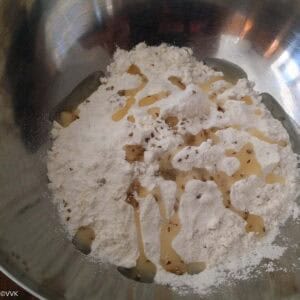
- Mix well and make sure the oil is properly coated in the flour. This ensures crispy samosa.
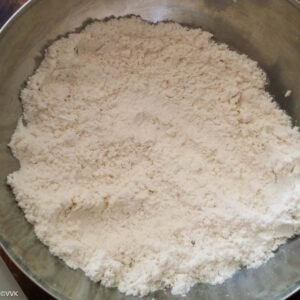
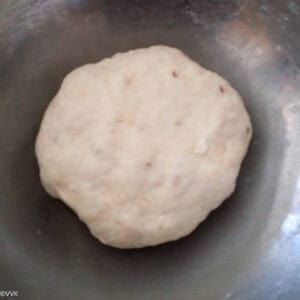
- Slowly drizzle in water, mixing until the flour forms a stiff dough. Do not add more than 2 tbsps of water at a time. Add water on a required basis. Knead the dough for a couple of minutes, then cover it with a damp cloth and let it sit for a while.
- Preparing the filling: Boil the potatoes in your preferred method, either microwaving or pressure-cooking. Let it cool, peel the skin, and roughly chop them. Heat the kadai and add oil. Once the oil is hot, add the cumin seeds. As they start to splutter, add the chopped onion.
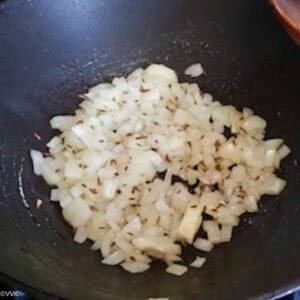
- Cook until the onion turns translucent. Now add the peas and cook for two minutes. Then add the dry masalas: fennel seed powder, red chili powder, chaat masala, and salt.
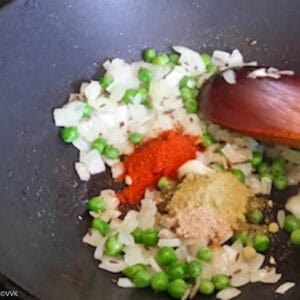
- Now mix them well and cook on a medium flame until all the water has evaporated. At this stage, add the chopped potatoes and mix well. Ensure the potatoes are coated well with the masala.
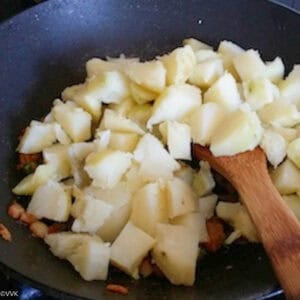
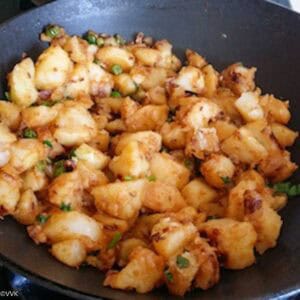
- Cook over medium heat for about 5 minutes, until a light brown crust forms. Turn off the heat, sprinkle in chopped cilantro, and mix well. That’s it. The potato filling is ready.
- Shaping the samosas, filling, and frying: Pinch off a medium lemon-sized ball of dough and roll it into an elliptical shape.
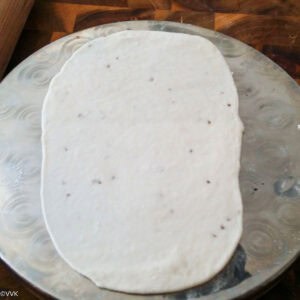
- Now cut them into two halves.
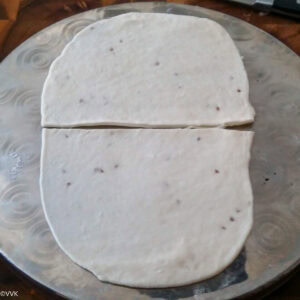
- Using your fingertips, spread a little water around the edges. This helps in sealing the samosas properly.
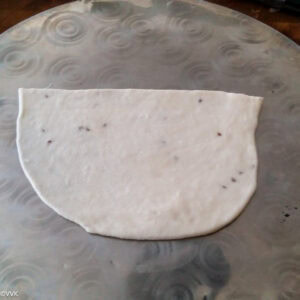
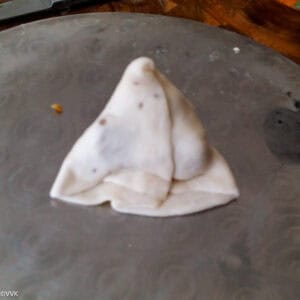
- Bring the open edges to the middle as shown in the image and press them together to form a cone. Seal the tip of the cone, then fill the inside with 2 tbsps of potato filling.
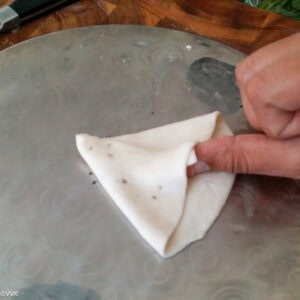
- Press the potato filling, making sure there is some space between the edges to bring them together.
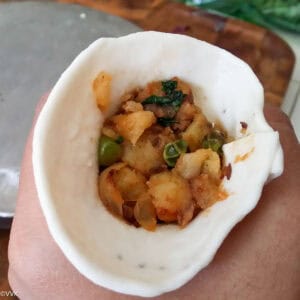
- Now, slightly pinch or fold the edge, then bring the bottom edges together and seal them tightly. The folding helps the samosas to stand, and it acts like the vertebrae. :-) Here is the quick video of shaping and filling the samosas.
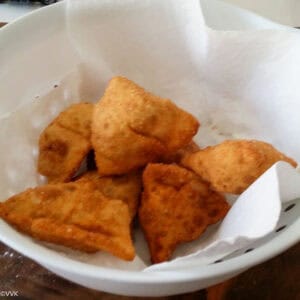
- Now, heat the oil for frying. Meanwhile, follow the above steps and shape more samosas with the remaining dough. Once the oil is hot, bring it to medium heat and slowly drop the samosa into the oil. Fry it until slightly browned, then take it out and let it sit on a paper towel to absorb the excess oil. I fried about 3 samosas in one batch. Since samosas take longer to fry, you might need to increase the heat to reheat the oil.
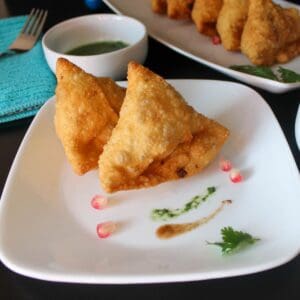
- That’s it. Yummy samosas are ready. Serve hot with your favorite sweet or green chutney or with ketchup.
Notes
- While preparing the samosa dough, you can add 2 tsps of ghee instead of oil.
- You can customize the filling as per your preference, adjust the spices, and create your own variations.
- Also, instead of garam masala, I add fennel powder and chaat masala. You can include garam masala too.
- Adjust the salt and spices as per your preference.
- Note about oil quantity for deep-frying: When deep-frying samosas, they need to be mostly submerged for even cooking and a crisp texture. In a small deep pan, about 2½ to 3 cups of oil works well for frying a few samosas at a time, while a medium kadai may require 3 to 4 cups. Using too little oil can cause uneven cooking and a hard outer layer, so it’s best to use a deep vessel and fry in small batches to minimize oil usage.
Nutrition
Calories: 718kcal | Carbohydrates: 43g | Protein: 5g | Fat: 59g | Saturated Fat: 5g | Polyunsaturated Fat: 17g | Monounsaturated Fat: 35g | Trans Fat: 0.2g | Sodium: 630mg | Potassium: 617mg | Fiber: 4g | Sugar: 2g | Vitamin A: 98IU | Vitamin C: 27mg | Calcium: 27mg | Iron: 2mg