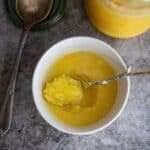
Ghee: A Step-by-Step Guide to Homemade Recipe
Ghee is a key ingredient in Indian cuisine. Follow our guide to make ghee at home and enhance your meals today.
Servings: 48
Calories: 85kcal
Ingredients
- 20 oz butter
- 10 curry leaves or moringa leaves optional
Instructions
- Add the butter to a heavy-bottomed pan and let it melt over medium-low heat.
- Slowly, the butter will melt and become foamy. Gently stir to ensure nothing sticks to the bottom.
- As the water evaporates, you’ll hear a bubbling sound—this is normal. The foam will disappear and then reappear as the milk solids settle at the bottom.
- When the second foam spreads evenly and starts to rise, turn off the heat. If you’re using moringa or curry leaves, add them now.
- Let the ghee sit for an hour, then strain and store it in an airtight container. (You can also strain while it’s warm, once the foam subsides.)
- Use the milk solids in any of the dishes mentioned above.
Video
Notes
- Use good-quality butter.
- Bringing butter to room temperature speeds up the ghee-making process, though it’s optional.
- Adding moringa or curry leaves is optional.
- Ghee can be stored at room temperature for 2–3 months in an airtight jar, or longer in the fridge.
- This measure yields approximately 2 cups of ghee.
Nutrition
Calories: 85kcal | Carbohydrates: 0.01g | Protein: 0.1g | Fat: 10g | Saturated Fat: 6g | Polyunsaturated Fat: 0.4g | Monounsaturated Fat: 2g | Trans Fat: 0.4g | Cholesterol: 25mg | Sodium: 76mg | Potassium: 3mg | Sugar: 0.01g | Vitamin A: 295IU | Calcium: 3mg | Iron: 0.002mg